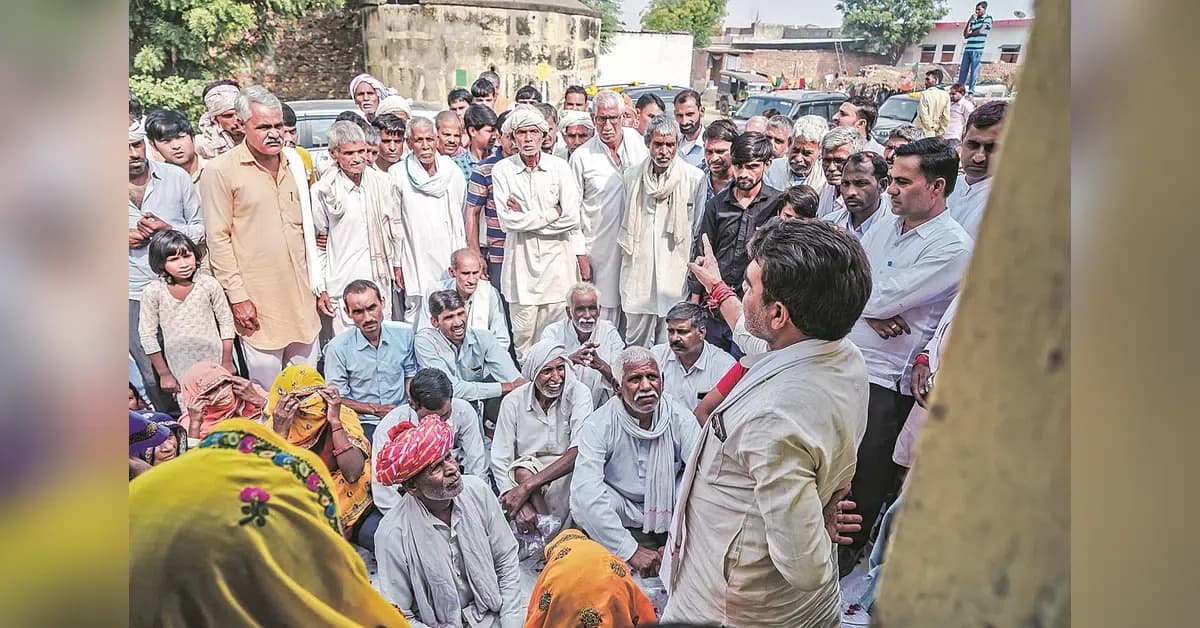
Panchayats are being positioned to manage comprehensive digital-governance platforms including eGramSwaraj and Gram Manchitra, according to reports from Business Standard. This digital transformation represents a significant shift in how local governance operates, requiring panchayats to handle both traditional administrative functions and modern technology-driven services. The implementation philosophy emphasizes the '1 Panchayat, 1 Entrepreneur, 1 Sector' approach, where each panchayat is empowered with at least one strong local entrepreneur who can create economic activity around the sector most relevant to that region - whether it is drones in agriculture, food processing, rural manufacturing, renewable energy, handicrafts, or digital services.
Beyond digital governance, panchayats are simultaneously tasked with implementing schemes across multiple sectors including housing, water, sanitation, and employment, as reported by Business Standard. This comprehensive mandate reflects the government's commitment to ensuring panchayats serve as the primary interface for local development and service delivery across various essential sectors. The approach focuses on simplifying access - helping founders navigate documentation, schemes, and approvals without overwhelming bureaucracy, and creating execution pipelines - connecting startups directly with industry, investors, pilot projects, and mentors.

The dual responsibility of managing digital platforms and implementing multi-sector schemes presents significant operational challenges for panchayats, according to the analysis. The report emphasizes that hyperlocal representation alone will not be sufficient to handle these complex responsibilities effectively. The challenge lies in balancing technological innovation with effective service delivery across multiple sectors while maintaining accountability through measurable outcomes rather than just events and announcements.
The integration of digital governance with traditional panchayat functions represents a fundamental shift in local administration, requiring panchayats to develop new capabilities and operational frameworks. As reported by Business Standard, this transformation requires panchayats to balance technological innovation with effective service delivery across multiple sectors. The approach emphasizes building need-based interventions - designing programs around actual founder and market requirements rather than generic incubation formats, and maintaining accountability through measurable outcomes - not just events and announcements. This philosophy of 'Your Geography Should Never Define the Size of Your Ambition' ensures that innovation has multiple scales, from global deeptech companies to highly impactful local enterprises in agriculture, manufacturing, skilling, or drone services.