The next phase of Mission Karmayogi, known as Mission Karmayogi 2.0, will build on the foundations established by the National Programme for Civil Services Capacity Building (NPCSCB) launched in 2020, according to S Radha Chauhan, chairperson of the Capacity Building Commission (CBC). As reported by PTI, the programme will take the reform agenda deeper into government systems with greater emphasis on states, frontline institutions, and organisational capacities required to absorb and apply individual learning. Chauhan described the proposed programme as a 'leap' in the aspirations that 'we have for Viksit Bharat'. The CBC, which serves as the custodian of the Mission Karmayogi framework, has established role-based and competency-linked learning pathways along with common quality standards for learning content. According to Chauhan, the next phase seeks to institutionalise these reforms so that capacity building becomes an integral part of government functioning, rather than a standalone training activity, involving embedding learning into roles, governance priorities, systems, processes, and institutional culture across ministries, departments, states, and frontline agencies.
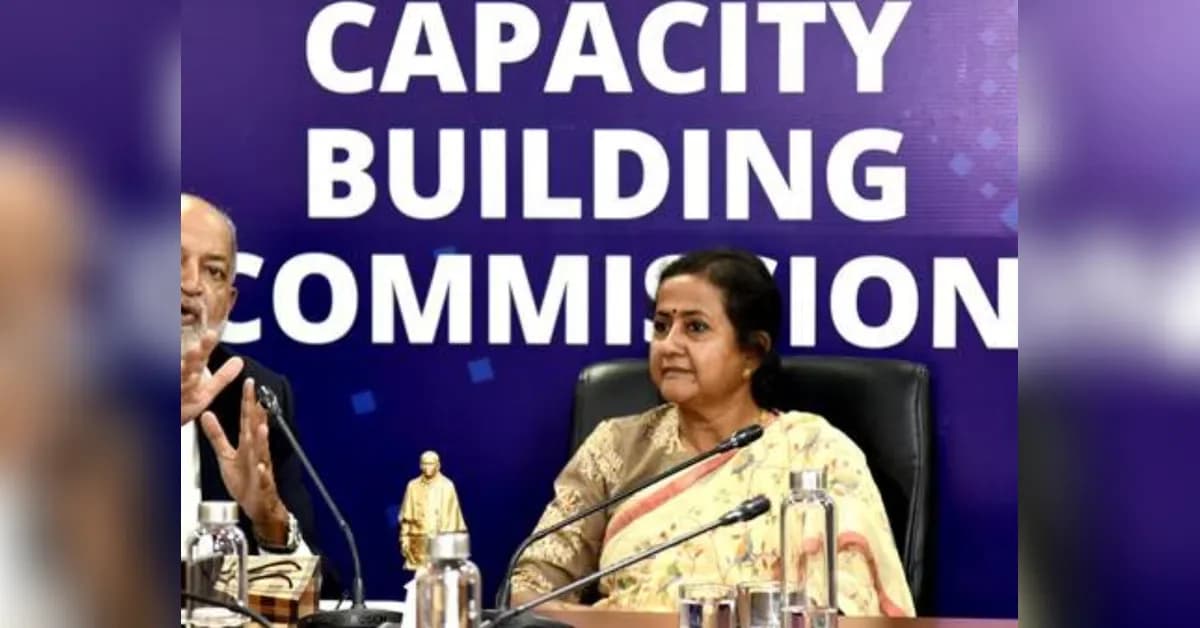
The CBC has established integrated government online training (iGOT) Karmayogi as a national platform for digital learning, ensuring quality standardisation across the country. According to Chauhan's interview with PTI, a public servant in Bhopal, Thiruvananthapuram, or Nagaland can access the same quality of learning content because it is available on iGOT, with standardisation ensuring uniform capacity building across the length and breadth of the country. The next stage will focus on how individual capacities developed through Mission Karmayogi can translate into improved organisational performance. Chauhan emphasised that this represents a major shift, stating that "you are reaching the quality of capacity building uniformly across the length and breadth of the country. That is a major shift and output that has happened." The quality of learning available to public servants has been standardised through the programme, ensuring consistent access to high-quality training materials regardless of location.
A key priority for Mission Karmayogi 2.0 is preparing public servants and government institutions for an AI-enabled governance ecosystem. As reported by PTI, the commission is working towards developing civil servants' capacity to deal with an artificial intelligence-led agentic ecosystem, with AI-related learning extended to frontline workers including panchayat sachiv, urban local body representatives, anganwadi workers, constables, and traffic constables. The programme is now drawing international interest, with the commission launching a global alliance for digital capacity building during the India AI Impact summit, attracting interest from countries like Brazil and the Asian Development Bank. Chauhan noted that "Brazil is a country that has a lot of common interests with us. So we are trying to engage with them." The commission is exploring how India's capacity-building platform and governance structures can be shared globally as a digital public good for capacity building, with the Ministry of External Affairs providing support for these international collaborations. This approach reflects the broader vision of Mission Karmayogi 2.0, where capacity building extends beyond senior officials to reach every level of government.
The CBC, which serves as the custodian of the Mission Karmayogi framework, has established role-based and competency-linked learning pathways along with common quality standards for learning content. According to Chauhan's statement to PTI, the next phase seeks to institutionalise these reforms so that capacity building becomes an integral part of government functioning, rather than a standalone training activity. This involves embedding learning into roles, governance priorities, systems, processes, and institutional culture across ministries, departments, states, and frontline agencies. The commission is looking at several partners to start conversations on how the capacity-building platform, along with the governance structures created under Mission Karmayogi, can be shared globally. As Chauhan explained, "Capacity building is not limited to senior officials or formal training institutions. It must reach every level of government and be supported by organisations that are equipped to use new skills meaningfully in everyday governance and service delivery." The learnings and reform solutions emerging from Mission Karmayogi are now drawing international interest with some countries showing interest in adopting the programme's approach.