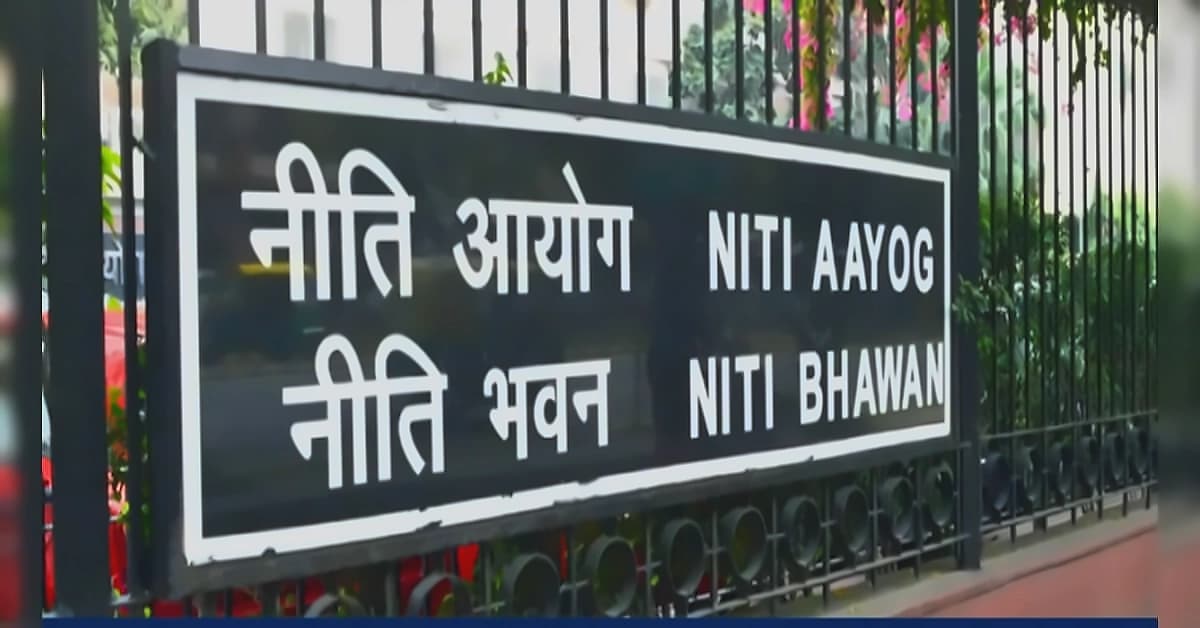
With EV policies in at least 10 states set to expire in 2027, federal think tank Niti Aayog has begun work on a next-generation green-mobility framework for states, according to reports from Mint. The exercise comes as state policies have helped attract manufacturing and allied infrastructure investment through incentives including fixed-asset subsidies, intellectual-property benefits, and tax waivers or reductions. India recorded 2.45 million EV sales in fiscal year 2026 (FY26), up 25% from the previous fiscal, with EV adoption rising to 8.5% in FY26 from 7.7% in FY25 and 7.2% in FY24. The new framework aims to bring everyone onto the same page while respecting each state's unique needs, speeding up India's shift toward zero-emission mobility.
Tamil Nadu, Telangana, Manipur, Uttar Pradesh, Rajasthan, Chhattisgarh, Himachal Pradesh, Jharkhand, Punjab and Haryana will see their EV policies expire in 2027, as reported by Mint. Policies in Maharashtra, Karnataka, Madhya Pradesh, Odisha and Kerala are set to end in 2030. Gujarat, West Bengal, and Goa are expected to float new policies shortly. Of India's 36 states and union territories, 29 have a dedicated EV policy, according to Niti Aayog's India Electric Mobility Index 2024. The seven states without notified policies are Arunachal Pradesh, Andaman & Nicobar Islands, Jammu & Kashmir, Dadra & Nagar Haveli and Daman & Diu, Nagaland, Sikkim and Lakshadweep.
The Centre's flagship PM E-Drive scheme supports electric two-wheelers, three-wheelers, buses, trucks and ambulances, with outlay raised to ₹11,900 crore for FY26 from ₹10,900 crore. The Centre also offers manufacturing incentives under the ₹25,938-crore production-linked incentive scheme for automobiles and auto parts, with disbursals having started in FY25 and continuing through FY29. According to Mint analysis, state-level incentives have worked in tandem with central government EV schemes, with states pursuing different strategies including hybrids alongside EVs in Uttar Pradesh, Haryana, Rajasthan and Chhattisgarh, while Maharashtra, Tamil Nadu and Karnataka have focused on EVs specifically. The central government's support through these schemes is helping more people switch to cleaner rides and boosting the industry.
State governments have pursued different strategies to promote EV adoption, with some implementing road tax on electric vehicles. Karnataka has begun imposing road tax on electric four-wheelers, with EV makers lobbying for continuation of incentives, as reported by Mint. Delhi's EV Policy 2.0, notified on 1 July, introduced restrictions on petrol and diesel vehicle registration, allowing only electric two-wheelers to be registered in the national capital starting April 2028 and only electric three-wheelers from January 2027. Maharashtra offers big financial incentives, Karnataka gives capital subsidies, and Delhi has restrictions on the registration of petrol and diesel vehicles in certain segments. Tarun Kapoor, adviser to the prime minister in the PMO, indicated at the Society of Indian Automobile Manufacturers convention that restrictions on conventional-fuel two-wheelers have started in Delhi and may expand to other regions.
Former NITI Aayog official Abhishek Saxena told Mint that the government's think tank would not chase consistency in state EV policies but coherence. He explained that each state will have its own approach to incentivizing EVs, whether for sales, manufacturing or ecosystem development. Saxena noted that states must align with central goals to optimize opportunities in segments like buses and trucks, emphasizing the need for coordination rather than uniformity in EV policy implementation across different regions. The new framework aims to balance this diversity with national objectives while ensuring that India's shift toward zero-emission mobility remains coherent and effective.