The draft National Electricity Policy (NEP) 2026 has been sent to the Union Cabinet for inter-ministerial discussion, according to Power Secretary Pankaj Agarwal. As reported by Business Standard, Agarwal made this announcement on Thursday during the 2nd Indian Power Sector Conference organised by industry body FICCI. The secretary indicated that we have aggregated all the stakeholders comments and already moved the Cabinet note for the inter-ministerial consultation, stating it shouldn't be taking very long for the policy to be finalized. The draft, which was circulated in January 2026 for stakeholder comments, seeks to make the power sector financially viable and increase per capita power consumption to 4,000 kilowatt-hours by 2047.
The new policy has been designed in line with Viksit Bharat vision 2047, marking a significant evolution from previous frameworks. According to Agarwal's statements to reporters, the last NEP was notified in 2005 when challenges centered around access to electricity and shortages, with developing renewable energy sources being the primary solution. However, as reported by Business Standard, today's challenges are entirely different, focusing on grid management and building transmission systems. Agarwal noted that today we are at a very different level...we are already at 300 gigawatt of non-fossil capacity and now going forward, the challenges are entirely different. The policy also seeks to promote competition in supply and increase the share of non-fossil capacity.
Grid stability is one of the key dimensions of NEP 2026, with the policy acknowledging that grids cannot be expected to operate at 24x7 capacity levels. As reported by Business Standard, Agarwal noted that you can't expect it to be utilised 24X7 at a particular level. There will be more fluctuations, but given that fluctuation, if we can really use 60 per cent of grid capacity, I think that's a fairly good thing. The policy addresses the current reality where India has reached 300 gigawatts of non-fossil capacity and faces entirely different challenges compared to the previous decade. Addressing the industry, Agarwal said the ministry has incorporated flexibility mandates in the policy to address grid stability concerns. Data centre and green hydrogen projects that are coming up are all gigawatt-scale projects and can cause grid fluctuations, requiring large electricity consumers like massive data centres and AI clusters to dynamically adjust, shift or reduce their power consumption when the local power grid faces peak stress or supply shortages.
The policy includes steps to develop chips for smart meters within the country to enhance the value chain, with active engagement from developers, chip developers, and smart meter manufacturers. According to Agarwal's statements to Business Standard, some chips are already being designed as part of this domestic development initiative. This move represents a strategic shift toward indigenous technology development in the power sector, with some of the developers, chip developers and also the smart meter manufacturers are actively engaged in the development process. Regarding indigenous design of chips, Agarwal emphasized the need to ensure that we not only design the application layer, but also try to design the core chips in our country. Based on discussions with manufacturers and chip developers, he's quite hopeful that by mid-2028, we can expect and mandate 'design in India' chips in our systems, and maybe even 'make in India' chips.
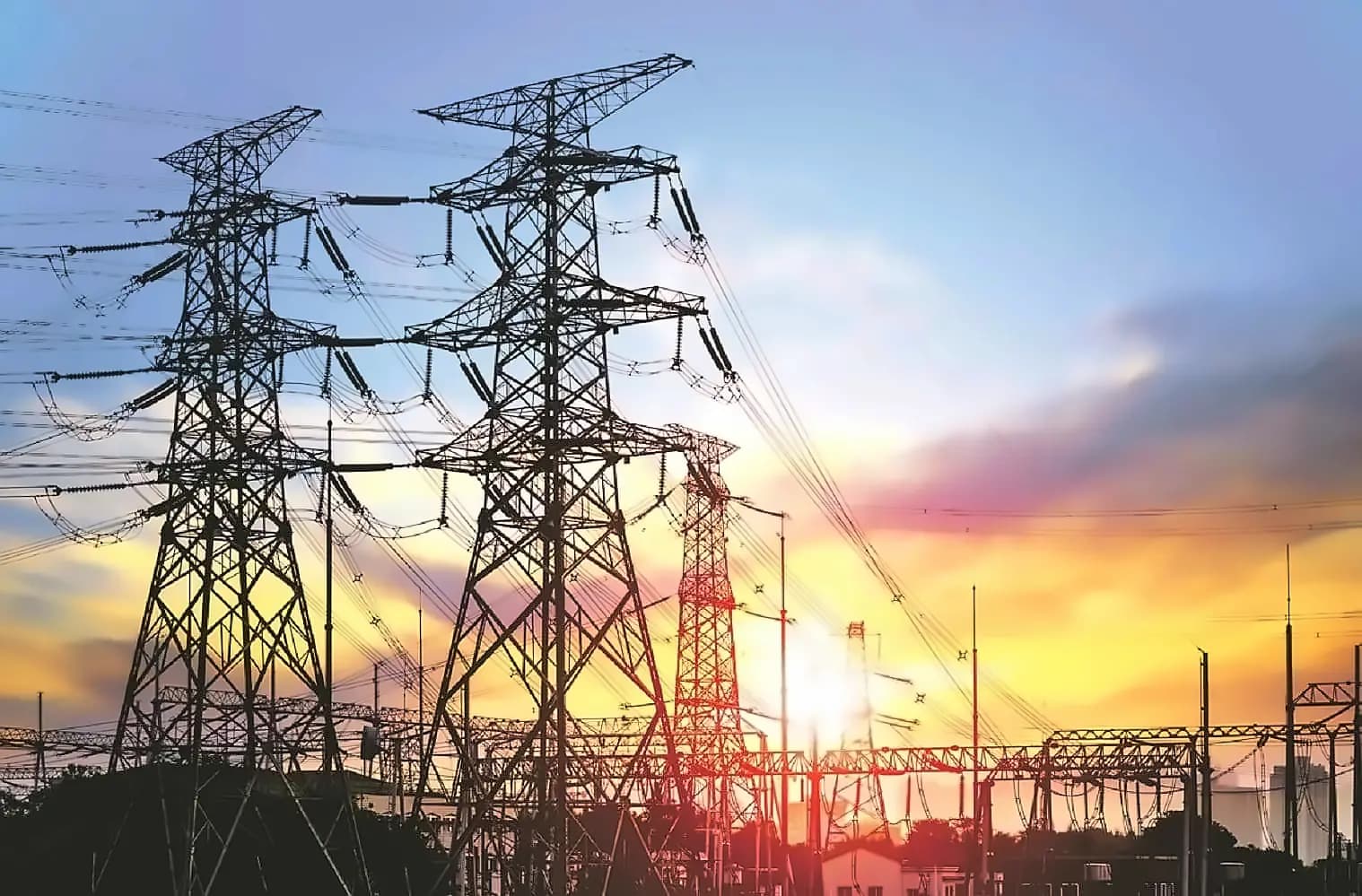
For optimising right-of-way (RoW) clearance required for power transmission projects, the secretary emphasised the development of multi-circuit lines from the beginning instead of making double-circuit lines again and again. This approach will optimise ROW, reducing it almost by half, adding that developing transmission lines multiple times also frustrates farmers. The policy also addresses project bankability across the sector by deploying risk-mitigation instruments such as first-loss guarantees, reserve funds and multilateral guarantees from multilateral development banks. Regarding market development, Agarwal noted that the government will put in place marketplace services, stating "Ancillary services market is yet to be defined. We need to work on this a lot". He also highlighted that CEA's long-term transmission planning provides sufficient visibility about the requirements in the next 5–10 years, urging CEA to seriously look into this as it is not only ROW efficient, but also cost efficient.
Regarding coal-based electricity generation, demand in September rose by about 14%, with logistics challenges now fully addressed. As reported by Business Standard, Agarwal confirmed that more than 440 rakes are being received on a daily basis, significantly improving the supply chain for coal-based power generation. This development addresses one of the key infrastructure challenges facing the power sector and demonstrates the government's commitment to ensuring adequate coal supply for thermal power generation. Additionally, the power ministry has invoked Section 11 of the Electricity Act to issue directions to captive coal-based generating stations of 50 MW and above capacity, mandating them to operate and generate power to the maximum extent of their available capacity. The directions, applicable from October 1 to December 31, 2026, require captive generators to offer surplus power through exchanges after meeting their own demand, with generators also directed to maintain adequate coal stock and submit weekly reports to the Central Electricity Authority.