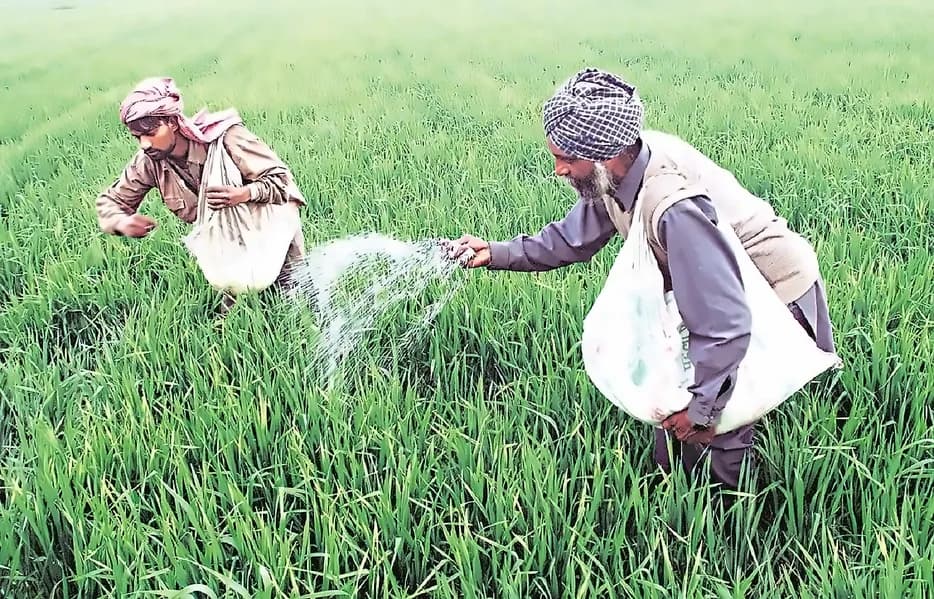
India's fertiliser subsidy regime has reached a critical juncture, with rising global urea prices threatening to push the subsidy bill to unprecedented levels. According to The Financial Express, fertiliser subsidies could climb to as much as ₹3.4 lakh crore in FY27, nearly double the ₹1.71 lakh crore provisioned in the Union Budget. The surge reflects a combination of elevated global fertiliser prices, disrupted supply chains and geopolitical tensions affecting critical shipping routes, particularly the Strait of Hormuz. Despite mounting fiscal pressures, farmers have largely been shielded from these increases with the retail price of urea remaining unchanged at ₹266.5 per 45-kg bag since 2018, even though the subsidy component now exceeds ₹4,000 per bag. Similarly, DAP prices have been held at ₹1,350 per 50-kg bag since the pandemic despite rising international costs.
The recent deadly fire at Delhi's Flourish B&B, which killed 22 people, exposes the entrenched corruption and regulatory failures that underpin urban governance in India. As reported by Business Standard, despite blatant violations of licensing, fire safety, and building norms, the establishment operated openly for years, raising questions about municipal accountability. The municipal authorities' subsequent crackdown cannot mask systemic neglect that enables such infractions, with similar tragedies in other cities including hospital and restaurant fires, building collapses, and flooding deaths all rooted in official complicity and oversight failures. As India urbanises rapidly, urgent municipal governance reform are the need of the hour.

Despite external challenges, India's economy grew at a higher pace of 7.7 percent during 2025-26 as compared to 7.1 percent in 2024-25, according to government data released on Friday. Sources indicate that growth momentum remains intact with domestic consumption holding up, as the country's GDP growth momentum continues quarter after quarter. The RBI slashed its FY27 GDP growth forecast to 6.6 percent from 6.9 percent, citing rising risks from the ongoing West Asia conflict, elevated energy prices, supply disruptions and weather-related uncertainties. However, officials remain confident that the economy can absorb the shock without derailing growth or upsetting fiscal targets, with the government maintaining its 4.3% fiscal deficit target through the Economic Stabilisation Fund and increased non-tax revenues.
The government's intervention extends beyond agriculture to shield consumers and critical sectors from soaring energy costs. State-owned oil marketing companies have absorbed significant pressure from rising global crude prices, with measures aimed at supporting fuel retailers and cushioning consumers estimated to cost the exchequer approximately ₹1.23 lakh crore. A major component stems from the government's decision to reduce excise duty on petrol and diesel by ₹10 per litre, helping moderate higher crude price impacts on households. The aviation sector received special attention with the Union Cabinet approving a ₹10,000 crore Aviation Turbine Fuel Price Stabilisation Fund after international ATF prices surged from ₹60.50 per litre in March 2026 to nearly ₹142 per litre by May. The scheme provides temporary assistance to OMCs when international ATF prices rise beyond specified benchmarks, with a recovery mechanism that returns funds to the government once market conditions normalise.
To offset the growing subsidy burden, the Centre is accelerating efforts to generate non-tax revenues, with disinvestment and asset monetisation emerging as important pillars of the strategy. Officials expect proceeds from these programmes to exceed the FY27 target of ₹80,000 crore, supported by an active pipeline of minority stake sales and infrastructure monetisation initiatives. The strategic sale of IDBI Bank is also expected to move forward as part of the broader divestment agenda. Additionally, the government recently announced tax exemptions on interest income and capital gains earned by foreign investors in government securities, potentially strengthening India's case for inclusion in the Bloomberg Aggregate Bond Index and unlocking substantial passive capital inflows. Officials reiterated that there is no proposal to restrict capital outflows while maintaining confidence that the economy remains capable of weathering current challenges.