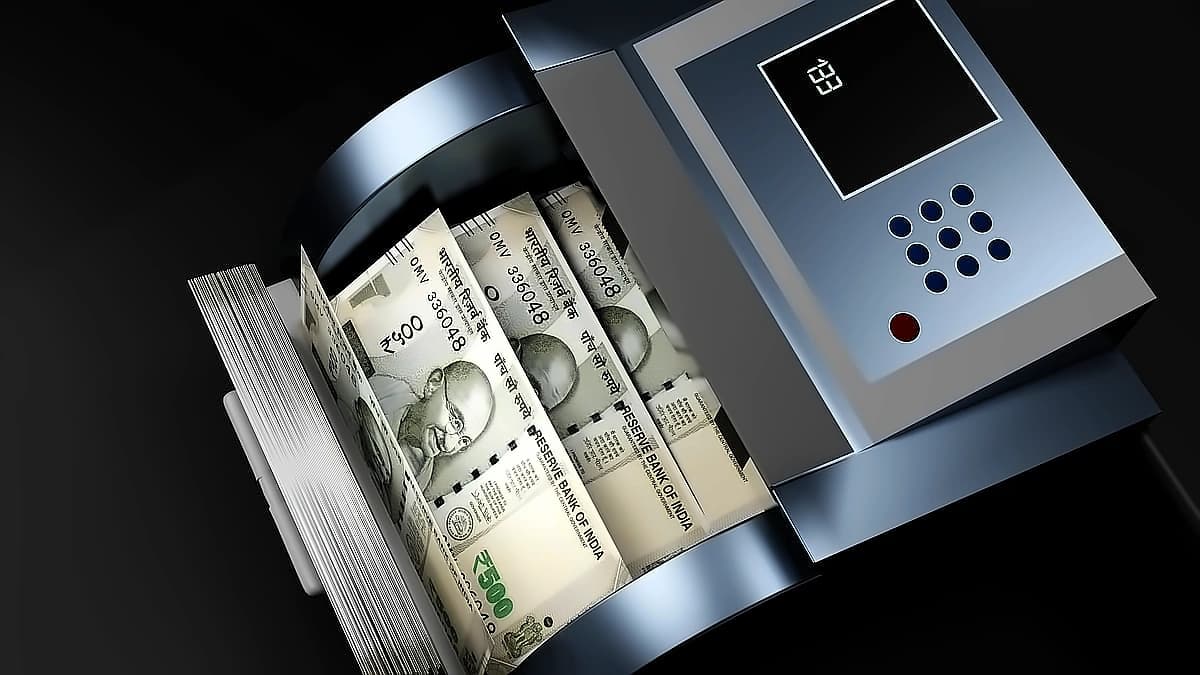
India's fiscal arithmetic is under severe strain. Elevated crude oil prices, averaging between $80-90 per barrel, threaten to add Rs 50,000-70,000 crore to the fertiliser subsidy bill alone. That's not all. The government faces a potential revenue shortfall of around Rs 1.3 lakh crore from special additional excise duty cuts. Put together, these oil-related pressures could widen the fiscal deficit by 0.3-0.4% of GDP.
This is where disinvestment comes in—not as a luxury, but as a necessity. The Finance Ministry is trying to lower the fiscal deficit to 4.3% of GDP while sustaining capital expenditure and welfare spending. With food, fertiliser, and fuel subsidies politically difficult to compress, and tax receipts vulnerable to growth slowdowns, selling stakes in state-owned companies looks like the path of least resistance. The Rs 80,000 crore target for FY27—a 135% jump over the previous year's revised estimate—isn't just a number; it's a fiscal lifeline.
LIC and Hindustan Zinc: The Chosen Ones
Why LIC and Hindustan Zinc? The answer lies in a mix of regulatory deadlines, market liquidity, and execution certainty.
LIC is the crown jewel. The government still holds 96.5% of India's largest insurer after its 2022 listing.
Even a 1% sale could raise several thousand crore rupees. The insurer's recent performance supports this narrative: Q4 FY26 net profit jumped 23% to Rs 23,467 crore, while the Value of New Business margin improved to 21.2%. The solvency ratio stands strong at 2.35, well above the regulatory floor of 1.5. Yet, the stock trades at a P/E of 9.57x, significantly cheaper than the industry average of 22.42x [stock_agent]. The proposed 2% stake sale targets Rs 10,000 crore, but this covers only 5-5.5% of the potential oil-related fiscal pressure of Rs 1.8-2.0 lakh crore.
Hindustan Zinc presents a different calculus. The government holds a 29.54% residual stake in this Vedanta-controlled mining giant. The company is firing on all cylinders—Q4 FY26 revenue surged 43% YoY to Rs 12,692 crore, with net profit up 67.6% to Rs 5,033 crore [stock_agent]. EBITDA margins exceed 56%, and ROE stands at a remarkable 76.94% [stock_agent]. The proposed 2% stake sale aims for Rs 5,000 crore. However, zinc prices face headwinds from global economic uncertainty, and the stock has declined 15% in the past month [stock_agent]. The government's stake sale plans remain speculative, with the company officially denying immediate OFS plans.
Lessons from Recent Successes
Not all disinvestments have struggled. Coal India and NHPC offer a masterclass in execution.
Coal India's 2% stake sale in May 2026 raised Rs 5,542 crore with a 9.6% discount to the market price. The attraction? A dividend yield of 6.15% and a P/E of 8.62x—value metrics that resonated with income-focused investors [stock_agent]. NHPC's 6% stake sale was even more successful, raising Rs 4,357 crore with an 8% discount and getting oversubscribed 3.47 times on day one. The renewable energy theme, strong project pipeline, and reasonable valuation (P/E 18.94x) drove institutional demand [stock_agent].
The lessons are clear: pricing matters (8-10% discounts work), sector themes help (renewables, dividends), and strong fundamentals are non-negotiable. For LIC and Hindustan Zinc, this means deeper discounts may be needed given current market volatility, and the growth story must be compelling enough to offset commodity or sector-specific risks.
The IDBI Bank Conundrum
IDBI Bank represents the strategic disinvestment challenge.
Fairfax Financial and Emirates NBD were the primary bidders, but their offers of Rs 40,000-45,000 crore didn't meet the undisclosed reserve price.
The government is now exploring ways to revive the process, including accepting below-reserve bids under certain tendering provisions. A 20% reserve price cut is being examined, which would bring expectations closer to the Rs 40,000-45,000 crore bid range. This isn't just about valuation—it's about completing a landmark privatization that has been in the works since 2021.
IDBI Bank's fundamentals have improved dramatically. Gross NPA ratio dropped to 2.57% in December 2025 from 3.57% a year earlier, while net NPAs remained static at 0.18%. Capital adequacy rose to 24.63%. Full-year FY26 net profit jumped 26.59% to Rs 9,513 crore. The RBI has completed 'fit and proper' assessments for lead bidders, removing a major regulatory bottleneck. Limiting the process to existing participants avoids restarting the lengthy approval cycle, but it also means negotiating with buyers who have already shown their price ceiling.
Market Headwinds: Foreign Outflows and Mega IPOs
The market environment has turned hostile.
This represents the lowest level of cumulative net foreign investment in Indian equities in 12 years. When foreign capital exits, domestic institutions must absorb larger portions of PSU offerings, potentially at lower valuations.
Adding to the pressure is the mega IPO pipeline. Jio Platforms aims to raise $4 billion (Rs 37,700 crore) at a $137 billion valuation, while the National Stock Exchange plans to raise Rs 30,000 crore. These offerings will compete for the same pool of institutional and retail investors, creating capital allocation constraints. The Nifty 50 has faced significant pressure—falling nearly 3% on March 9, 2026 alone—driven by geopolitical tensions, rising crude prices, and FII selling.
This risk-off environment means the government may need to offer deeper pricing concessions. LIC might require a 10-15% discount to current levels (Rs 366-388/share vs. the current Rs 431), while Hindustan Zinc could need 12-18% discounts (Rs 434-466/share vs. Rs 529.6) [stock_agent]. These concessions would reduce proceeds to Rs 8,500-9,000 crore for LIC and Rs 4,100-4,400 crore for Hindustan Zinc—below the original targets.
The Acceleration Imperative
Q1 FY27 performance provides a reality check. The government raised approximately Rs 15,000 crore from five transactions: Coal India (Rs 5,542 crore), NHPC (Rs 4,357 crore), NLC India (Rs 1,224 crore), Central Bank of India (Rs 2,266 crore), and GIC Re (Rs 3,000 crore). This represents about 18.75% of the Rs 80,000 crore annual target—slightly ahead of the pro-rata quarterly target of 25%, but the easy wins are done.
The remaining Rs 65,000 crore must come from Q2-Q4, requiring an average of Rs 21,667 crore per quarter—a 33% increase over Q1 performance.
Additional bankers are being hired to expand investor coverage and enable parallel processing of multiple transactions.
The pipeline is clear: LIC (Rs 10,000 crore target), Hindustan Zinc (Rs 5,000 crore), IDBI Bank (Rs 40,000-45,000 crore strategic sale), and multiple PSU bank stake sales. But the execution challenge is immense. The government must balance fiscal urgency with market realities, potentially accepting lower proceeds in the short term while maintaining focus on long-term structural reforms that improve PSU attractiveness.
The broader question is whether disinvestment has become a fiscal habit rather than a reform tool. Once asset sales become a routine gap-filling device, the reform case weakens. Budgets set targets, revised estimates cut them, and receipts arrive late or not at all. The Rs 80,000 crore target is ambitious, but the real test is whether the Finance Ministry can break this cycle and use disinvestment to drive genuine governance improvement rather than just balance the books.