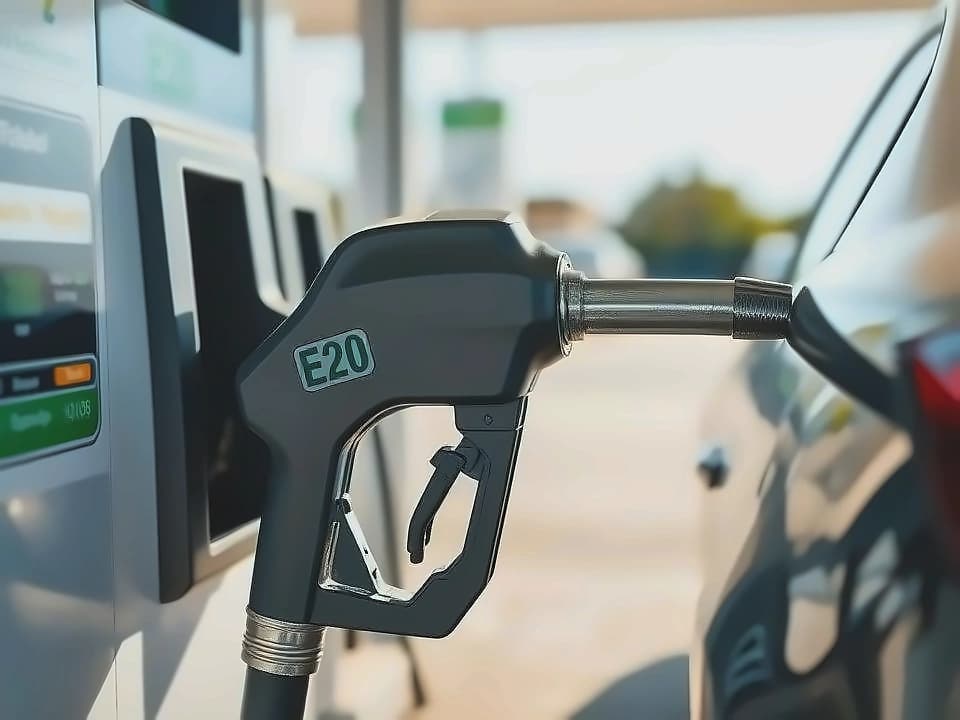
India has achieved nationwide 20% ethanol blending (E20) ahead of its original 2030 target, making it the standard grade of petrol across the country. This milestone positions India alongside countries like Brazil, Thailand, Paraguay, Bolivia and Zimbabwe that have successfully implemented high-level ethanol blending on a national scale. The achievement represents a significant advancement in India's biofuel roadmap, with E20 now becoming the standard petrol available at fuel stations across the country. The blending rate has risen dramatically from 1.5% to 20% over the past decade, while domestic ethanol production capacity has increased nearly fivefold to meet rising fuel demand.
India has completed the nationwide rollout of E20 petrol and is now testing higher ethanol-blended fuels including E25, E27, E30, and eventually E85, signalling the next phase of its biofuel roadmap. Union Petroleum and Natural Gas Minister Hardeep Singh Puri confirmed that E25 petrol would be introduced only after the testing process is completed, with trials, engine testing and development of technical standards currently underway. The government's broader strategy aims to reduce India's heavy dependence on imported crude oil, which accounts for nearly 88% of the country's oil requirements, with officials indicating that any move towards higher ethanol blends will be gradual, with technical evaluations and vehicle compatibility remaining key considerations. Recent developments show E20 fuel is causing controversy and increasing worry among car buyers with lots of social media uproar, as older vehicle owners express concerns about increased wear and tear and potential mileage drops.
The rollout will be gradual due to the large number of vehicles already on Indian roads that were not designed to run on fuels containing more than 20% ethanol. According to recent analysis, vehicles manufactured before April 2023 were primarily designed for E10 fuel, while vehicles produced between April 2023 and March 2025 can run on E20, although experts say their engines are not fully optimised for the higher blend and fuel efficiency may be affected. Vehicles manufactured after April 2025 are considered fully compatible with E20 fuel. This has prompted policymakers to adopt a phased approach before moving to higher ethanol concentrations, with the Automotive Research Association of India (ARAI) study finding faster deterioration of some rubber components in older E10 vehicles, although no major issues were observed in two-wheelers. For cars manufactured before 2023, the issues are bigger since these cars were not ready for this fuel, but some carmakers have tailormade their cars for higher ethanol blend beyond E10, meaning even older car owners might not have to worry.
Industry experts warn that introducing E25 without adequate preparation could raise several concerns for vehicle owners. Higher ethanol concentrations may have greater impact on components such as rubber hoses, seals, O-rings, fuel pumps and certain plastic parts, particularly in older vehicles. Vehicles not engineered for higher ethanol blends may require more frequent inspection of fuel systems, replacement of specific components and additional maintenance, potentially increasing ownership costs. For now, E20 is here to stay and higher blends are sometime away, while blends like E25 or E30 would require substantial engine changes, making it impossible for current cars to run on them. Cars bought now have no issues running on E20 fuel, however, a lower fuel efficiency and a drop in fuel economy are still expected. Several experts argue that consumers should be offered multiple fuel options instead of a single mandatory ethanol blend, with similar multi-grade fuel systems already existing in several countries.
Brazil is widely regarded as the global leader in ethanol fuel, with the country no longer selling pure petrol at regular filling stations under its Fuel of the Future law. The mandatory petrol blend has been raised to E30, with provisions to increase it to E35 in the future, while more than 85% of new light vehicles sold in Brazil are flex-fuel models that can run on any mixture of petrol and ethanol, including 100% ethanol (E100). The United States follows a different approach under its Renewable Fuel Standard (RFS), with most petrol containing E10, E15 increasingly available for newer vehicles, and an extensive E85 network particularly in the Midwest. Flex-fuel vehicles (FFVs) are increasingly being viewed as a long-term solution for India's ethanol blending programme, with several automobile manufacturers developing FFVs. These vehicles are capable of automatically adjusting to different ethanol concentrations, including E20, E25, E30 and E85, offering greater flexibility than conventional vehicles. Providing consumers with greater fuel choices and appropriate price incentives, similar to Brazil's successful ethanol model, will be crucial for the long-term success of higher ethanol blending.
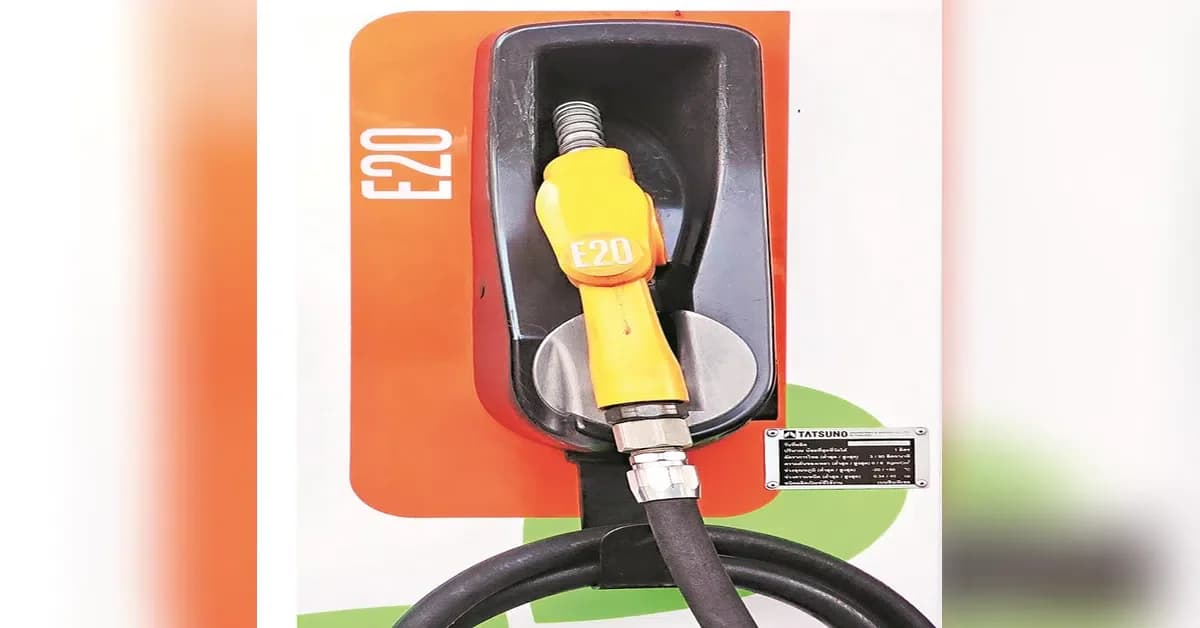
India's ethanol-blending programme serves important goals such as improving energy security and reducing oil imports, but its implementation has imposed unnecessary costs on consumers, according to Business Standard analysis. The policy faces criticism over its design approach, with evidence suggesting that E20 does not cause widespread engine damage but can reduce fuel efficiency and accelerate wear in older vehicles that were not designed for higher ethanol blends. While E20 was implemented much before its original 2030 target, an even higher blend for now will require a drastic change. The government views ethanol blending as an important tool to reduce crude oil imports, lower the country's import bill, save foreign exchange, support farmers through higher demand for feedstock and reduce emissions. Achieving E20 nationwide has required substantial investment in ethanol production, fuel distribution infrastructure and agricultural supply chains, placing India among a small group of countries that have successfully implemented high-level ethanol blending on a national scale. Brazil's gradual approach offers India lessons in avoiding rapid transitions that could harm the automobile industry and vehicle owners.