India must fast-track its indigenous loyal wingman programme and operationalise Ghatak UCAVs by 2030 to prepare the Indian Air Force for next-generation robotic warfare, according to Air Marshal Ashutosh Dixit, Chief of Integrated Defence Staff. Speaking at the Kalam & Kavach 3.0 seminar, Air Marshal Dixit emphasised that this represents a very high-priority target for the country's defence capabilities. The initiative aims to keep pace with loyal wingman programmes in countries such as the United States and Australia, as reported by Business Standard. However, Air Chief Marshal Amar Preet Singh has delivered a paradigm-shifting assessment at the CAPSS-IMR Joint Seminar in Delhi, challenging the conventional obsession with "low-cost drones versus high-cost defense" and asserting that counter-strategy must prioritise the value of the target asset rather than the cheap price of an incoming weapon.
The indigenous Ghatak stealth UCAV programme, currently under development by the Defence Research and Development Organisation (DRDO), must be accelerated with far greater urgency, Air Marshal Dixit stated. Based on a flying-wing configuration, Ghatak is designed for low radar cross-section and internal weapon carriage. Once operational, Ghatak could undertake deep-strike missions, penetrating heavily defended airspace to hit high-value targets without placing pilots at risk. The programme received a significant boost in March when the Defence Acquisition Council granted Acceptance of Necessity for the procurement of 60 Ghatak UCAVs.
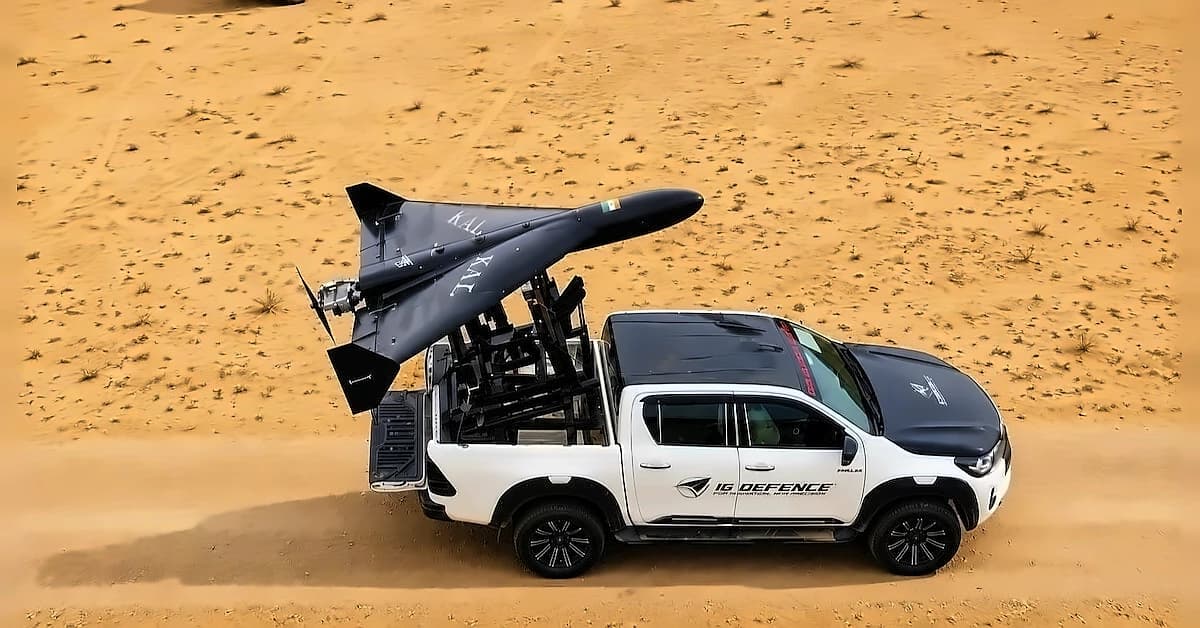
India's AI-powered autonomous aircraft platform Kaal Bhairava is set to enter Europe for the first time under Flying Wedge Defence & Aerospace's global expansion initiative called "Operation 777". According to reports, Bengaluru-based Flying Wedge Defence & Aerospace (FWDA) has partnered with Portugal-based SKETCHPIXEL LDA to establish its first overseas manufacturing facility in Portugal, a NATO member state. The platform features a reported range of around 3,000 km and endurance of over 30 hours, with AI-enabled target recognition, encrypted communication systems and swarm coordination capabilities designed for long-duration autonomous operations. Under the partnership, SKETCHPIXEL will contribute simulation technologies, AI integration systems, communication technologies and interoperability capabilities, while FWDA will retain ownership of the platform's core autonomous systems and airframe design.
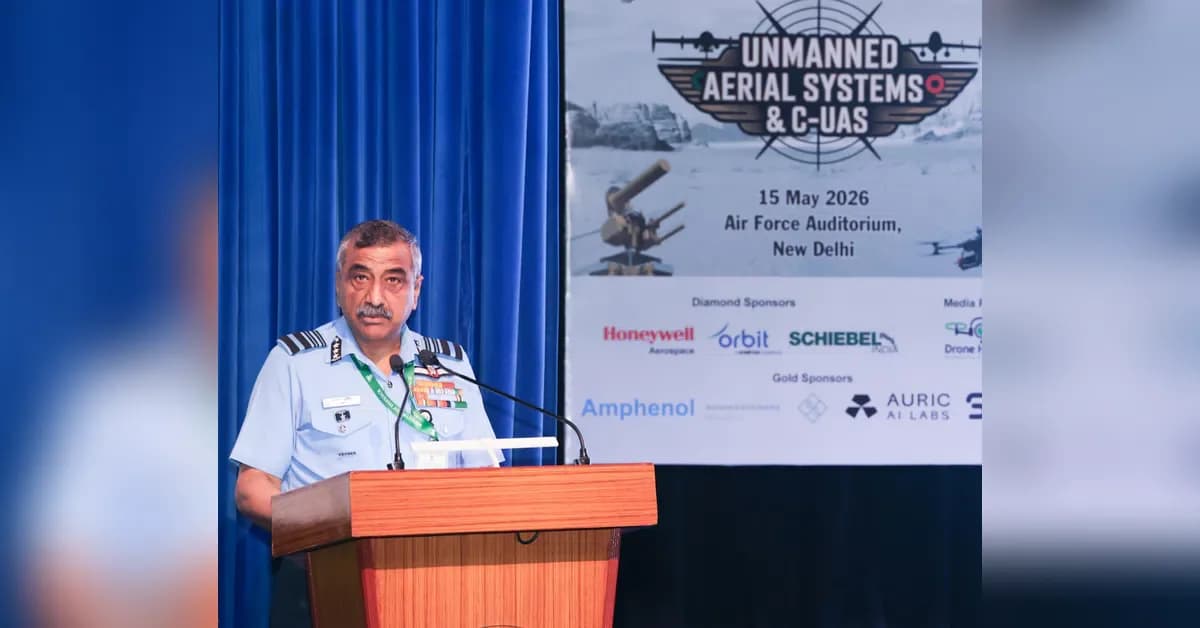
Air Chief Marshal Amar Preet Singh's assessment at the CAPSS-IMR Joint Seminar in Delhi has fundamentally challenged conventional thinking about modern aerial warfare. He firmly rejected the notion of an entirely unmanned future, stressing that global powerhouses continue investing heavily in 6th-generation manned fighter jets due to the severe vulnerability of heavy-payload unmanned systems in high-threat environments. The IAF Chief emphasised the critical importance of absolute airspace coordination and "total domain awareness" to prevent catastrophic friendly fire, highlighting that counter-strategy must prioritise the value of the target asset rather than the cheap price of incoming weapons. This vision aligns with India's indigenous drone development programmes while maintaining the central role of manned aircraft in future warfare concepts.
According to Air Marshal Dixit's presentation at the Kalam & Kavach 3.0 seminar, the Indian Air Force's future operational concepts could involve indigenous Tejas combat aircraft coordinating in real time with multiple Ghatak UCAVs, each carrying different mission payloads ranging from electronic warfare systems and targeting sensors to precision munitions. The pilots would be able to command these UCAVs through their helmet-mounted control displays and execute specific tasks without putting additional personnel at risk. Air Marshal Dixit emphasised the critical importance of doctrine development, stating 'The hardware is only as good as the doctrine built around it'. This concept represents manned-unmanned teaming (MUM-T), where conventional fighter jets pair with autonomous systems for enhanced operational capabilities, while the IAF Chief's vision ensures that manned aircraft remain central to India's future defence strategy.