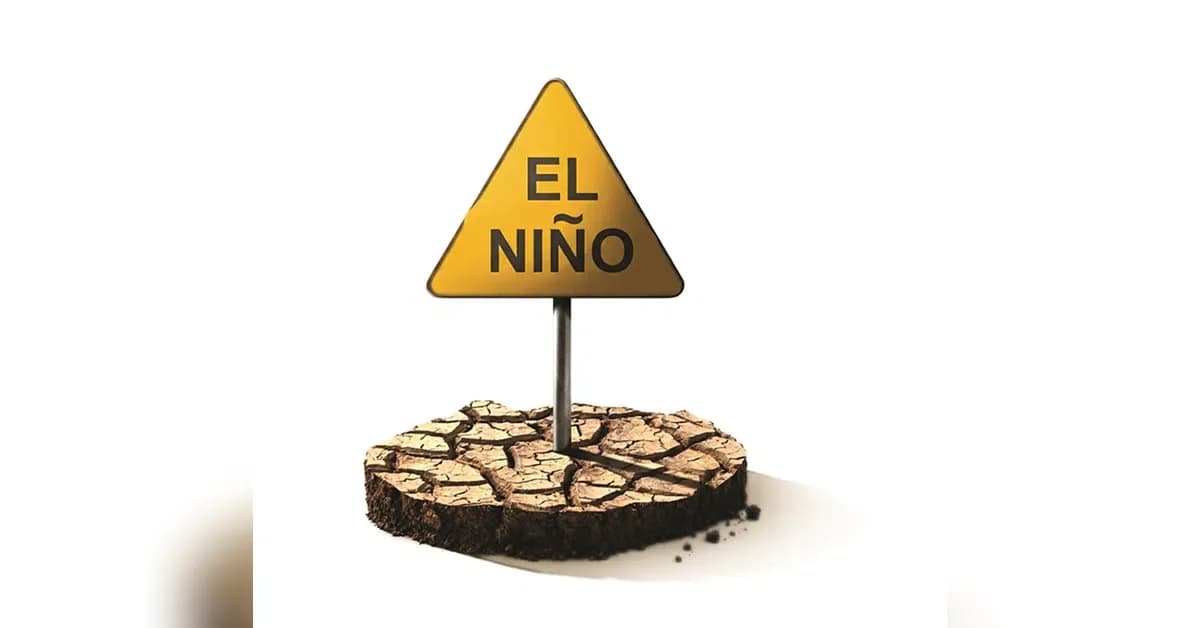
India is facing mounting concerns about El Nino's adverse impact on agriculture this year, with the India Meteorological Department forecasting an El Nino-weakened monsoon for 2026 that could bring the lowest rainfall in 11 years. According to the Foundation of All India Farmer Associations (FAIFA), climate variability and changing weather patterns are increasing pressure on India's agricultural systems, affecting productivity, water availability and farmer resilience. The report emphasizes that technology-led interventions such as AI, AgriStack, remote sensing and data-driven advisories have become important enablers of efficient and climate-smart farming practices. FAIFA President P S Murli Babu has suggested to farmers that they make small temporary ponds, diversify crop patterns and build rainwater-harvesting systems to recharge groundwater to meet the El Nino challenge. Many experts argue that regenerative agriculture can improve soil organic carbon, enhance water-retention capacity and reduce dependence on external inputs over time, with healthier soils better able to withstand droughts and irregular rainfall patterns.
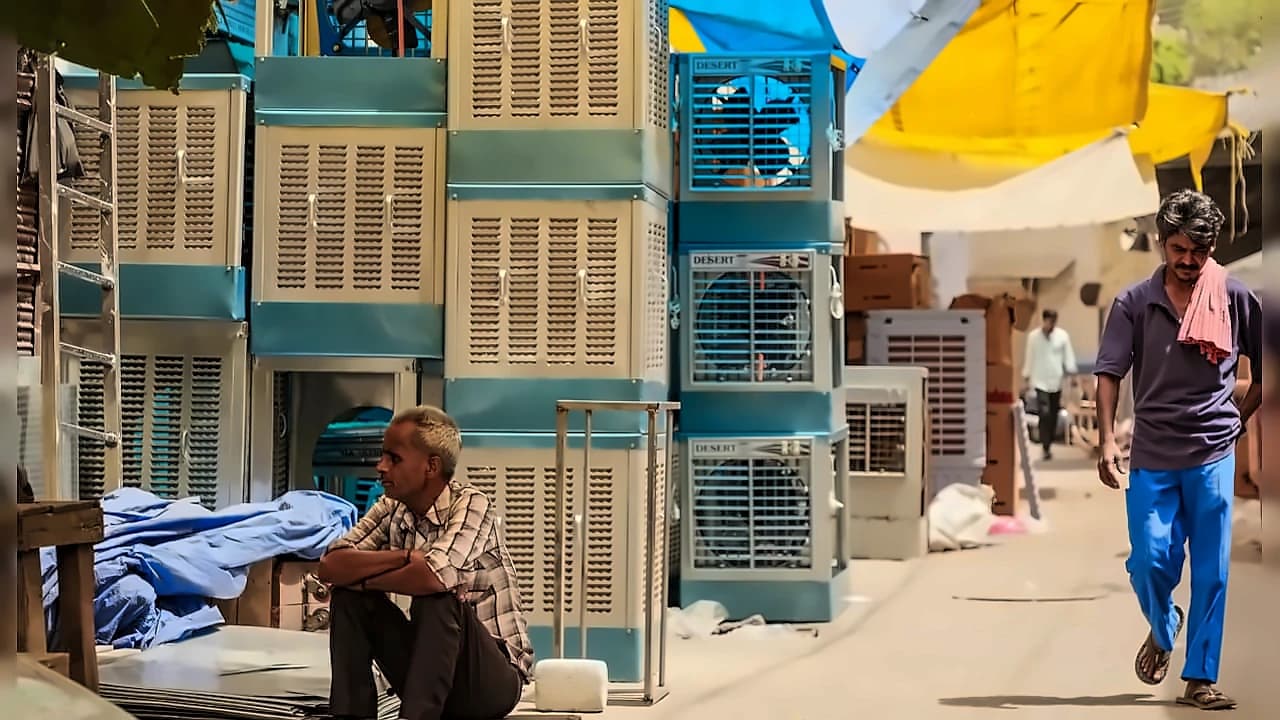
India is experiencing an unprecedented climate crisis with temperatures consistently crossing 45°C to 48°C, according to the India Meteorological Department (IMD). The crisis is characterized by rising night temperatures, urban heat islands, and productivity losses that severely threaten public health, food security, and the livelihoods of poor laborers. The IMD has issued warnings for severe and prolonged heat-wave across large parts of northern and central India for the next 10 days, with temperatures expected to stay well above average for this period. This represents a significant escalation from previous heatwave conditions, with the latest data showing temperatures reaching critical levels that pose immediate threats to human health and economic stability.
India's extreme heatwaves are emerging as a significant economic threat, with strong El Niño-linked heat conditions potentially shaving up to 2.5% off India's GDP in 2026, according to Dr Vishwas Chitale from the Council on Energy, Environment and Water (CEEW). The economic losses are becoming structural rather than temporary, with heat-related productivity loss potentially adding up to 4.5% of India's GDP by the end of this decade, representing ₹150-250 billion in losses. The International Labour Organisation estimates that India lost 181 billion potential labour hours in 2023 due to heat exposure, resulting in ₹141 billion in income losses, including over ₹71.9 billion in agriculture. According to the 2025 Lancet Countdown on Health and Climate Change, India lost 247 billion potential labour hours in 2024 due to heat exposure, marking a 124% increase compared to 1990-1999 levels. A 2025 multi-city urban heat analysis shows that heatwave conditions are associated with nearly 15% higher daily mortality, contributing to over 1,100 excess deaths annually in urban centres, with the burden concentrated among outdoor workers, informal labourers and low-income populations.
Despite growing climate risks, accessing climate finance remains prohibitively expensive for developing economies. An October 2025 report by Oxfam and the CARE Climate Justice Centre found that for every $5 developing nations receive in climate finance, they pay back $7 in loan repayments. Nearly two-thirds (65%) of climate finance is delivered as loans, often at standard interest rates without concessions. In 2022 alone, developing countries received $62 billion in climate loans but face repayments of up to $88 billion, creating a 42% profit for creditors. Rich countries claim to have mobilised $116 billion in climate finance for 2022, but the true value is only around $28-35 billion, less than a third of the pledged amount.
To combat El Nino's impact on agriculture, India must adopt a two-pronged approach: reducing dependence on chemical inputs and using digital tools to support farmers, according to the Foundation of All India Farmer Associations (FAIFA). The report states that India requires multiple transitions to achieve climate-resilient farming, including reducing high dependence on chemical inputs, rebuilding soil health, diversifying cropping systems, improving water stewardship and expanding nature-based and sustainable farming pathways. The report advocates strengthening crop advisory systems, using digital public infrastructure to deliver context-specific farmer support, and scaling precision irrigation and solar energy to meet climate goals. FAIFA President P S Murli Babu noted that resilience is building in Indian agriculture against natural vagaries as allied sectors such as livestock, fisheries and agro-processing are becoming increasingly important in securing rural incomes. The report emphasizes that long-term agricultural resilience will depend on balancing productivity growth with sustainability, resource efficiency, environmental stewardship and farmer-centric policy.
As temperatures reach critical levels, urgent policy interventions are needed to protect vulnerable populations. Around 13.3 million AC units were sold in India in 2024, generating USD 7.5 billion in revenue, with sales projected to rise to 15.4 million units in 2025. However, AC ownership in India remains extremely low with national penetration averaging only around 5%, rising to about 13% in urban areas and barely 1% in rural India. To address the crisis, experts recommend mandating solar-reflective white paints, green roofs, and traditional insulation materials in public housing to lower indoor temperatures by 3°C to 5°C. Enforcing a strict 'No-Work' window for outdoor workers between 12:00 PM and 4:00 PM during heat waves, backed by Direct Benefit Transfers (DBT) to prevent wage loss, and setting up air-conditioned public shelters and well-ventilated community centers as emergency cooling spaces. The 16th Finance Commission has recommended classifying heatwaves as a national disaster, which could unlock nearly ₹40,000 crore from mitigation funds for states during 2026-31. India must treat extreme heat not as a temporary weather anomaly, but as a core developmental issue by integrating climate adaptation into urban planning, labor safety nets, and macroeconomic policy.