According to reports from NDTV Profit, Zerodha founder Nithin Kamath has highlighted the stark inequality in India's ability to cope with rising temperatures. In a post on X, Kamath argued that rising temperatures are exposing one of India's deepest divides: the unequal ability to escape the heat. He noted that while some Indians may experience higher electricity bills and a few extra hours indoors, others must work through 45-degree temperatures because missing a day's work isn't an option. Kamath emphasized that India has been consistently warming up decade after decade, and this is a one-way journey unless humanity makes a dramatic course correction. He warned that the burden of rising temperatures will fall disproportionately on lower-income Indians because much of the country's workforce remains employed in outdoor and informal occupations.
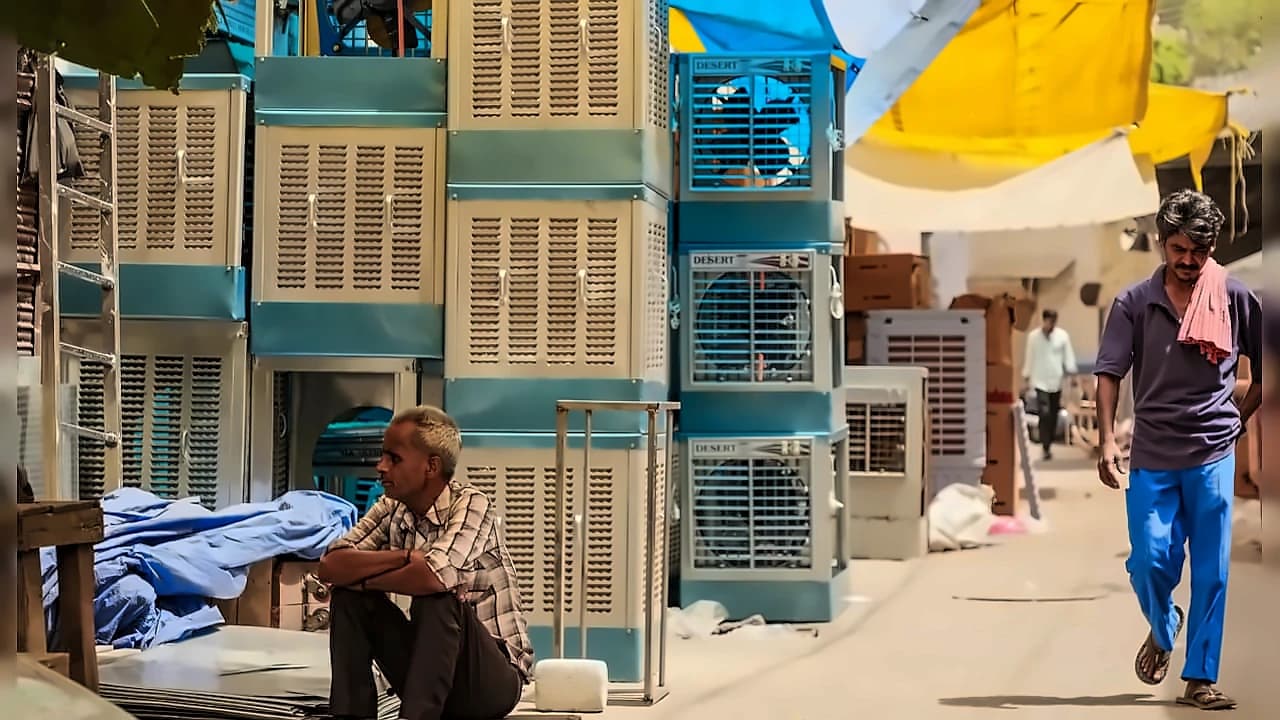
As reported by NDTV Profit, Kamath highlighted that a large share of India's workforce remains employed in agriculture, construction, delivery services, gig work and other outdoor occupations where avoiding peak daytime temperatures is often not an option. While India's electrification drive has significantly expanded power access, air conditioners and even air coolers remain concentrated among higher-income households. Kamath described this as the inequality of heat, noting that people with higher incomes can afford air conditioning, work from home and avoid outdoor activity during the hottest parts of the day, while lower-income households often have none of these options. He emphasized that for many Indians, staying indoors when temperatures rise is simply not a luxury they can afford.
According to NDTV Profit, Kamath highlighted the overlap between climate vulnerability and economic vulnerability, noting that more than 40% of Indians continue to work in agriculture even as the sector's share of GDP has steadily declined. Many regions most exposed to heatwaves and climate shocks such as El Niño are also among India's poorest regions. He emphasized that rising temperatures have implications for livelihoods, productivity, health outcomes and regional economic development, making them more than a weather issue. Kamath noted that these are the real Indians who will be most affected by rising temperatures, with many of the regions most exposed to climatic shocks like El Niño and heatwaves being among the poorest regions of northern India.
As reported by NDTV Profit, Kamath highlighted the growing health impacts of rising temperatures, stating that there is still insufficient data to accurately measure the full impact of heatwaves on mortality in India, despite studies and reports highlighting the scale of the problem. He argued that all the heatwave deaths that are in the news are the result of this relentless warming, adding that while several estimates are circulating, the truth is, we still don't have good statistics on how many Indians are losing their lives because of heatwaves. He warned that the consequences are already visible in the growing number of heatwave-related deaths, emphasizing that climate change is not just an environmental issue but a public health crisis affecting the most vulnerable populations.
As reported by NDTV Profit, Kamath suggested practical measures such as planting native tree species including neem, jamun, amla and moringa to help mitigate heat stress. He encouraged people with available space to plant such trees, noting that such trees have deeper roots and are more resilient. However, he acknowledged that individual efforts can only go so far, arguing that climate change is not an Indian problem but a global problem. He warned against viewing local efforts as a complete solution, stating that rising temperatures are a serious challenge that don't have easy explanations, and they definitely don't have easy solutions. Kamath emphasized that this is a systemic crisis. Individual actions help, but they are not enough. We need collective action, not just at a country level, but at a global level.