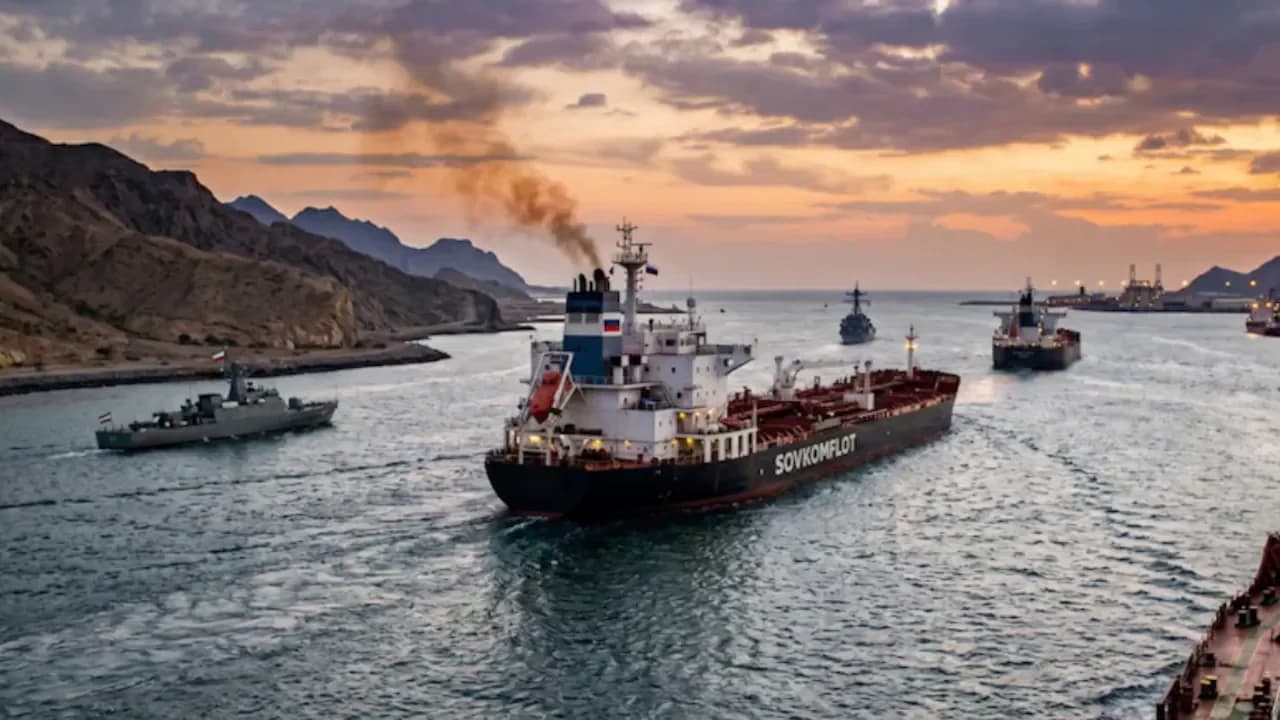
India has ordered real-time tracking of all Indian seafarers operating in the Strait of Hormuz region following the latest attack on merchant vessels MT Al Bahiyah and MT Mombasa. The attacks resulted in one Indian seafarer killed and nine others injured, with two in critical condition. Of the 46 crew members on board the two vessels, 30 were Indians. Union Minister of Ports, Shipping and Waterways Sarbananda Sonowal announced the enhanced response, stating "There can be no compromise whatsoever on the safety and security of Indian seafarers." The minister emphasized that these attacks targeted Indian seafarers who ensure the operation of global supply chains, highlighting their critical role in international commerce. The latest strike has highlighted the growing risks faced by Indian maritime workers amid escalating tensions in West Asia, with MEA spokesperson Randhir Jaiswal noting that Indian seafarers have faced among the highest fatalities among foreign crews affected by attacks on commercial shipping in the region.
India's maritime regulator has now directed shipping companies to stop deploying Indian seafarers on vessels transiting the Strait of Hormuz until further orders. As per the Directorate General of Maritime Administration (DGMA), through DGMA Circular No. 36 of 2026, Ship Owners, Ship Managers and RPSL Companies have been instructed to avoid deploying Indian seafarers on vessels undertaking voyages through the Strait of Hormuz until further orders. The circular cited recent attacks on five merchant vessels, Mombasa B, Al Bahyah, GFS Galaxy, MT Wedyan and Al Rekayyat, noting that these incidents "over the past few days have increased the risks faced by seafarers and commercial ships operating in the conflict-affected area significantly." The DGMA stated that in view of the heightened security situation in the Persian Gulf region, including incidents resulting in casualties among Indian seafarers and continuing attacks on merchant vessels during the ongoing conflict, it considers "necessary to adopt enhanced precautionary measures to safeguard the interests of Indian seafarers serving on board ships operating in the region."
The shipping regulator has mandated heightened security protocols for vessels operating in the Persian Gulf region. As reported by Business Standard, masters of vessels operating in the Persian Gulf, the Strait of Hormuz and adjoining waters have been directed to maintain a heightened level of security vigilance. These vessels must continuously monitor navigational warnings, security advisories and updates issued by competent authorities, and implement all applicable ship security measures and ship security plans (SSPs). Shipowners, vessel managers and Recruitment and Placement Service Licence (RPSL) agencies employing Indian seafarers in the region have been asked to furnish compliance reports and confirmation that no Indian seafarer is being compelled to sail without adequate information, protection and support. The latest strike has emphasized the need for these measures, as the Islamic Revolutionary Guard Corps (IRGC) later claimed responsibility for targeting the vessels, saying it had targeted two vessels that allegedly ignored maritime warnings, a claim rejected by the UAE and criticized by India.
The government has appointed dedicated liaison officers for every affected Indian seafarer in the region. Each liaison officer serves as the single point of contact for families, coordinating medical updates, travel documentation, family assistance, repatriation, Seafarers Welfare Fund support, outstanding wages, contractual entitlements and other compensations. The ministry has also established a 24X7 helpline with international toll-free number +1-888-988-0256 and domestic toll-free number 1800-889-7768. The helpline can be accessed via WhatsApp at 91 8655856830 or by email to enavik.24x7@gov.in. India has also established a 24X7 helpline with international toll-free number +1-888-988-0256 and domestic toll-free number 1800-889-7768. Union Minister Sonowal has instructed officials to work closely with Indian missions in Iran, Oman and the United Arab Emirates, along with the Ministry of External Affairs, the Indian Navy and other maritime agencies, to obtain verified updates on navigational safety, shipping routes, medical evacuation, repatriation and ongoing investigations.
Following the attack, New Delhi summoned Iran's Deputy Chief of Mission Mohammad Javad Hosseini and conveyed its concerns over the safety of Indian citizens. The government has pressed Tehran to ensure the protection of civilian vessels and seafarers operating in international waters. The Ministry of External Affairs (MEA) has raised the issue with Iran after the Islamic Revolutionary Guard Corps (IRGC) claimed responsibility for the strikes. The MEA said Indian nationals have suffered a significant number of casualties during attacks on commercial shipping routes in the region, with several Indian sailors killed or gone missing in recent incidents involving missile strikes, naval blockades and attacks on merchant vessels. Beyond the safety of its citizens, the stability of the Strait of Hormuz has major economic implications for India. The narrow waterway is one of the world's most important energy routes, carrying approximately 20% of global oil and LNG passing through it. India, one of the world's largest energy consumers, depends heavily on supplies passing through the region, making attacks in the Strait of Hormuz capable of impacting global oil prices and trade through fears of energy crises and surges in crude oil prices.