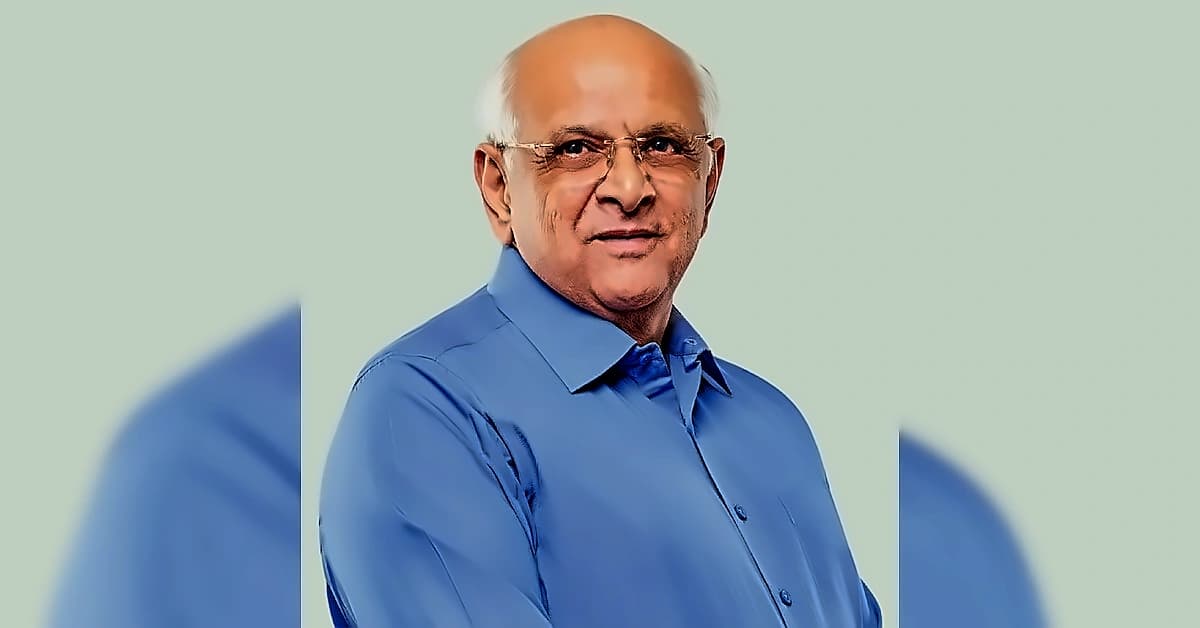
Gujarat Chief Minister Bhupendra Patel has outlined comprehensive plans to transform the state into a $1 trillion economy by 2030. According to reports from Business Standard, the state currently holds a gross state domestic product (GSDP) of ₹27.03 trillion ($318 billion) in 2024-25, representing 8.2% of India's GDP. The state government's strategy centers on developing economic master plans for six regions - North Gujarat, Central Gujarat, South Gujarat (Surat), Saurashtra, Coastal Saurashtra, and Kutch - each designed to match local strengths with development needs. The Gujarat State Integrated Logistics Master Plan (ILMP), officially launched in January, serves as a long-term strategic roadmap to transform the state into India's most efficient and globally competitive logistics hub.
GIFT City has emerged as a leading global hub with over 1,924 registered entities as of May, including global firms like HSBC, Google, and JP Morgan. As reported by Business Standard, the Gujarat Global Capability Centre (GCC) Policy 2025-30 aims to attract 250 GCCs, an investment of more than ₹10,000 crore, and 50,000 jobs, with focus on financial services, fintech, and global in-house centres. The policy offers comprehensive incentives including subsidies on capital expenditure, support on operating expenses, salary reimbursements, interest subvention, support on employee provident fund, and exemption from electricity duty. The state has also introduced a 'choose your incentive' framework allowing industries to customize capital subsidy, interest subsidy, or power tariff reimbursement combinations.
Gujarat's renewable energy capacity stood at 51.5 GW in June, with the state targeting to meet over 63% of its installed capacity from renewables and achieve more than 16% of the country's RE installed capacity. According to Business Standard, under the Integrated Renewable Energy Policy 2025, the state aims to scale up its RE capacity to over 150 GW by 2035 and an ambitious 300 GW by 2047. The Green Hydrogen Policy 2025 targets producing 5 million tonnes per annum of green hydrogen by 2030, with Gujarat earmarking 199,000 hectares specifically for green-hydrogen projects. To support large-scale renewable integration, the state has introduced the Pumped Storage Project Policy 2025, targeting 75 pumped storage projects by 2035 with an estimated investment of ₹75,000 crore.
Ahmedabad has been officially confirmed as the host city for the 2030 Commonwealth Games, with events planned in Ahmedabad, Gandhinagar, Vadodara, and Ekta Nagar. As reported by Business Standard, the state operates seven international airports, while new airports at Dahod and Dwarka have been announced. The expansion of Ahmedabad International Airport is being planned ahead of 2030 to handle increased global traffic. The Sardar Vallabhbhai Patel Sports Enclave in Motera is being expanded into a world-class sports hub, including the addition of multiple new stadiums and temporary venues. The state's urban mobility is being upgraded through metro rail projects to support the Commonwealth Games infrastructure.
The state government has streamlined 3,226 compliances covering both business-centric and citizen-centric processes, with more than 731 provisions decriminalised following an extensive review of state Acts and Rules. According to Business Standard, Gujarat's E-Sarkar initiatives focus on end-to-end digitisation of government services, approvals, and compliance processes. The state has introduced MSME incentives up to 45% of their investment, with MSMEs not defined according to the latest Union Ministry of MSME definition. A road map for PSU rationalisation is being prepared, with implementation expected to begin in FY27, focusing on disinvesting non-strategic and loss-making PSUs while retaining strategic entities.