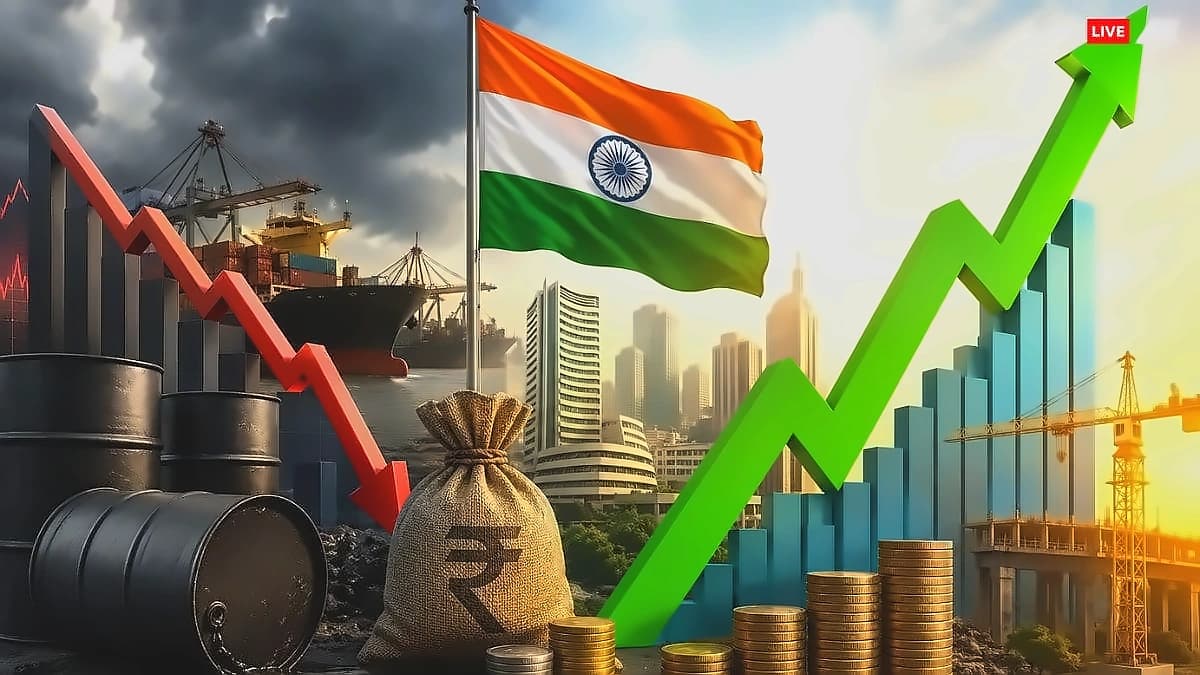
Five major Indian states have committed to contributing over $5 trillion to the national economy by 2035-36, according to projections by the International Monetary Fund (IMF). Uttar Pradesh, Gujarat, and Maharashtra are expected to deliver their combined economies worth over $3 trillion by 2030-31, representing a two-year delay from the IMF's national target of 2028-29. Karnataka is projected to reach $1 trillion by 2032-33, followed by Tamil Nadu targeting $1.5 trillion by 2035-36. The new Tamil Nadu government has set this ambitious goal, while UP has targeted reaching $1 trillion by 2029-30, Maharashtra and Gujarat by 2030, and Karnataka by 2032. As per Business Standard, the delay stems from external developments and the rupee's depreciation against the dollar.

The rupee has depreciated at a CAGR of 2.38% during FY23-26, significantly impacting state economic projections. According to reports from Business Standard, if this depreciation trend continues, UP's economy would be $0.44 trillion this financial year and $0.57 trillion in 2029-30, roughly half of the projected $1 trillion target. However, if the rupee remains at 88.31 against the dollar from 2026-27 onwards, UP's economy would reach $0.63 trillion in 2029-30. The same applies to other states, with Tamil Nadu's economy projected at $0.96 trillion by 2035-36 if it maintains an 11.4% CAGR, while UP would reach $1.22 trillion by 2035-36 if the rupee remains at 88.31. The reality check reveals that achieving these targets will be challenging given the current rupee depreciation trend.
UP has assumed its economy will grow to ₹39.8 trillion in FY27 against revised projections of ₹31.1 trillion in the previous year, according to Business Standard reports. The state recorded a compound annual growth rate (CAGR) of 11.7% over five years until FY27, which would make UP a ₹55.5 trillion economy in 2029-30. Similarly, Tamil Nadu has set a goal to hit $1.5 trillion by 2035 with a projected CAGR of 11.4% from 2022-23 to 2026-27. However, by 2035-36, none of the other four economies would reach $1 trillion if they maintain their trend CAGR, assuming a rupee depreciation of 2.38% annually or even at 88.31 against the dollar. The reality shows that achieving these projections will require careful balance between currency stability and export competitiveness.
The data reveals that strengthening the rupee and increasing growth would be key to enlarging the economy's size, as reported by Business Standard. However, artificially strengthening the rupee would create adverse conditions for exports. The analysis suggests that governments should focus on creating conditions conducive to foreign investment to bring in more dollars and support the ambitious state economic targets. The reality shows that achieving these projections will require careful balance between currency stability and export competitiveness, with the current rupee depreciation trend posing significant challenges to state-level economic goals.