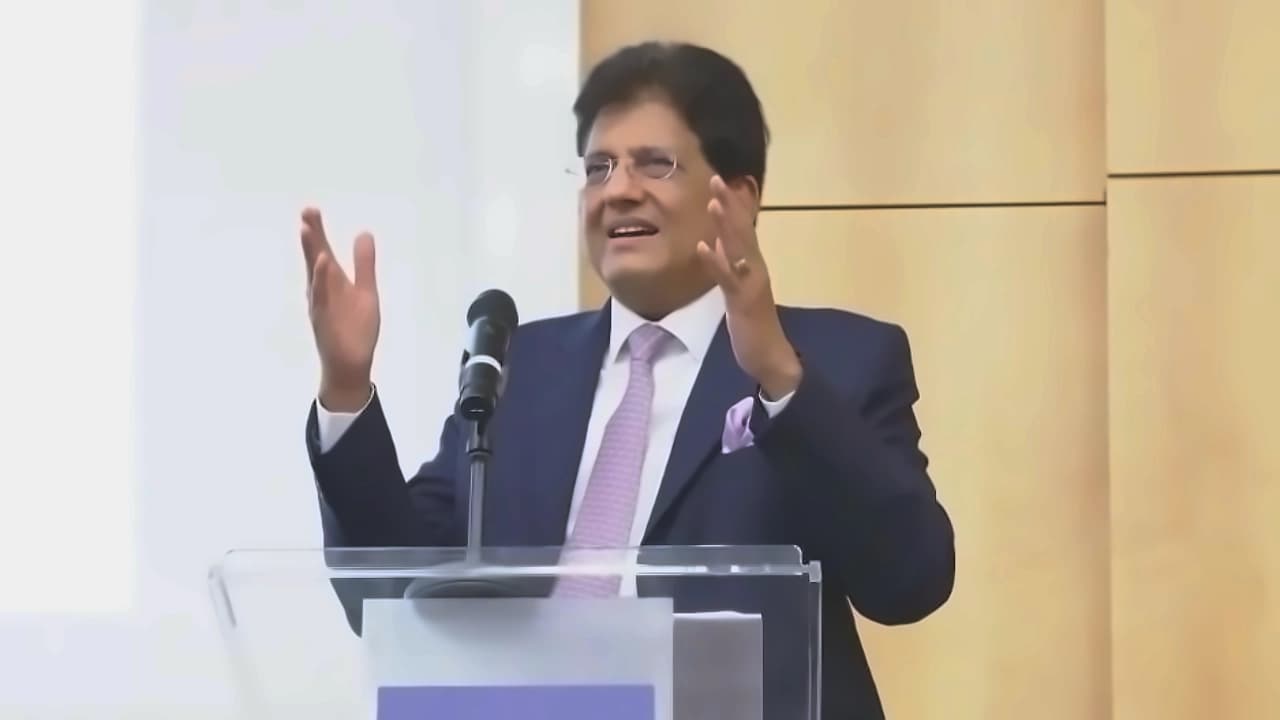
Commerce and Industry Minister Piyush Goyal chaired a comprehensive meeting with senior officials from various ministries and captains of Indian industry to strategize on boosting domestic manufacturing capabilities. As reported by X, Goyal emphasized that the government is committed to working closely with the industry to expand manufacturing capacities, enhance quality standards and strengthen global competitiveness for building an Aatmanirbhar Bharat. The minister stated that the meeting was aimed at drawing up an action plan to strengthen the country's manufacturing sector, with officials from key ministries and leading industry associations participating in the strategic discussions.
The meeting comes against the backdrop of the Centre's ambitious plan to expand India from a $3.7 trillion economy to a $30-35 trillion economy by 2047, in which manufacturing is expected to play a central role. According to the latest official statement, manufacturing's share in GDP is targeted to rise to at least 25 per cent from the current level of 16 to 17 per cent. India's manufacturing strategy has increasingly focused on the development of integrated manufacturing hubs - spatial ecosystems that combine physical infrastructure, regulatory support, common facilities, and connectivity. These hubs are designed to support scale, reduce transaction costs, and anchor long-term manufacturing activity, strengthening India's position within domestic and global production networks.
Highlighting recent trade achievements, India's exports registered a 13.59 per cent growth in April 2026, reaching USD 80.80 billion compared to USD 71.13 billion in April 2025, despite global headwinds. As reported by ANI, Goyal said the ministry conducted key review meetings to accelerate "seafood exports, local manufacturing, value addition and employment generation under the SCALE roadmap." The minister also highlighted that the government engaged in "high-level bilateral meetings with Chile, Oman, Netherlands, Maldives, Germany and Egypt to deepen trade, investment and strategic cooperation." These engagements form part of India's broader efforts to strengthen economic ties with key global partners while expanding export opportunities and attracting investments across sectors.
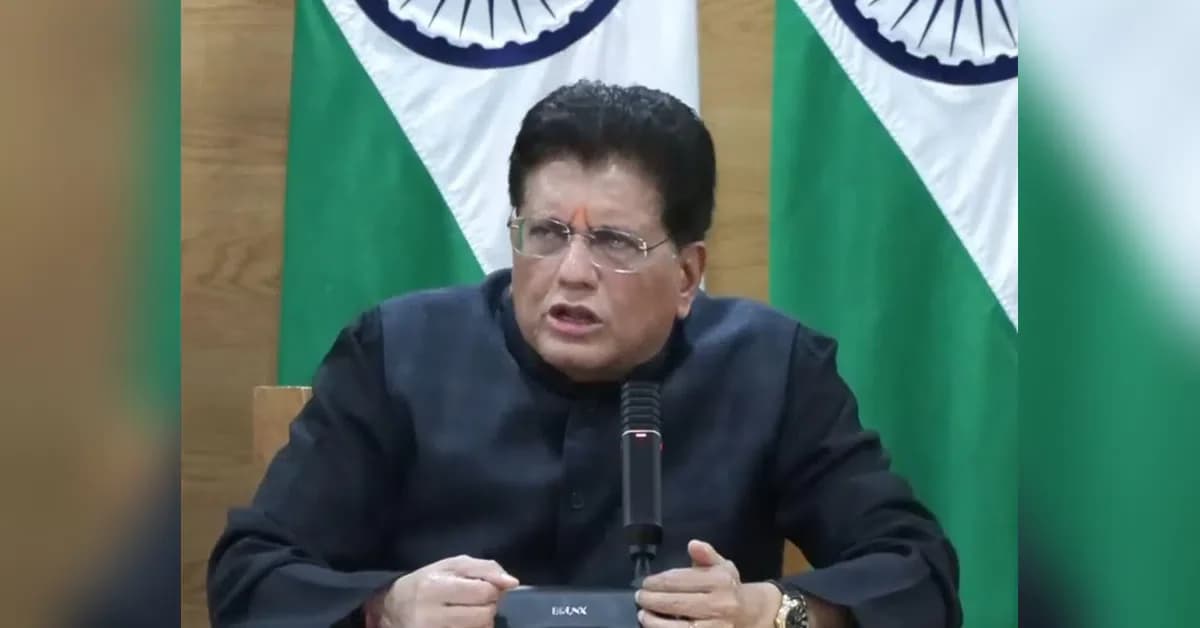
The government's manufacturing policy has shifted to infrastructure-led, integrated hub development to enable scale, reliability, and long-term industrial competitiveness. According to the official statement, the Government's capital expenditure has expanded from ₹2 lakh crore in FY2014-15 to ₹12.2 lakh crore in FY2026-27 in a big push to infrastructure creation. The minister announced that the government released the LEADS Report 2025 and presented the LEAPS Awards 2025 to strengthen "logistics efficiency, PM GatiShakti integration and ease of doing business." The LEADS Report evaluates logistics performance across states and Union Territories, while the LEAPS Awards recognise initiatives aimed at improving logistics efficiency and supply chain infrastructure, aligning with the broader PM GatiShakti programme.
MSMEs, which comprise 7.47 crore enterprises, account for 35.4 per cent of manufacturing output and anchor manufacturing hubs nationwide. This labour-intensive sector plays a key role in generating jobs in the economy and spurring economic growth. The Union Budget for 2026-27 has proposed three chemical parks, seven PM MITRA parks, MSME clusters, and a ₹10,000-crore Biopharma SHAKTI initiative to accelerate the pace of development. The infrastructure approach has undergone a structural transformation, with the focus moving from project-level execution to system-level planning that directly enhances the effectiveness of manufacturing hubs by reducing bottlenecks and improving logistics efficiency.