RBI MPC member Nagesh Kumar has provided detailed analysis of India's 7.8% Q1 GDP growth, calling it "impressive and above expectations" despite significant global disruptions. Speaking to ABP Live, Kumar highlighted that the growth was achieved "in the middle of a West Asia conflict that rattled crude supplies and lingering uncertainty from US tariffs." The economist noted that India is heavily dependent on imported crude at 80% and above, making the 7.8% growth truly impressive given the challenges of crude prices going through the roof and supply disruptions. Kumar emphasized that "there is no time for complacency because the crisis is still one and the West Asia war has not ended," but praised the government's "efficient and all those policymakers in the government really deserve credit for handling the situation so competently."
The 7.8% GDP growth was significantly backed by robust manufacturing growth of 9.2%, which Kumar described as "encouraging because when manufacturing grows well, it also encourages job creation." According to ABP Live, Gross Fixed Capital Formation (GFCF) rate was 34.3% in Q1 FY27 compared to 31.4% in the same quarter of the previous year, representing a massive jump of 2.9%. Kumar noted that "the indications that we are getting from offtake of credit by industry gives some early indication that the private investment cycle may finally be taking off the ground." The economist highlighted that capital goods output has been posting double digit growth in the range of 16-17% for the last four months consecutively, indicating strong momentum in industrial expansion.
Chairman of 15th Finance Commission N K Singh has strongly endorsed India's new GDP data series, calling it a "significant improvement" that captures the country's structural economic changes. Speaking at the 10th CII National School Education Summit, Singh emphasized that the revised 2022-23 base year captures many more data segments and reflects the "tectonic change" in India's economic composition. The Finance Commission chief noted that "the service sector has made an enormous change in India" and the new data series is "in line with international best practices" and "what we have done separately before." Singh explained that countries change their base year to reflect change in realities and the composition of the GDP has undergone a tectonic change, making the new series essential for accurate economic measurement.
World Bank Executive Director Neelkanth Mishra has strongly defended India's latest GDP estimates, calling claims that the 7.8 per cent growth recorded in Q1 2026-27 was inflated due to base revision "ill-educated and egregiously wrong." Speaking on X, Mishra said he was "shocked to see the ill-educated and egregiously wrong claims made by some" who suggested that using the original base would have resulted in much lower growth. The World Bank official emphasized that the new series had not simply changed the base but had 'cleaned up the data' and'significantly improved the methodology'. Mishra noted that the downward revision to the base, which was already known in March, was already acknowledged in an Axis Capital research note published on March 1, when he was with the firm, stating "the new series increased credibility of estimates of real output."
RBI MPC member Nagesh Kumar highlighted the strategic impact of India's new FTAs with the EU, UK, and EFTA, which will provide duty-free access to the entire Europe for the first time. As reported by ABP Live, Kumar explained that "last year, when we were hit by very heavy tariffs by the US, the one thing those tariffs exposed was very high dependence of India's exports on one single market, that is the United States. About 20% of our exports go to the US but within the 20%, labour intensive exports like textiles, garments, footwear and gems and jewellery: 33% of the exports were going to one single country." The new FTAs will "neutralise the advantage that our peers in these sectors had over us" as garments being exported to UK or EU faced before the onset of the FTA, 16% kind of tariffs, while competitors from Bangladesh or Vietnam faced zero tariffs. Kumar expressed optimism that "Indian companies, producers in labour intensive sectors, particularly, as they also have an impact on job creation, will get their act together, scale up their production capacities, enhance their R&D, design capability and quality performance, get more and bigger orders from European companies."
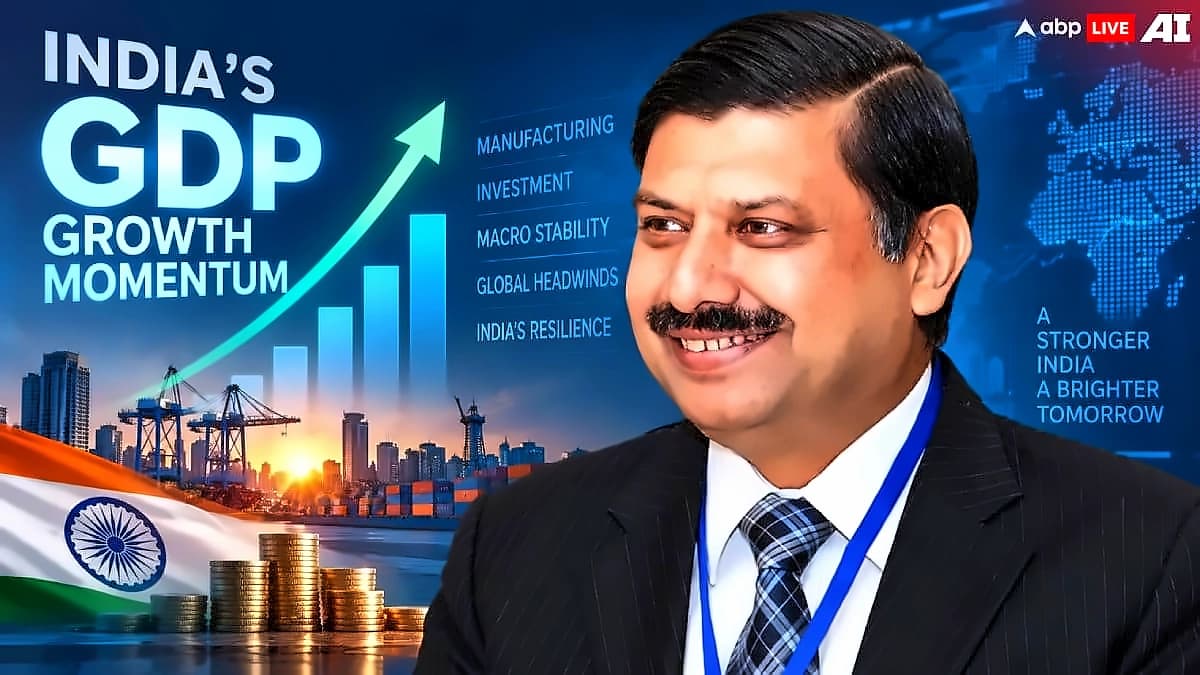
The Japan Credit Rating (JCR) upgraded India's rating from 'BBB+' to 'A-' with a stable outlook on Wednesday, citing 'solid' economic growth, effectiveness of economic policies and improved soundness of the financial system. Chairman N K Singh noted that this 'A' grade upgrade after 38 years represents the 'far-reaching structural reforms' undertaken by the Modi government since 2014 and 'sustained macroeconomic stability'. Singh explained that the credit upgrade represents a moment of celebration and marks a 'moment of change' in India's economic trajectory. The Minister highlighted the development vision of PM Modi and noted that the Centre is now spending more than ₹12 lakh crore annually on infrastructure. According to Business Standard, Goyal emphasized that such infrastructure would make movement of people easier, simplify transportation and improve connectivity, while giving a boost to exports and trade.