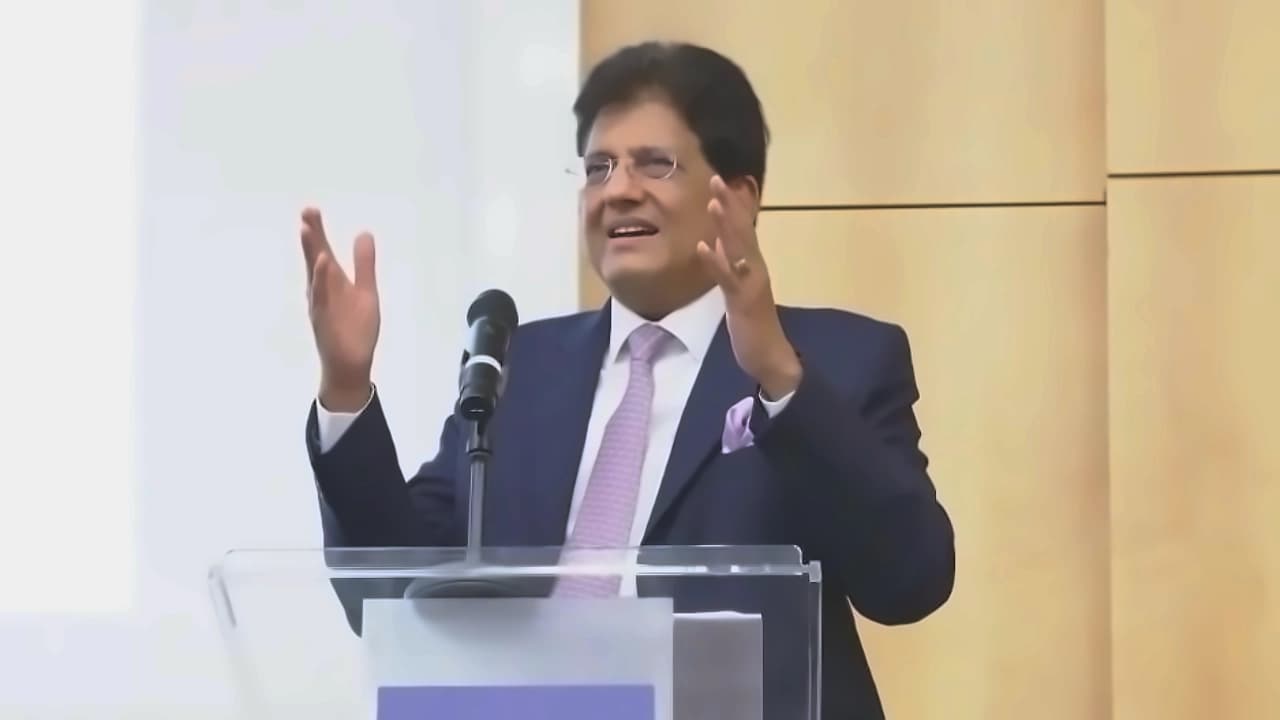
Union Minister of Commerce and Industry Piyush Goyal addressed the ASSOCHAM India Business Reform Summit 2026 in New Delhi on Tuesday, calling for deeper collaboration between industry and government to advance ease of doing business. According to reports from KNN, the Minister emphasized the need to enhance India's competitiveness and accelerate the country's journey towards Viksit Bharat 2047. Goyal stated that the present global situation and geopolitical uncertainties should be viewed as an opportunity for India to strengthen business processes, undertake faster reforms, build greater resilience and strengthen supply chains. The Minister urged businesses to become more actively involved in helping improve government systems and regulatory frameworks, noting that the National Single Window System launched after COVID-19 had not received enough engagement or constructive feedback from the private sector. India and Prime Minister Shri Narendra Modi have never allowed a crisis to go to waste, and Goyal expressed confidence that the country would convert current global risks into opportunities for growth and reform.
Speaking on the evolving global situation and the West Asia crisis, Goyal noted that businesses should remain alert to both opportunities and risks without panicking. As reported by KNN, the Minister expressed confidence that the country would convert current global risks into opportunities for growth and reform. He encouraged citizens to promote Indian travel destinations and support domestic industries, highlighting tourism and domestic consumption as key pillars of India's economic growth strategy. Goyal stressed the importance of adopting smarter operational practices, reducing waste, improving productivity, and investing in energy-efficient technologies. He emphasized that India had successfully overcome unpredictable challenges such as COVID-19 and highlighted the need for smarter and more efficient business practices. The Minister recalled the success of the Ujala LED bulb programme, which significantly reduced energy consumption and led to savings estimated at around one lakh crore rupees annually.
According to the Minister's address, India's exports reached an all-time high of USD 863 billion last year despite global disruptions, with growth recorded in both merchandise and services exports. As reported by KNN, Goyal added that India is targeting exports worth USD 1 trillion in the near term. The Minister highlighted the growth of Global Capability Centres (GCCs), with around 1,800 GCCs currently operating in India, generating nearly 2 million direct jobs and around 10 million indirect jobs. He noted that global companies are increasingly expanding operations in India due to confidence in Indian talent and capabilities, with multinational corporations viewing India as a reliable and strategic global partner due to its skilled, youthful workforce and strong digital infrastructure. Goyal urged exporters to proactively leverage upcoming FTAs by exploring new markets, conducting sampling and trial orders and increasing global engagement even before the agreements formally come into effect.
The Minister highlighted opportunities in emerging sectors such as Artificial Intelligence, cyber security and cloud services. According to KNN, the government is promoting investments in data centres through trusted global partnerships, renewable energy expansion and improved power infrastructure. In a major announcement, cloud services exported from India or Indian data centres to the rest of the world would enjoy 100 percent tax-free status until 2047. Goyal informed that investments in data centres are expected to create economic activity across sectors including real estate, logistics, hospitality, healthcare, education and manufacturing. The government is actively building an investment-friendly ecosystem for data centres and cloud services through low-cost data access, stronger power infrastructure and trusted international partnerships. Goyal emphasized that India should look at emerging technologies, business reforms and global developments as opportunities and urged industry to adopt greater efficiency and reduce waste by learning from global best practices, including Japanese manufacturing systems.
Referring to India's Free Trade Agreements (FTAs), Goyal said agreements covering 38 countries would provide greater market access and investment opportunities for Indian businesses. As reported by KNN, he urged exporters to proactively explore new markets and increase engagement ahead of the agreements becoming operational. The Minister said the government is examining the possibility of creating a single approval mechanism at industrial parks to function as a one-stop system for central and state clearances. He added that around 20 industrial parks are currently under development under the Bhavya initiative, with the proposal emerging from consultations with industry stakeholders seeking faster and simpler regulatory approvals. The government is working toward consolidating operations into integrated single-point service centres in major cities and state capitals. Goyal informed that the Commerce Ministry, which has 482 offices across 216 cities under 46 organisations, is working towards consolidating operations into single-point contact centres in state capitals and major cities.
Goyal urged businesses to focus on quality, productivity, localisation, innovation and value-added exports in sectors such as automobiles, electronics, consumer goods and agro-based products. According to KNN, he called on industry to provide reform suggestions and work closely with the government to improve business processes and operational efficiency. The Minister emphasized that India should convert global uncertainties and geopolitical challenges into opportunities for faster reforms, resilient supply chains and higher exports. He stressed the need for India to move beyond exporting raw materials and instead focus on value-added manufacturing in sectors such as automobiles, electronics, consumer goods, agro-processing, and auto components. "Indian products should reach global shelves as finished products rather than merely as raw materials," Goyal said, adding that higher levels of localisation, innovation, and quality manufacturing would strengthen India's global competitiveness. Goyal urged all stakeholders to work together towards making the Amrit Kaal journey towards Viksit Bharat more outcome-oriented, efficient and collaborative.