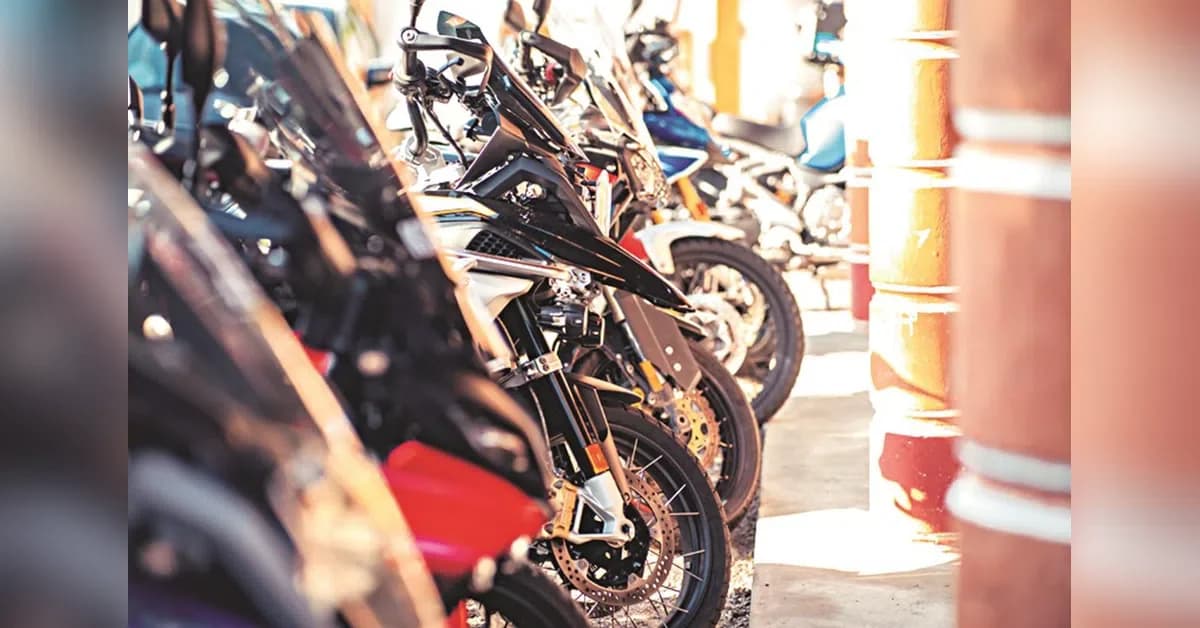
The Ministry of Road Transport and Highways has proposed amendments to the Central Motor Vehicles Rules that will restrict two-wheeler headlamps to low-beam mode only. According to The Times of India, the new safety norms are expected to come into effect from April next year. Currently, the Automatic Headlamp On (AHO) system can activate either low beam or high beam depending on vehicle settings, but the proposed amendment would ensure that when the automatic system is switched on, the headlamp remains in low-beam mode only. The change would apply only to new two-wheelers and would not affect vehicles already on the road. Additionally, buses and heavy vehicles will be required to use genuine reflective tapes to improve visibility at night and during poor weather conditions. The road transport ministry has also proposed restricting high-intensity headlamp use across all vehicle categories to curb glare, which causes visual discomfort or impairs the vision of other road users.
The Ministry of Road Transport and Highways is considering phased safety rules for two-wheelers, including speed alerts, reflective tyres, pedestrian warnings and leg guards, to reduce road deaths. According to reports from Business Standard, these measures could be part of AIS-223, an Automotive Industry Standard under development. The government is considering a phased rollout, with some features introduced first while their effectiveness is assessed before others are made mandatory. Stricter regulations will be introduced for headlamp intensity and colour temperature across all vehicle categories, with an alert system also being considered to signal drivers when high-beam use is unnecessary in urban areas. For two-wheelers, the maximum permissible intensity has been reduced from 1.5 lakh candela (cd) to 1 lakh cd, while for four-wheelers, the limit could come down from 2.25 lakh cd to 1.5 lakh cd. The ministry is separately considering prescribing the height and upward angle of silencer tail-pipe outlets to prevent exhaust gases from being directed towards pedestrians or riders travelling behind a vehicle, particularly in congested traffic.
The safety push comes as two-wheelers dominate India's vehicle market and their riders remain among the most vulnerable on roads. As reported by Business Standard, a record 21.7 million two-wheelers were sold in 2025-26, nearly five times the 4.643 million cars sold during that year. Two-wheeler riders accounted for 81,740 road deaths in 2024, together with pedestrians, they represented nearly 67 per cent of all road fatalities, according to MoRTH data. Domestic sales rose 20.9 per cent year-on-year to 7.552 million units in April-July, according to data from the Society of Indian Automobile Manufacturers (Siam). The amendments in automotive vehicle standards are being made given that efforts to persuade drivers and make them aware of the need to use low-beam mode have not yielded desired results.
Among the proposed measures is mandatory use of reflective tyres to improve the side visibility of two-wheelers. Leg guards are also being considered to protect riders in a crash or fall. The ministry is separately considering prescribing the height and upward angle of silencer tail-pipe outlets to prevent exhaust gases from being directed towards pedestrians or riders travelling behind a vehicle, particularly in congested traffic. According to Business Standard, Siam is discussing with the ministry a proposal for an audio alert to warn riders when they exceed a specified speed. For two-wheelers, the maximum permissible intensity is proposed to be reduced from 1.5 lakh candela (cd) to 1 lakh cd, while for four-wheelers, the limit could come down from 2.25 lakh cd to 1.5 lakh cd. The ministry is proposing these changes after efforts to encourage motorists to use low-beam mode and create awareness around the issue have not produced the desired results.
Two-wheeler manufacturers and Siam have identified several safety parameters and are working with academic institutions, including IIT Delhi and IIT Madras, to assess how effectively they reduce accidents. The study is expected to take about 18 months to evaluate all the parameters. As reported by Business Standard, IIT Delhi, during a recent meeting with the ministry, also stressed the need for an effectiveness study, arguing that regulations introduced without first establishing their benefits could impose unnecessary costs on society. MoRTH is therefore considering a phased implementation, with over-speeding alerts, reflective features and the acoustic vehicle alerting system (AVAS) forming the first phase. The ministry is proposing these changes after efforts to encourage motorists to use low-beam mode and create awareness around the issue have not produced the desired results.