The government has categorically denied any fuel shortage in the country, stating 'There is no scarcity of any petroleum product. There is, in pockets, a pattern of arbitrage that is creating the appearance of one'. According to the latest statement, India's refining capacity of 258.1 million tonnes per annum across 22 operational refineries has produced enough fuel to meet domestic consumption of 243.2 million tonnes in FY26 while exporting 61.5 million tonnes of petroleum products. Union Petroleum and Natural Gas Minister Hardeep Singh Puri has been in continuous coordination with public sector oil marketing companies, state governments and industry bodies to ensure uninterrupted supply. A high-level review involving chief secretaries of states and Union Territories, along with industry associations FICCI and CII, confirmed 'no scarcity of petroleum products' on the ground. The government has urged citizens to rely on official communications and avoid rumours that confuse "arbitrage-driven distortions" with actual fuel shortages.
The government has issued a stern warning against industrial consumers procuring fuel from retail outlets, citing significant financial implications for state-run oil marketing companies. According to reports from Business Standard, the government has requested states and Union Territories to form special squads and take strict action against malpractice of bulk consumers and hoarders taking supplies meant for retail consumers, black marketing, unauthorised stocking and diversion of petroleum products under relevant provisions of the Essential Commodities Act and control orders issued thereunder. The ministry has urged industry associations to sensitise their members about the consequences of violations, emphasizing the need to maintain fair distribution of fuel across all consumer categories. The government has also asked industry associations to sensitise members against such practices and urged states and Union Territories to deploy special enforcement squads to curb hoarding, black marketing, unauthorised storage and diversion of petroleum products under relevant legal provisions.
State-run oil marketing companies are currently absorbing losses of around ₹550 crore per day on the sale of petrol, diesel and domestic liquefied petroleum gas. As reported by Business Standard, the oil companies have refrained from passing on the full impact of high international prices to consumers, including households, two-wheeler commuters and farmers at the pump. However, such cushioning was not extended to industrial procurement, where pricing tracks international actuals as a matter of standing policy. The government noted that industrial consumers who divert their purchases from the industrial channel to the retail pump capture this cushion at the cost of the ordinary citizen, while also concentrating demand at the pump in a way that produces local shortages where none would otherwise exist. This subsidy buffer, intended for households, commuters and farmers using retail pumps, is being captured by industrial buyers diverting purchases from bulk channels to retail outlets.
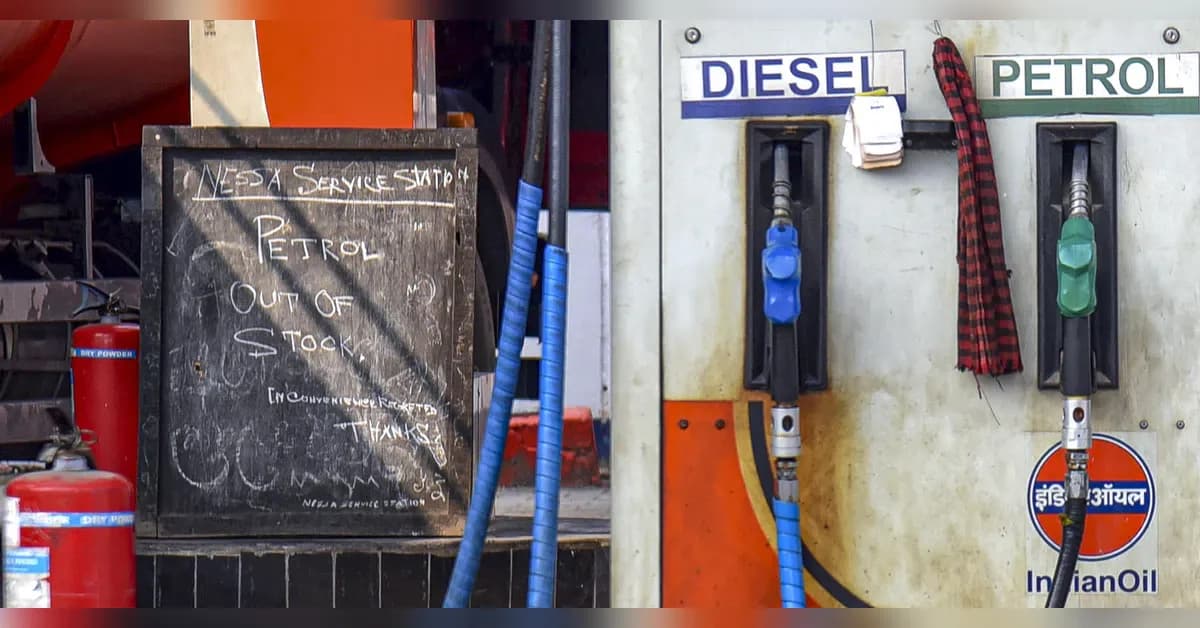
According to reports from Business Standard, on May 27, retail petrol in Delhi cost ₹102.12 per litre while diesel was sold at ₹95.20 per litre. Bulk diesel was priced at ₹149 per litre in the national capital. However, petrol and diesel prices have risen about ₹7.5 per litre and CNG by ₹6 per litre as part of the increased cost of energy caused by the Iran war being passed on to consumers. The government stated that industrial consumers who divert their purchases from the industrial channel to the retail pump capture this cushion at the cost of the ordinary citizen, while also concentrating demand at the pump in a way that produces local shortages where none would otherwise exist. Private OMCs are experiencing a decline of approximately 38 per cent in the offtake of high-speed diesel during May across both retail outlets and bulk customers due to higher rates fixed by such retailers. The volume is shifting entirely to PSU oil marketing retail outlets.
The government has assured adequate supplies of petrol and diesel to meet demand from domestic, retail and industrial customers. According to Business Standard, India is the world's fourth-largest refiner, with an installed capacity of 258.1 million tonnes per annum across 22 operational refineries. The ministry reaffirmed that India's robust refining capacity, coordinated operations of public sector retailers, and Centre-state-industry cooperation form a 'working architecture of energy security'. The government has urged industry associations to sensitise their members about the consequences of violations, emphasizing the need to maintain fair distribution of fuel across all consumer categories. The ministry has also pointed to a shift in market share, noting that private fuel retailers have seen an around 38 per cent decline in high-speed diesel sales this month, while bulk industrial offtake through PSU OMCs has fallen by about 29 per cent, with those volumes reportedly moving to retail outlets.