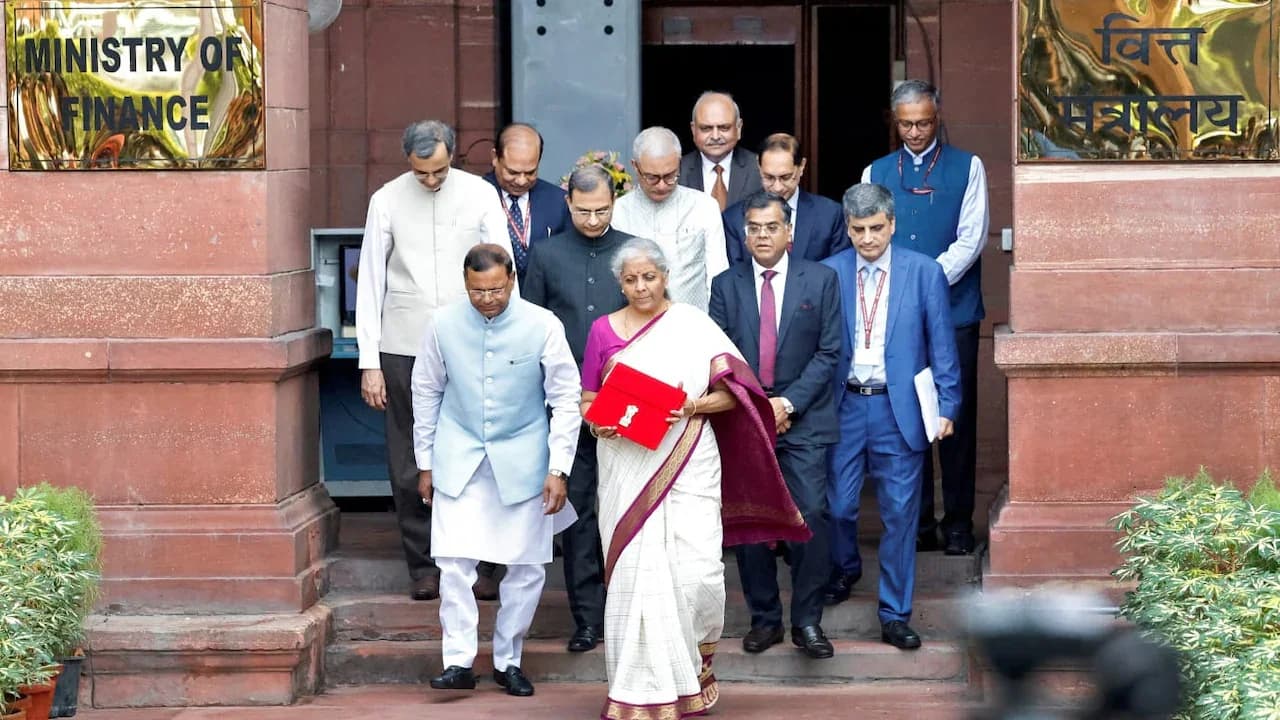
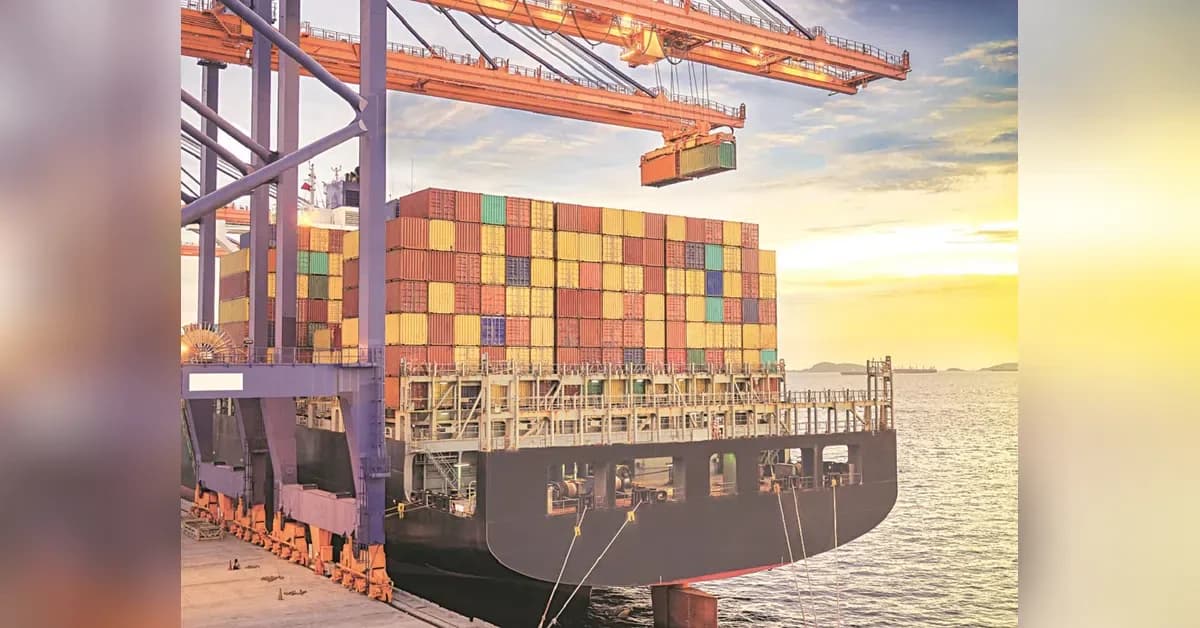
Union Finance Minister Nirmala Sitharaman announced that the government aims to bring customs duty on most items to single-digit rates by the FY28 Budget, while continuing tariff rationalisation efforts. Speaking at the National Council of Applied Economic Research's India Policy Forum in New Delhi on Thursday, August 6, Sitharaman stated that barring a few items, tariffs will come down to single digits by the 2027-28 Budget. According to reports from The Times of India, she emphasised that there is progress being made, may be by budget of 2027-28, I would be able to say that barring a few items, it will come down to single digits. The minister noted that even now, barring 13 items, we have rationalised the rate as part of the ongoing customs duty reforms. When asked about further tariff rationalisation, she emphasised that there is progress been made. Barring a few items, we have rationalised it and it will come down further. That is continuing and we will keep it up. The Centre aims to complete customs tariff rationalisation by Budget 2027-28, with the primary goal to reduce the number of tariff slabs to single digits to simplify India's customs structure and reduce trade-related complexities.
India currently operates with around 13 customs tariff slabs, though the government has already reduced this number to eight, including the zero-duty slab, through measures announced in the FY24 and FY26 Budgets. As reported by Dalal Street Investment Journal, the average customs duty rate has declined to 10.66 per cent from 11.65 per cent, according to government estimates. However, complexities remain due to specific duties on commodities such as fabrics, mixed tariff structures, agriculture infrastructure cess and inverted duty structures. The government has been gradually reducing its most-favoured-nation tariffs across nearly 12,400 tariff lines, with the average tariff increasing from 13.4 per cent in 2016 to 17 per cent in 2023, easing to slightly above 16 per cent in 2024 and currently around 15 per cent. The FY27 Budget continued the rationalisation process by reducing the import duty on personal goods to 10 per cent from 20 per cent, while also removing customs duty exemptions on 17 medicines used for cancer and rare diseases.
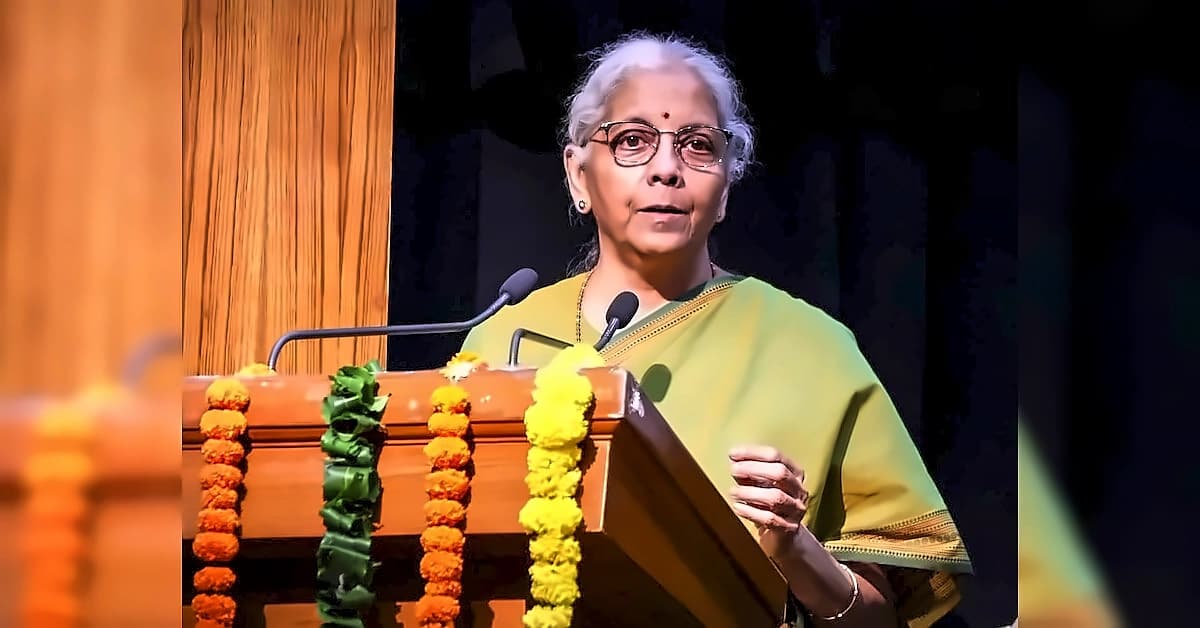
Sitharaman outlined India's ambitious vision for becoming a developed nation by Viksit Bharat 2047, describing it as only a milestone in India's larger civilisational arc. Speaking at the 23rd India Policy Forum while delivering the CD Deshmukh Memorial Lecture, she explained that India's destiny is to become a developed civilisation that combines prosperity with trusteeship, enterprise with responsibility, innovation with civilisational wisdom, global leadership with cultural rootedness, and environmental stewardship with economic progress. The finance minister emphasised that India must completely dismantle the remnants of its colonial mindset and reject the psychology of victimhood, while financial institutions, governance structures and public resources must widen the circle of opportunity so that enterprise in India is augmented by both ability and access. She noted that India's share of global GDP on a purchasing power parity basis has recovered to around 8.5 per cent from less than 3 per cent in the early 1970s, citing economic historian Angus Maddison. The minister highlighted institutions such as ISRO, BARC, BHEL and IITs as important contributors to economic development, while pointing to challenges faced after Independence including Partition, poverty, food security concerns and a limited industrial base.
The tariff rationalisation efforts come alongside significant progress in India-US trade relations. Commerce Secretary Rajesh Agarwal confirmed that India and the US have finalised the broad framework for a proposed bilateral trade agreement, with discussions now focused on working out a new tariff structure before the pact can be implemented. As reported by NDTV Profit, the outline for the deal has already been agreed upon, but both sides are now working on a tariff regime that ensures Indian exports remain competitive in the US market. Commerce and Industry Minister Piyush Goyal expressed confidence that the first phase of the India-US Bilateral Trade Agreement (BTA) will be operationalised after the Trump administration provides Indian exports with a competitive tariff edge over neighbouring countries and ASEAN nations. With the India-European Union trade agreement potentially taking effect before the end of the year and a possible trade agreement with the U.S., imports covered under preferential tariff arrangements could account for more than half of total imports.
Addressing India's development priorities, Sitharaman emphasised that quality education and quality healthcare are entirely non-negotiable national priorities. She highlighted that investment in public health and education is an expression of the Indian ethos, referencing historical examples like the Vira-Cholan Hospital inscription from 1069 CE that shows temple revenue was divided into three parts: temple rituals, a college with hostel, and a 15-bed hospital with permanent land endowment for physicians and medicines. The finance minister noted that banks are for all Indians, not just a select few, with banking continuing to be an instrument of inclusion ensuring that aspiration finds support rather than barriers. According to Dalal Street Investment Journal, the Centre's capital expenditure push since Covid has boosted the private sector's confidence in the economy, encouraging them to take risks and invest. From a stock market perspective, customs tariff rationalisation could benefit import-dependent sectors such as electronics, automobiles, engineering and renewable energy by lowering input costs and supporting margins. However, businesses that have historically benefited from high import protection may face greater competition from overseas players, with investors likely to focus on companies with strong cost advantages, global supply-chain exposure and greater ability to benefit from lower import duties.
The finance minister emphasised the importance of fiscal discipline in state-level borrowing, stating that there should be a conscious effort to ensure that states borrow only as much money for asset creation as they can service and not leave the debt for the next generation to repay. As reported by The Times of India, she noted that states are working to put their 'house in order'. According to the International Monetary Fund (IMF), India's general government debt was 83.4 per cent in 2026. The minister's comments come as the government continues its comprehensive tax reform agenda, following the recent GST rationalisation and corporate tax changes. The focus on customs duty rationalisation represents the next phase of this reform process, with the government maintaining its commitment to creating a more efficient and predictable tax environment for businesses and consumers. She urged state governments to focus borrowing on asset creation and improve revenue generation to reduce the future debt burden, noting that the government has nearly tripled capital expenditure over the past five years.