The ministry of heavy industries has initiated stakeholder consultations to assess demand for electric commercial vehicles and establish targets under a new financing scheme. According to reports from Mint, the government has requested sales estimates from e-truck and e-bus manufacturers to determine future requirements and set appropriate targets. The scheme will provide interest subsidies and credit guarantees to reduce financing costs for operators of e-buses and e-trucks, which cost more than twice as much as their diesel counterparts.
During stakeholder consultations in May, the government had considered a budget of ₹9,852 crore to support the financing of 50,000 e-buses and 50,000 e-trucks over five years, as reported by Mint. This will be the first major government scheme for private sector intercity e-buses, with previous e-bus schemes covering state-run intracity buses only. A senior government official confirmed that the ministry is still estimating how many e-buses and e-trucks will come on the roads in the next few years and how charging infrastructure requirements will rise.
India has emerged as the world's third-largest e-bus market, according to the International Energy Agency, with recent years showing significant growth patterns. According to the ministry of road transport and highways data reported by Mint, e-bus sales experienced an 81% rise to 3,644 units in FY24, followed by a 6% decline to 3,314 units in FY25 before resurging 37% to 5,356 units in FY26. The government is currently assessing demand for the next few years and has asked manufacturers for sales estimates and projections to support this new financing initiative.
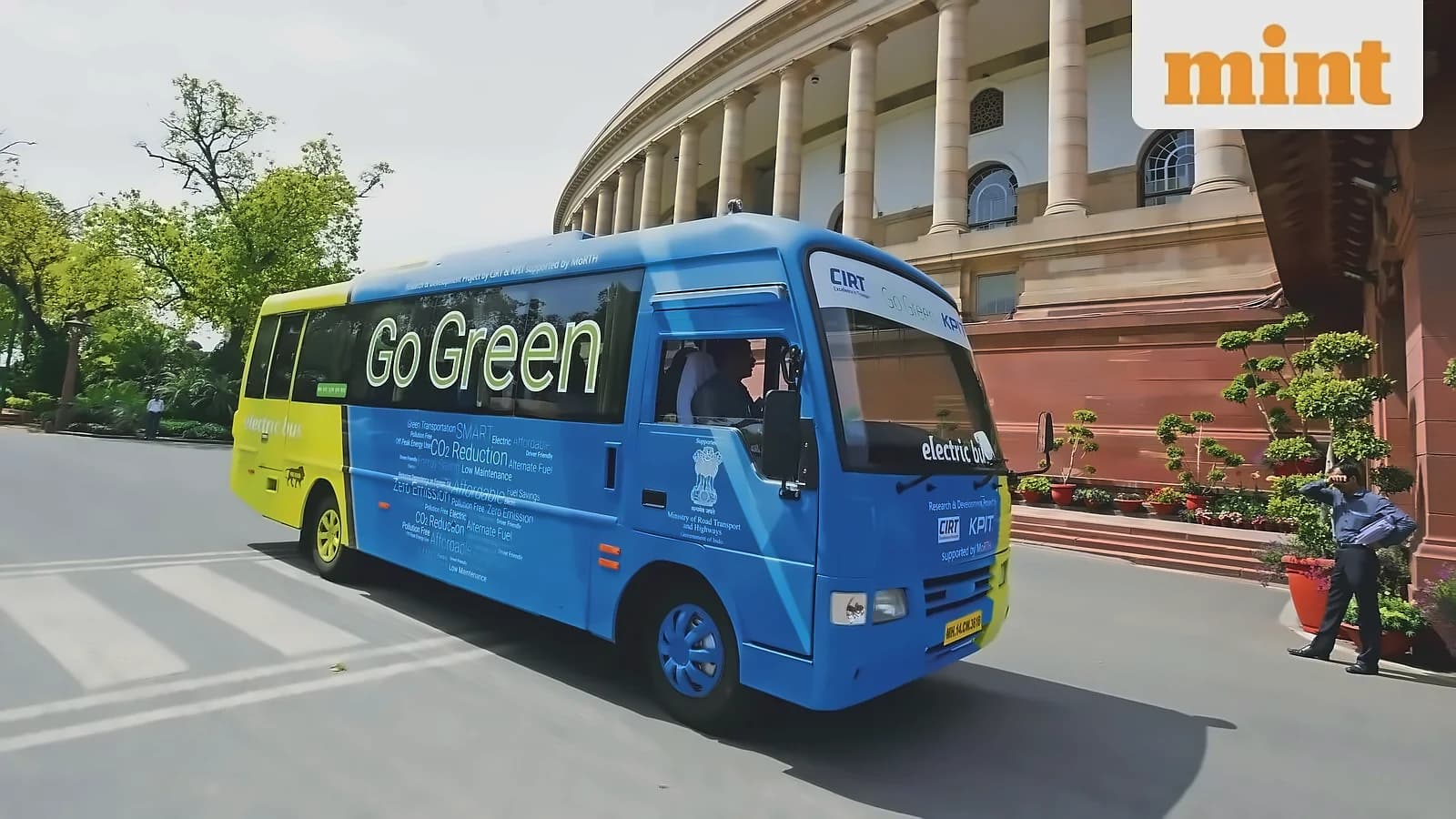
E-bus demand is primarily driven by operators seeking better profitability and margins through electric fleet transitions. As reported by Mint, Sudhakar Chirra, founder and CEO of Fresh Bus, which operates 86 e-buses, noted that rising demand is attributed to costly airfare, limited railway connectivity, and ease of boarding compared to trains or planes. Experts emphasize that e-bus adoption can help reduce more emissions than most vehicle segments due to continuous operation periods, requiring thorough planning for depots, chargers, and designated lanes.
The new initiative addresses low adoption of e-trucks under the ministry's flagship PM E-Drive scheme, which was the country's first to support e-truck sales with a ₹500 crore budget for subsidies till FY28 and a target of 5,643 e-trucks. According to the scheme's dashboard reported by Mint, only 52 e-trucks had been incentivized as of 24 August, highlighting the need for the enhanced financing support under the new scheme.