Eka Mobility Founder and Chairman Sudhir Mehta revealed that depot and charging infrastructure, rather than bus supply, has become the biggest hurdle to faster e-bus deployment in India. According to reports from Business Standard, Mehta emphasized that charging infrastructure should be tendered before the e-buses, as it takes longer to build than to manufacture the buses. A depot requires electricity connections, charging equipment, civil infrastructure, and transmission capacity, with transmission capacity playing a pivotal role as large numbers of e-buses are deployed. "Depot infrastructure requires a separate scale," Mehta said, highlighting the unique challenges of depot development.

Mehta proposed that governments should first map the depot and charging infrastructure required over several years, ideally for the next five years and tender it first. As reported by Business Standard, this process can take 12 to 24 months, after which deploying the buses is a matter of a few months. The current system involves an original equipment manufacturer (OEM) and an operating partner, with the operating partner arranging financing, chargers, electricity connections, depot work, and drivers. There can be a delay of six to eight months before a state issues the letter of award (LoA), after which the operator must secure financing and prepare the depot. Mehta noted that banks also want charging infrastructure in place before financing the buses, creating a vicious cycle that can delay deliveries.
Eka Mobility secured orders for 3,485 buses in December 2025 under the Centre's 10,900-bus tender under the Prime Minister Electric Drive Revolution in Innovative Vehicle Enhancement (PM eDRIVE) scheme. According to Business Standard, the company currently has an order book of almost 10,500 e-buses, having delivered more than 1,500 and around 9,000 e-buses left to deliver over the next 18-24 months. The orders cover more than 40 cities, with the company completing a 750-bus order for Rajasthan and starting operations in Andhra Pradesh and Bihar. Mehta revealed that Eka had buses ready at its plant but could not send them because the depots were not ready, forcing the company to plan production based on when depots are expected to be ready.
Eka's e-bus deliveries are expected to increase significantly, with deliveries rising from around 500 in FY26 to about 1,800 in FY27, and targeting 4,000-4,500 e-bus deliveries in FY28. As reported by Business Standard, the company delivered about 200 e-buses last month and expects to reach deliveries of about 400 per month by March. Revenue was around ₹750 crore in FY26 and could reach about ₹2,000 crore in FY27, with the company seeing potential to at least double revenue annually for the next few years and reaching $1 billion in revenue by 2029-30.
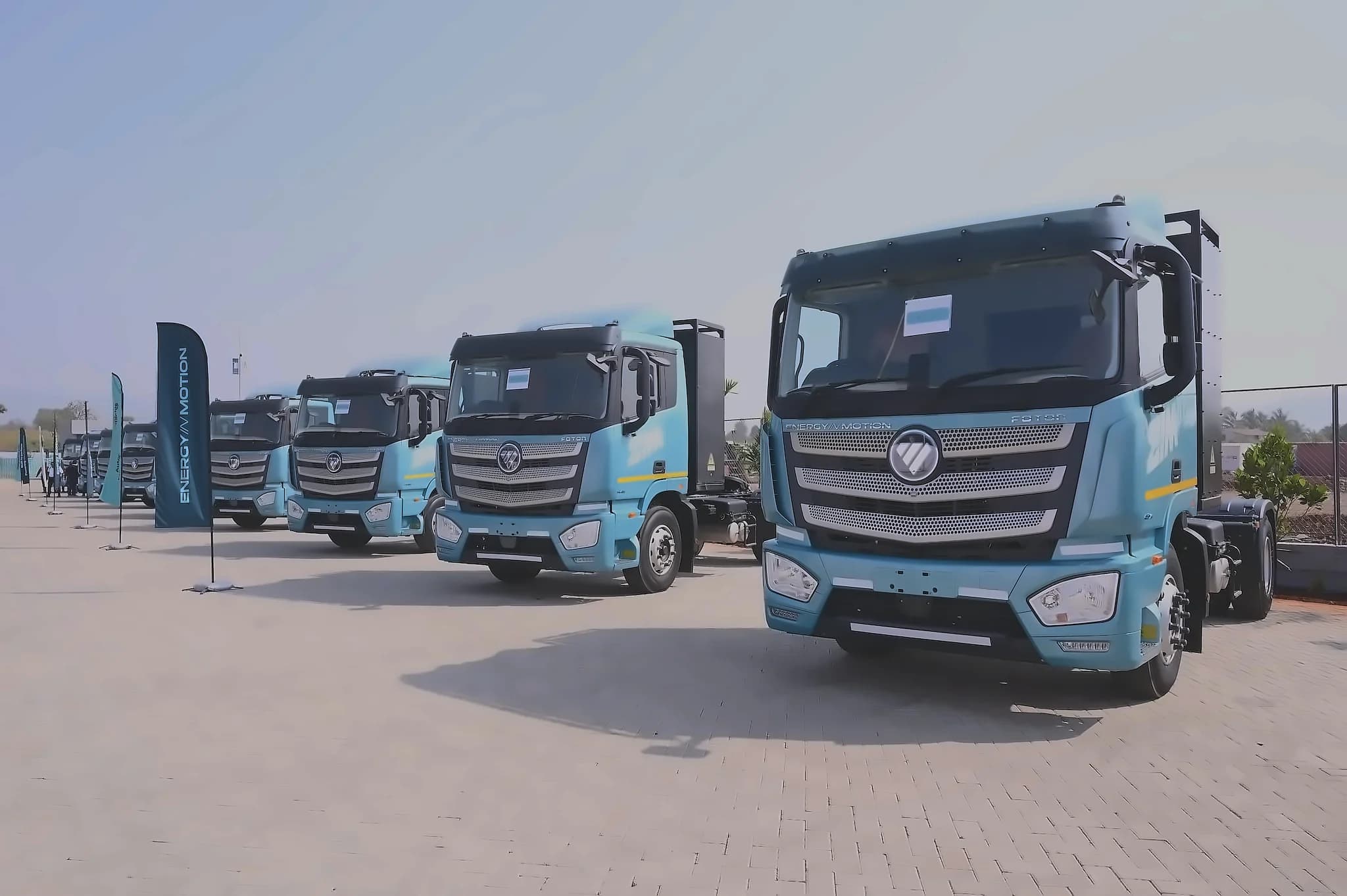
Mehta highlighted the company's expansion into electric trucks, where Eka has completed trials with more than 50 customers and its etrucks are homologated. According to Business Standard, the company is initially setting up capacity to produce about 3,000 etrucks a year, with modular plants that can be configured for e-buses or etrucks depending on demand. Mehta expects the etruck market to expand sharply over the next five years, with the opportunity at eight to 10 times the size of the e-bus opportunity, and heavy etrucks accounting for 30-50% of the market within five years. "Trucks are a very unforgiving game. People have to be convinced from the unit economics. Once they are, the numbers will come," Mehta said, expressing confidence in the Indian market's potential.