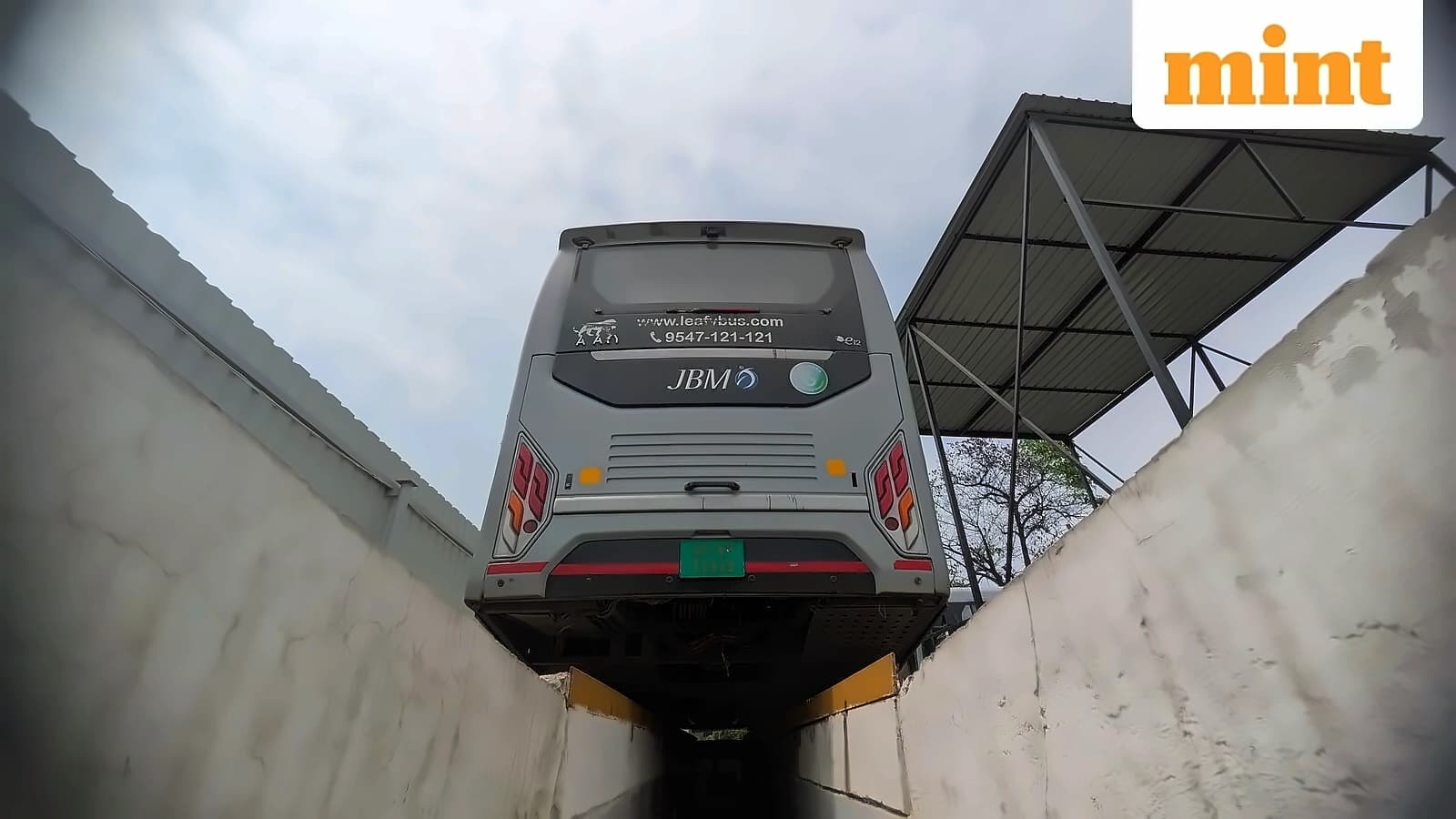
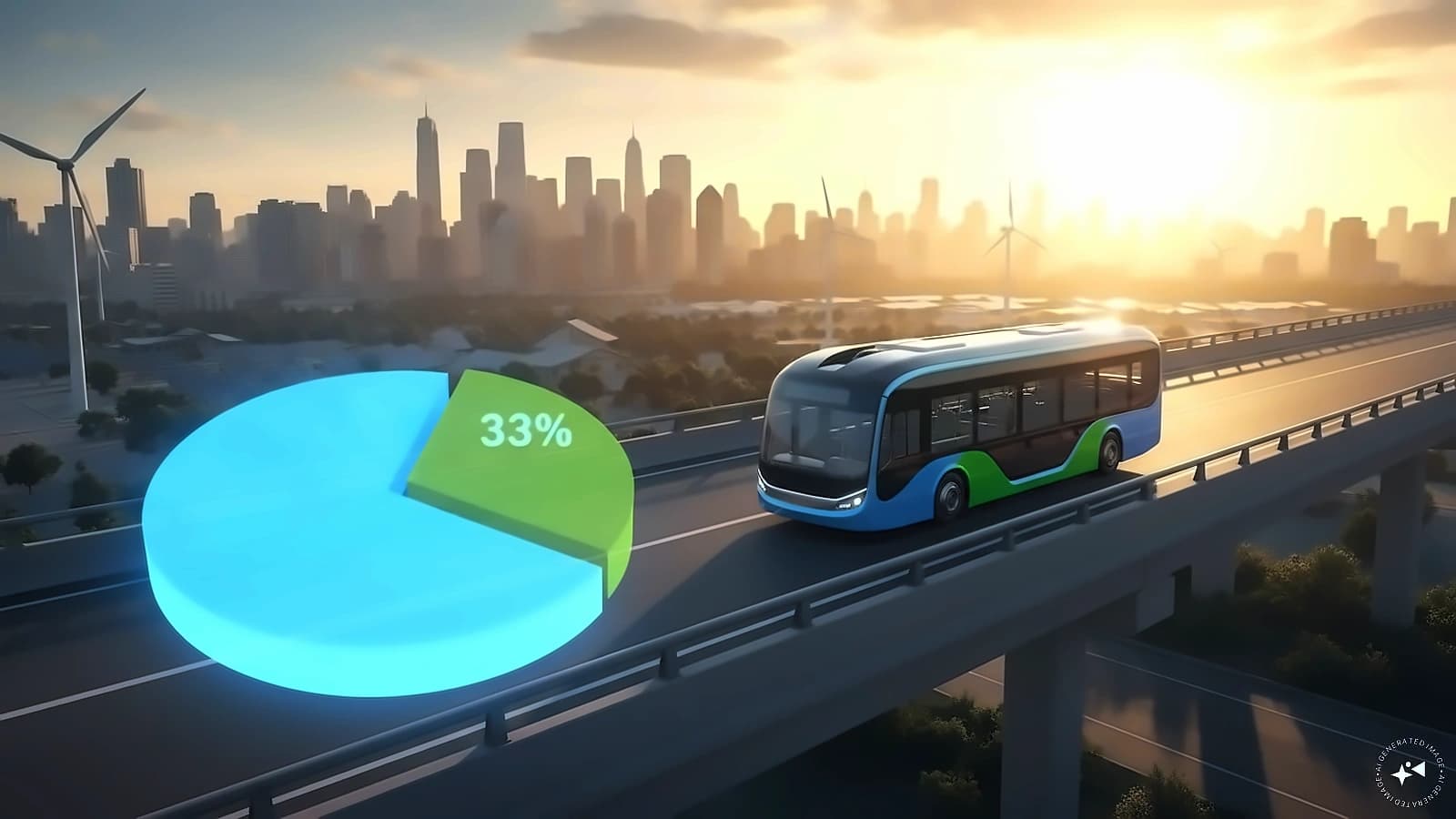
According to the latest Vahan data disclosed in JBM Auto's regulatory filing under SEBI LODR Regulation 30, the company registered 274 electric buses in September 2026, achieving the highest share among manufacturers in India with a 33% market share. The September figure represents the company's strongest monthly performance, with the higher monthly market share of 33% in September compared to the ~24% share recorded over H1FY26-27 indicating stronger relative performance in the most recent month. For the first half of FY26-27, JBM Auto added 892 electric buses, contributing to a ~24% market share for the April-September period against a total market of 3,771 registrations. The company's performance comes as India's electric bus market achieved its highest-ever H1 sales of 3,723 units, representing a 55% jump from the previous year and pushing penetration to 8.55% from 5.47% in H1 FY26, according to government Vahan registry data.
The surge in electric bus adoption is primarily driven by government initiatives to overhaul existing urban diesel fleets into zero-emission vehicles. The PM E-Drive scheme allocated ₹4,391 crore for 14,028 e-buses, while the PM E-Bus Sewa scheme provides ₹20,000 crore central government support for subsidizing operating costs of 10,000 additional e-buses. As per Mint, the government has launched a new scheme to provide cheaper loans to private sector bus and truck operators, which could significantly reduce upfront and operating costs of electric buses that are currently more than twice as expensive as their diesel counterparts. The scheme targets support for 50,000 e-buses and 50,000 e-trucks with an outlay of ₹9,852 crore, along with financing support for charging infrastructure. This expansion has intensified competition, with new-age entrants like PMI Electro (5,210 e-buses) and EKA Mobility (3,485 e-buses) securing major government contracts in the 10,900 e-buses tender under the PM E-Drive scheme.
As reported in the company's regulatory filing, JBM Auto's electric bus business operates from an NCR-based integrated manufacturing facility with an annual production capacity of 20,000 buses, described as the world's largest dedicated facility of its kind outside China. The facility integrates design, engineering, testing, validation, and manufacturing capabilities under one integrated system. The company's electric buses have demonstrated significant operational impact, covering more than 450 million e-kilometres and carrying over 2 billion passengers to date. According to the filing, JBM Auto's buses have helped avoid more than 1 billion kg of carbon dioxide emissions through their operations. The facility's scale enables the company to develop and deploy electric mobility solutions at scale, supporting India's transition towards zero-emission public transportation.
According to latest financial data, JBM Auto reported revenue of ₹6,227.30 crore in FY26 versus ₹5,525.91 crore in FY25, showing a 12.69% year-on-year increase. The company's net profit increased to ₹238.07 crore in FY26 from ₹214.63 crore in FY25, representing a 10.92% growth. However, recent quarterly performance shows some volatility, with revenue declining 21.70% quarter-on-quarter to ₹1,473.94 crore in June 2026 compared to ₹1,882.47 crore in March 2026. The company's market capitalisation stands at ₹13,320.54 crore as of October 1, 2026, with shares trading at ₹544.80 following a 16.97% decline over the past year. The stock has shown resilience with a 1,100% gain over the last three years, though it hit a 52-week high of ₹738.50 and a low of ₹477.00.
As reported by CNBC TV18, JBM Auto has set a net-zero emissions target for 2040, demonstrating its commitment to sustainable mobility solutions. The company's electric buses offer what Arya describes as 'purpose-built born EV solutions' that provide innovation, efficiency, safety and a passenger-first approach. The company is currently executing an order book of more than 9,000 electric buses over the next two-and-a-half years, positioning it well for continued growth in India's expanding electric bus market. Beyond electric vehicles, JBM Auto has diversified into multiple segments including auto components (contributing 70% of total revenue), buses, EV aggregates, EV charging infrastructure, and renewable energy through its subsidiary JBM Solar Power Pvt. Ltd. The company has deployed over 20 solar power projects across India and maintains a strong customer base including industry leaders such as Ashok Leyland, Daimler, Nissan, and Volvo.
According to latest market data, JBM Auto shares opened at ₹551.75 on October 1, 2026, compared to the previous close of ₹556.50, with trading in the range of ₹533.95 to ₹555.30. The stock has shown mixed performance with a 16.97% decline over the past year but maintains strong long-term momentum with a 1,100% gain over three years. The company's diversified business model across automotive components, electric vehicles, and renewable energy provides multiple growth avenues, while its market capitalisation of ₹13,320.54 crore reflects its established position in the automotive sector. As per CNBC TV18, in August, JBM Auto announced it was targeting revenue of ₹7,000-7,500 crore in FY27, with nearly 45% expected to come from its electric vehicle business as demand for electric buses and auto components grows. The growing e-bus market is expected to facilitate localization of e-bus components and strengthen the domestic EV manufacturing ecosystem, though experts emphasize the need to focus on localizing battery cell manufacturing in India.