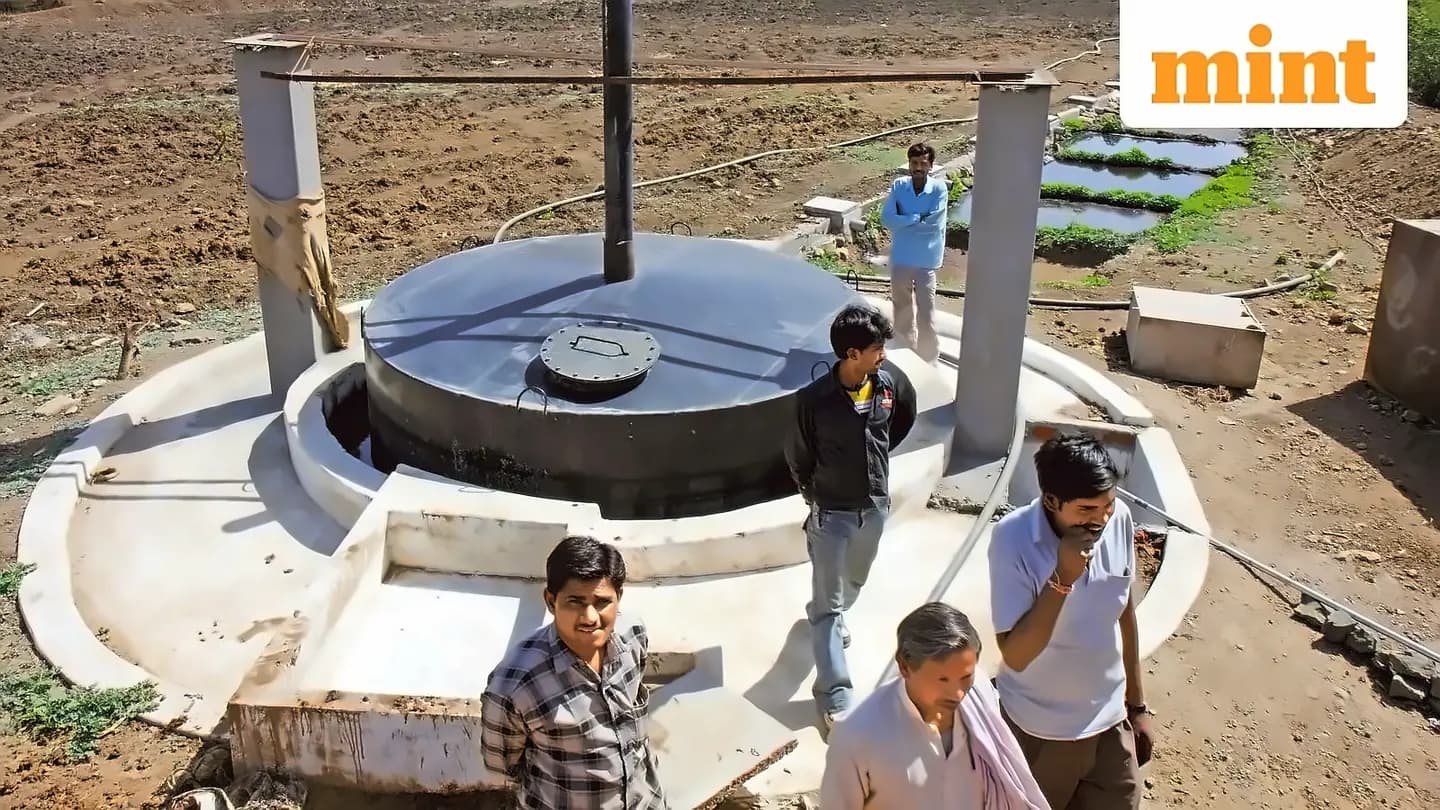
The government has operationalized detailed guidelines for the ₹23,731 crore GOBARdhan scheme aimed at developing India's compressed biogas (CBG) sector. According to the Petroleum and Natural Gas Ministry's operational guidelines dated September 15, 2026, the scheme will run from 2026-27 to 2035-36 and seeks to establish a more predictable market for CBG producers. The scheme brings together six components -- assured CBG offtake, a pricing framework, capital assistance, pipeline infrastructure, credit guarantee support and a CBG ecosystem challenge fund. GOBARdhan stands for Galvanising Organic Bio-Agro Resources Dhan and is the government's programme to turn organic waste such as cattle dung, agricultural residue, food waste and other biomass into useful products such as biogas, CBG and organic manure. The broader scheme is aimed at nearly ten-fold growth in domestic CBG production and greater private investment in the sector.
Under the scheme guidelines, CBG producers have been assured offtake of up to 100 per cent of the CBG available for sale, subject to technical and operational feasibility. The gas will be mapped either to City Gas Distribution (CGD) entities and geographical areas or to identified CBG clusters for aggregation and injection into trunk pipelines. City gas distributors will be required to procure and sell CBG within their overall gas supplies for the CNG transport and domestic PNG segments, according to a phased obligation of 3 per cent in FY2026-27, 4 per cent in FY2027-28 and 5 per cent from FY2028-29 onwards. The assured-offtake mechanism is intended to address a longstanding problem for CBG developers: having a plant does not by itself guarantee a buyer for the gas. Firm offtake through the CGD route will be governed by tripartite agreements involving the producer, the CGD entity and GAIL as the designated synchro operator, with trunk-pipeline offtake based only on firm contractual arrangements.
The government has introduced a new CBG pricing framework with an initial Administered CBG Price (ACP) of ₹2,110 per million British thermal unit (MBTU), equivalent to about ₹98 per kg of CBG at 95 per cent methane content, excluding taxes and compression charges. The price will remain in place for a minimum of 10 years until March 31, 2036, although it can be revised prospectively based on factors including CBG production economics, inflation and other considerations determined by the Project Approval Board. The government will provide CBG affordability support to the Synchro Operator for 10 years, capped at ₹10 per kg to help bridge the affordability gap. Under the latest framework, GOBARdhan offers capital assistance of ₹2 crore per ton-per-day (TPD) of installed capacity, credit guarantees, funding for trunk pipeline connectivity, and a dedicated CBG Ecosystem Challenge Fund to modernize biomass aggregation. The assistance is not an unconditional upfront grant but linked to project milestones, including approvals, the first commercial sale of CBG and subsequent plant performance.
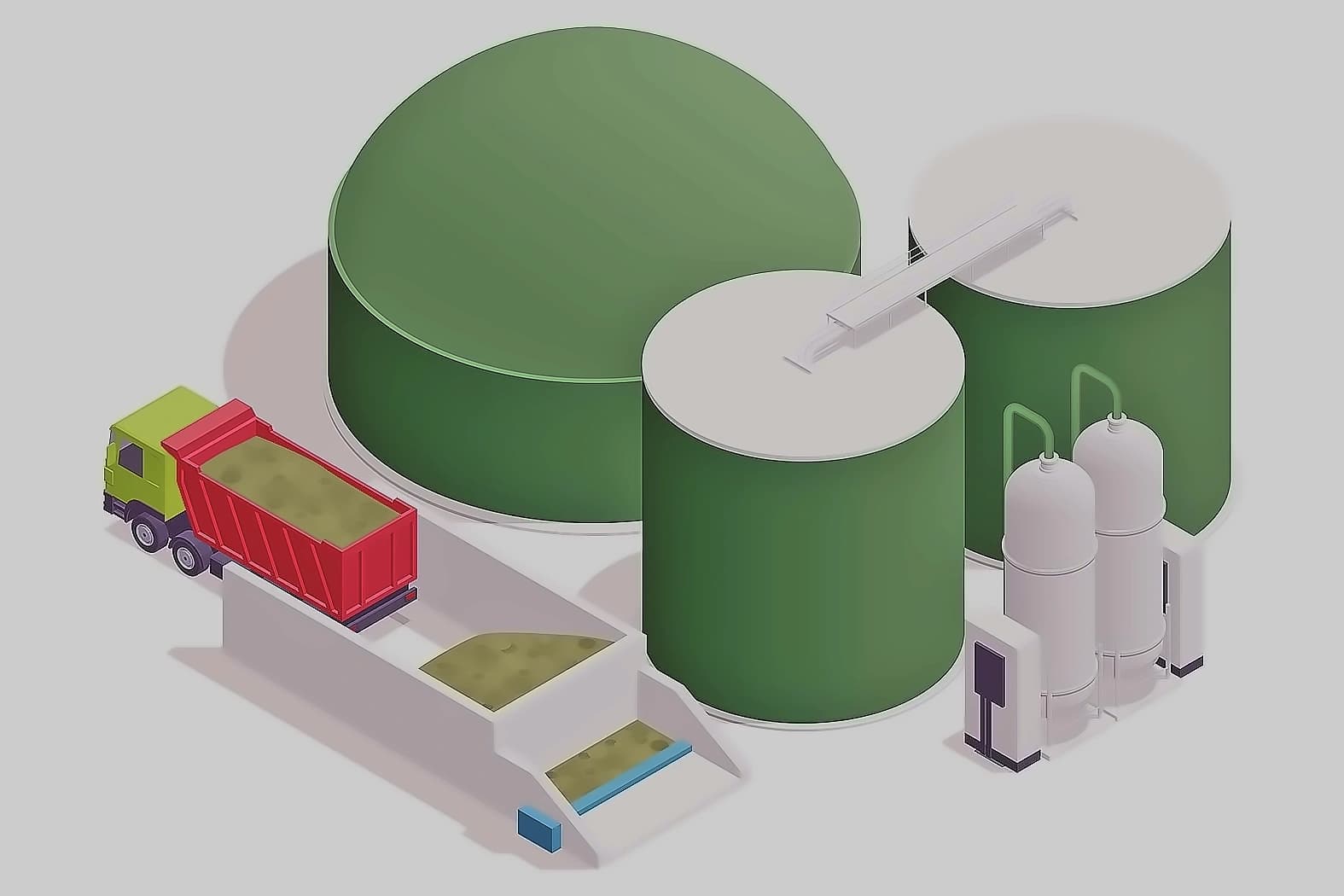
For new CBG plants, the government has decided to provide financial assistance of ₹1.25 crore per tonne per day (TPD) of eligible CBG capacity, subject to an overall cap of ₹30 crore per project. Existing biogas plants upgraded to produce CBG can receive ₹0.60 crore per TPD, capped at ₹5 crore per project. A separate component will reimburse up to 50 per cent of eligible expenditure on feedstock aggregation and organic-manure value-addition machinery, subject to a ceiling of ₹0.75 crore per TPD. Under the rules, there would be no take-or-pay obligation for a CGD entity in the first year, with a take-or-pay obligation of up to 90 per cent of the annual nominated quantity from the second year onwards. CBG producers will face a supply-or-pay obligation of up to 50 per cent of annual contracted quantity from the second year. The framework goes beyond a demand mandate by prescribing consequences for non-compliance, with the ministry considering measures including rationalisation of APM/non-APM gas allocation equivalent to the requested CBG quantity if a CGD entity fails to execute a firm offtake agreement.
The new framework marks a transition from the earlier SATAT initiative, under which the government sought to promote CBG production and marketing. According to the guidelines, SATAT, administered by the Petroleum Ministry, will be subsumed from September 1, 2026, with liabilities already committed under the earlier initiative continuing to be honoured. Existing SATAT retail outlets are encouraged to be integrated into the GOBARdhan framework. The shift is significant because GOBARdhan attempts to bring several elements of the CBG ecosystem under a single framework -- demand, pricing, capital, infrastructure and financing -- rather than relying primarily on individual incentives. The Indian Biogas Association (IBA) has suggested that by 2030, 10% of chemical fertilizers must be blended with Fermented Organic Manure (FOM) from the liquid bio-slurry, providing investors with a dual-revenue business model that combines clean energy and sustainable agriculture. The guidelines mandate comprehensive operational standards including real-time monitoring, online gas-quality measurement and automatic shut-off systems for beneficiaries.