The Indian government has introduced competitive bidding for the first time at the intra-state transmission level through the ₹1.86 trillion Green Energy Corridor (GEC)-III scheme. According to reports from Business Standard, this represents a significant shift from the traditional cost-plus model, where tariffs are determined by state electricity regulatory commissions based on actual project expenditure plus regulated returns on equity. Under the new competitive bidding model, developers will compete by offering the lowest levelised tariff, potentially bringing down costs for consumers while ensuring transparent pricing and significant de-risking for developers. However, industry experts caution that unrealistic and aggressive bidding by less experienced and small-sized companies can create stranded assets, and policy planners must provide adequate safeguards in the contract itself.
The GEC-III scheme encompasses a comprehensive investment of ₹1.86 trillion, including ₹54,082 crore in Central Financial Assistance (CFA). As reported by Business Standard, the scheme targets the evacuation of 135 Gigawatt (GW) of renewable energy along with deployment of 50 Gigawatt Hour (GWh) of Battery Energy Storage Systems (BESS). The project includes creation of 51,126 circuit kilometres of transmission lines and 2,28,903 Megavolt Ampere (MVA) of transformation capacity across multiple states. The CFA allocation of ₹45,005 crore, representing 83% of the total, is specifically earmarked for intra-state transmission system development.
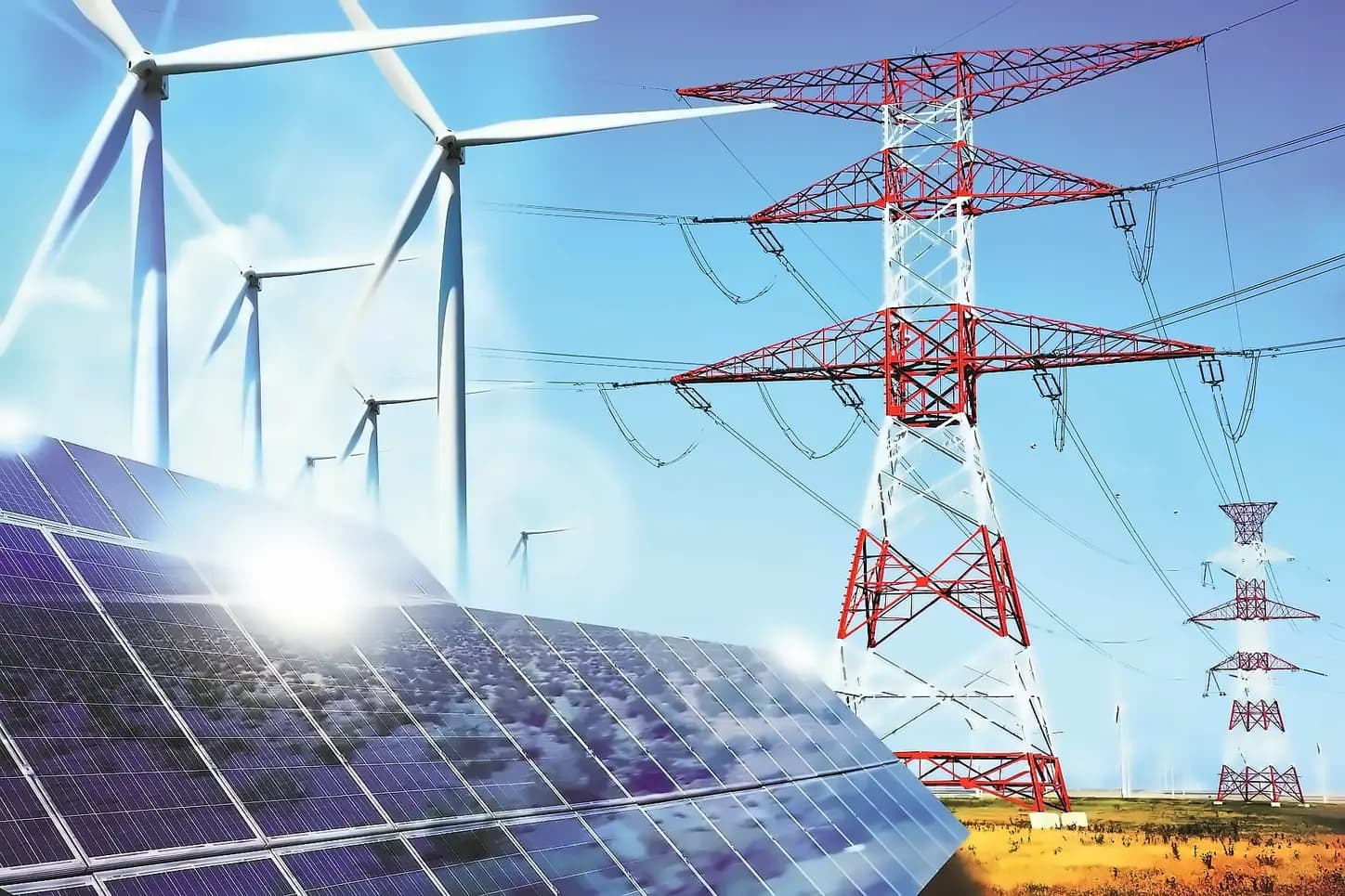
The scheme addresses critical challenges in renewable energy integration by combining transmission infrastructure with storage capacity. According to the Ministry of New and Renewable Energy (MNRE), the principle underlying GEC-III is that transmission must precede renewable energy generation to provide certainty to developers, reduce curtailment risks, and enable states to meet their Renewable Consumption Obligation (RCO) trajectory. This strategy is crucial as India targets ramping up non-fossil fuel based power generation capacity from the existing 300 GW to 500 GW by 2030 and 786 GW by 2036. The total investment estimate, including the ₹1.32 trillion for transmission infrastructure, is likely to reach ₹8 trillion-₹9 trillion.
The competitive bidding approach is expected to drive significant reforms, particularly at the state level, according to senior MNRE officials cited by Business Standard. The new model will lead to commissioning of new transmission lines where evacuation faces congestion and ensure renewable energy evacuation happens at the same pace as project development. Industry experts acknowledge that while the cost-plus model provides certainty during initial sector opening, competitive bidding becomes optimal once sectors mature with established technology and counter-party risk sharing mechanisms. However, experts emphasize the need for strong networth criteria for participation to ensure only serious players take up projects, addressing concerns about unrealistic bidding by less experienced companies that could create stranded assets.