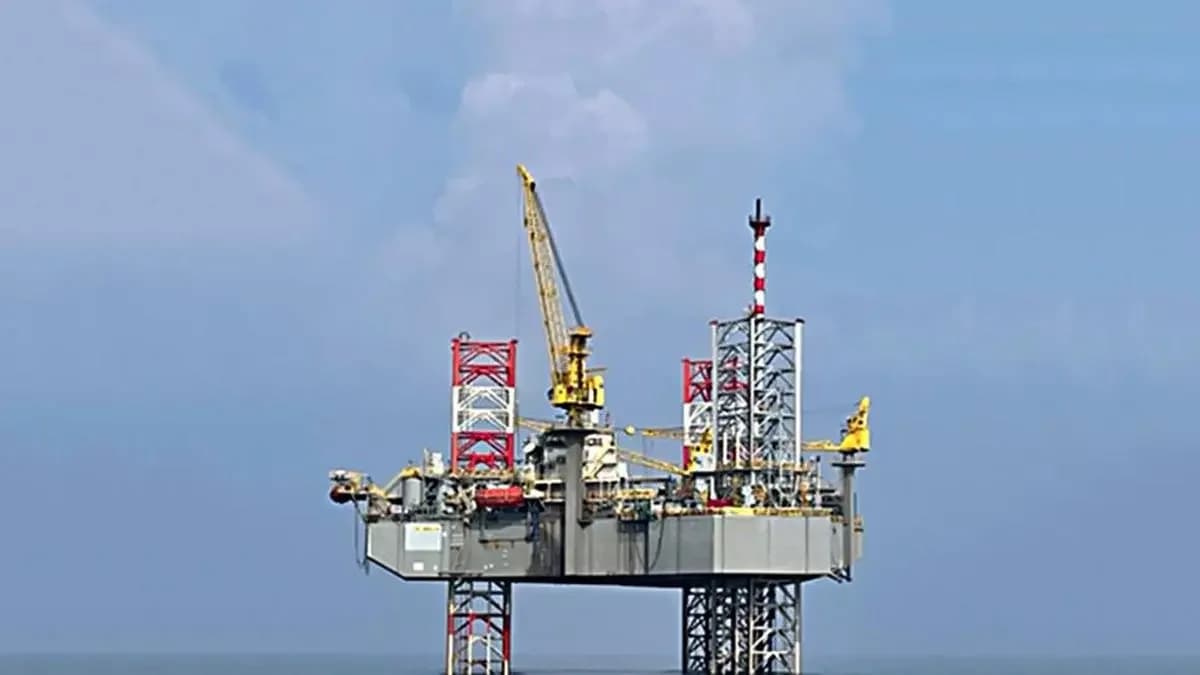
The government has launched the ₹84,084-crore Samudra Manthan scheme formally called the National Offshore Exploration Scheme, to reduce India's heavy reliance on imported hydrocarbons through deepwater and ultra-deepwater exploration. According to reports from Business Standard, the scheme was approved by the Union Cabinet in July 2026, marking a major shift from policy reforms to mission-mode implementation. The scheme will run through FY2030-31, with FY2026-27 as a preparatory year and spending from FY2027-31 as Phase I. Petroleum Secretary Neeraj Mittal called it "the most ambitious upstream oil and gas intervention undertaken in recent times" and estimated it could add more than 600 million tonnes of oil equivalent to India's reserves.
Under the scheme's central component, the government will provide financial support for 56 exploratory wells and four stratigraphic wells in deepwater and ultra-deepwater areas. As reported by Business Standard, for the 56 exploratory wells, government funding will cover up to 50% of actual costs, subject to a ceiling of ₹675 crore per well. The four stratigraphic wells, which study subsurface rock formations, will be eligible for support covering up to 100% of costs, capped at ₹1,350 crore per well. Only state-owned companies or consortia led by them can apply for funding for these wells. The scheme includes a recovery clause where the government carries early geological risk and keeps a claim on any upside - recovery starts after seven years of commercial production or once the operator has recouped 50% of exploration and development costs, whichever comes first.
The scheme includes a first component allocating ₹28,534 crore for extensive 2D and 3D seismic surveys across offshore basins using Artificial Intelligence and advanced digital technologies. The second component provides ₹43,200 crore to support 60 deepwater and ultra-deepwater exploration wells, with the scheme offering financial assistance covering up to 50% of eligible drilling costs or ₹675 crore per well, whichever is lower. Payment is milestone-based: 40% when drilling reaches 40% of the approved depth and 60% on completion and approval of the well report. Both public and private exploration operators will be eligible for support under this component. The third component addresses infrastructure bottlenecks with ₹10,000 crore earmarked for developing shared offshore infrastructure in selected basins, particularly the Mahanadi and Kutch regions, to reduce project costs and enable stranded discoveries to enter commercial production.
The fourth component focuses on strengthening India's domestic industrial capabilities through the establishment of an Oil and Gas Manufacturing and Services Zone with ₹2,000 crore allocation. The integrated hub will support manufacturing, engineering, repair, warehousing and specialized offshore services, reducing dependence on imported equipment while promoting indigenous capabilities across the exploration value chain. An additional ₹350 crore has been allocated for programme monitoring, digital interventions, evaluation, human resource development, awareness campaigns, outreach activities and event management. The scheme also includes provisions for digital programme management systems to improve transparency and implementation efficiency.
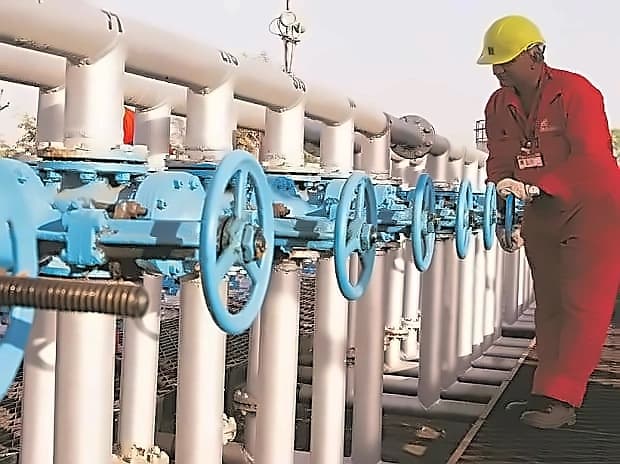
According to the government, India's annual crude oil import bill stands at nearly USD 144 billion, or around ₹13 lakh crore, highlighting the urgent need to enhance domestic production. The scheme aims to increase India's hydrocarbon reserves by over 600 MMTOE, expanding the country's total resource base from approximately 1.6 billion tonnes of oil equivalent to 2.2 billion tonnes. Domestic hydrocarbon production is projected to increase from around 62 MMTOE annually to nearly 80 MMTOE, with incremental production estimated between 10 and 15 MMTOE, and a peak potential of 20 MMTOE. Higher domestic production is expected to reduce crude oil imports substantially, potentially lowering the country's import bill by nearly ₹1 lakh crore every year while generating significant foreign exchange savings.