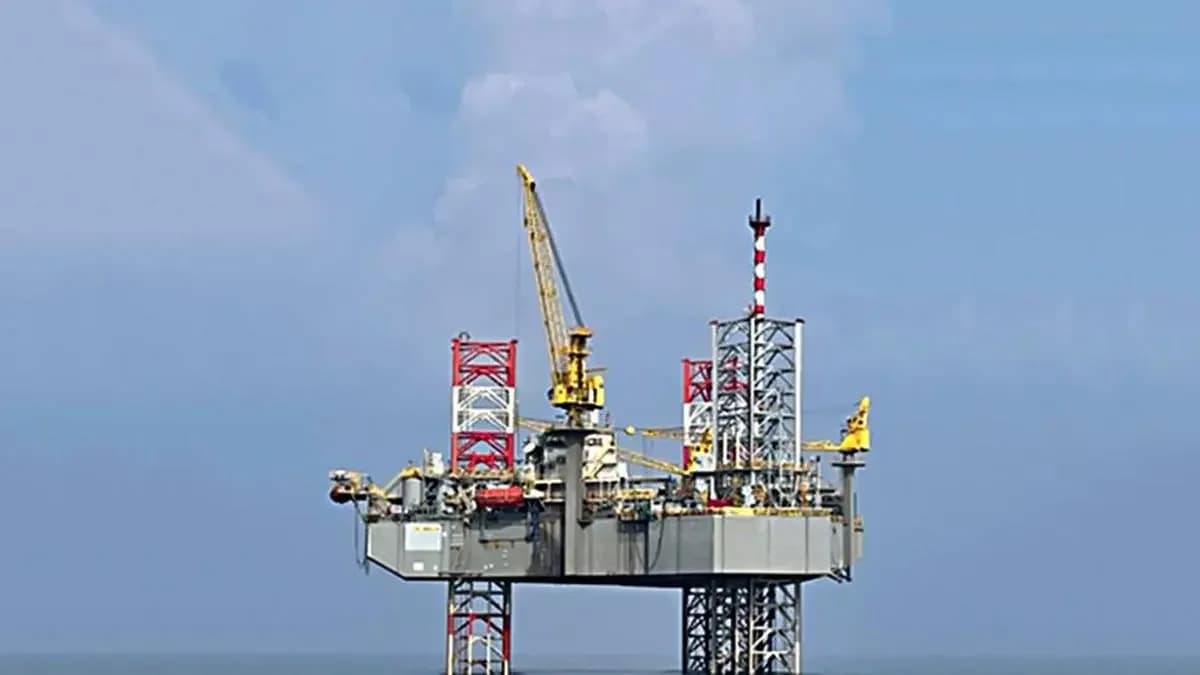
The Union Cabinet approved the 'Samudra Manthan' National Offshore Exploration Scheme on Friday, July 31, 2026, marking one of the world's first large-scale government-funded high-risk offshore oil and gas exploration programmes. Under this groundbreaking initiative, the government will fund up to 50% of the cost of drilling a deepwater or ultra-deepwater exploration well, or ₹650 crore per well, whichever is lower, directly from the budget. As per PTI, this represents perhaps the first time any government in the world is funding risk exploration from the budget, with 60 deepwater and ultra-deepwater exploration wells over the next five years to be funded from the budget. The scheme is projected to add more than 600 million metric tons of oil Equivalent (MMTOE) to India's reserves while significantly expanding offshore exploration activity and increasing domestic oil and gas production. The Central Sector scheme will be implemented until FY31 with an aim to harness India's vast offshore energy resources.
According to reports from PTI, the scheme is expected to add incremental annual production of 10-15 million tonne of oil equivalent, which would reduce the dependence on imports of oil and gas but only to the extent of 3-5 per cent. The initiative will generate annual forex savings by substituting imports through higher domestic production and is projected to drive strong GDP expansion while creating jobs in E&P and allied activities. The scheme will also catalyze investment across exploration and manufacturing sectors, as reported by Upstox Securities. The government expects the programme to reduce import dependence through higher domestic production, generate foreign exchange savings, catalyse investments across exploration and manufacturing, strengthen indigenous capabilities, create employment across exploration and production activities, and support long-term economic growth. As per Outlook Business, the scheme will stimulate investments across the exploration and production value chain while strengthening India's technological capabilities in offshore energy.
As reported by PTI, the scheme responds to a trend line that has been moving in the wrong direction for a decade. India's reliance on imported crude oil has climbed from 77% to 88% over the past 10 years, with the country also importing roughly half of its natural gas needs. That vulnerability was thrown into sharp relief by the recent conflict in West Asia, which disrupted energy supplies and sharpened the case, in the eyes of policymakers, for building out domestic production capacity rather than remaining exposed to global supply shocks. The government has termed this initiative as a modern day Samudra Manthan to emphasize its significance in India's energy independence strategy. According to The Times of India, the scheme builds on Prime Minister Narendra Modi's announcement of the National Deep Water Exploration Mission during his Independence Day address in 2025, when he called for unlocking India's offshore hydrocarbon potential as part of the country's energy self-reliance agenda.
The mission has already begun moving from policy to execution, with state-run Oil and Natural Gas Corporation (ONGC) spudding its first deep-water exploratory well in the Mahanadi Offshore Basin on July 25, 2026. The well, located off the Odisha coast, marks the start of ONGC's deep-water exploration programme after recent discoveries in the Utkal and Konark blocks strengthened the basin's hydrocarbon potential. As part of the initiative, around ₹10,000 crore has been earmarked to develop common production and evacuation infrastructure in offshore basins, including stranded discoveries such as those in the Mahanadi and Kutch basins, where high infrastructure costs have delayed commercial production. Another ₹2,000 crore will support the establishment of an Oil and Gas Manufacturing and Services Zone aimed at boosting domestic manufacturing, engineering, repair and warehousing capabilities for the upstream sector, in line with the government's Make in India initiative. According to CNBC-TV18, the scheme covers the entire offshore exploration value chain including large-scale acquisition, processing and interpretation of seismic data, accelerated deepwater and ultra-deepwater exploratory drilling, and scientific drilling in frontier basins. The programme also includes development of common offshore production and evacuation infrastructure, and the establishment of an integrated Oil & Gas Manufacturing and Services Zone.

The latest scheme approval includes dedicated provisions for digital programme management, capacity building, technology adoption, stakeholder engagement and international outreach, creating an integrated ecosystem to accelerate offshore exploration and production. As reported by Business Standard, these enhanced digital capabilities will strengthen India's technological leadership and promote technological innovation in the offshore sector. Industry experts emphasize that the scheme's focus on shared infrastructure for production and evacuation is important, as it can improve project viability and create value by lowering costs for discoveries that may otherwise be considered marginal. According to Rajnish Gupta, Partner at EY India, "Good results can catalyse greater private investments in the sector. The emphasis on shared infrastructure for production and evacuation is important, as it can improve project viability and create value by lowering costs for discoveries that may otherwise be considered marginal". The government has undertaken a series of reform measures across the upstream sector, including opening almost the entire offshore acreage for exploration, modernising the legislative and contractual framework, and strengthening the National Data Repository.
Oil & gas stocks such as ONGC, Oil India (OIL), Reliance Industries (RIL), among others, are expected to remain in focus on Monday, August 3, as the Union Cabinet last week approved 'Samudra Manthan' - the National Offshore Exploration Scheme to unlock India's offshore energy potential. As per CNBC-TV18, ONGC is likely to benefit from higher offshore exploration spending, fresh exploration blocks, and increased domestic hydrocarbon production. Oil India could gain from expanded offshore exploration opportunities as the government seeks to boost domestic oil and gas output. Reliance Industries could benefit through its exploration and production business from increased offshore exploration activity and investments across the sector. Vedanta Oil & Gas, Deep Industries, Dolphin Offshore Enterprises, L&T, and other offshore services companies are also positioned to benefit from the scheme's comprehensive approach to offshore exploration and production infrastructure development.