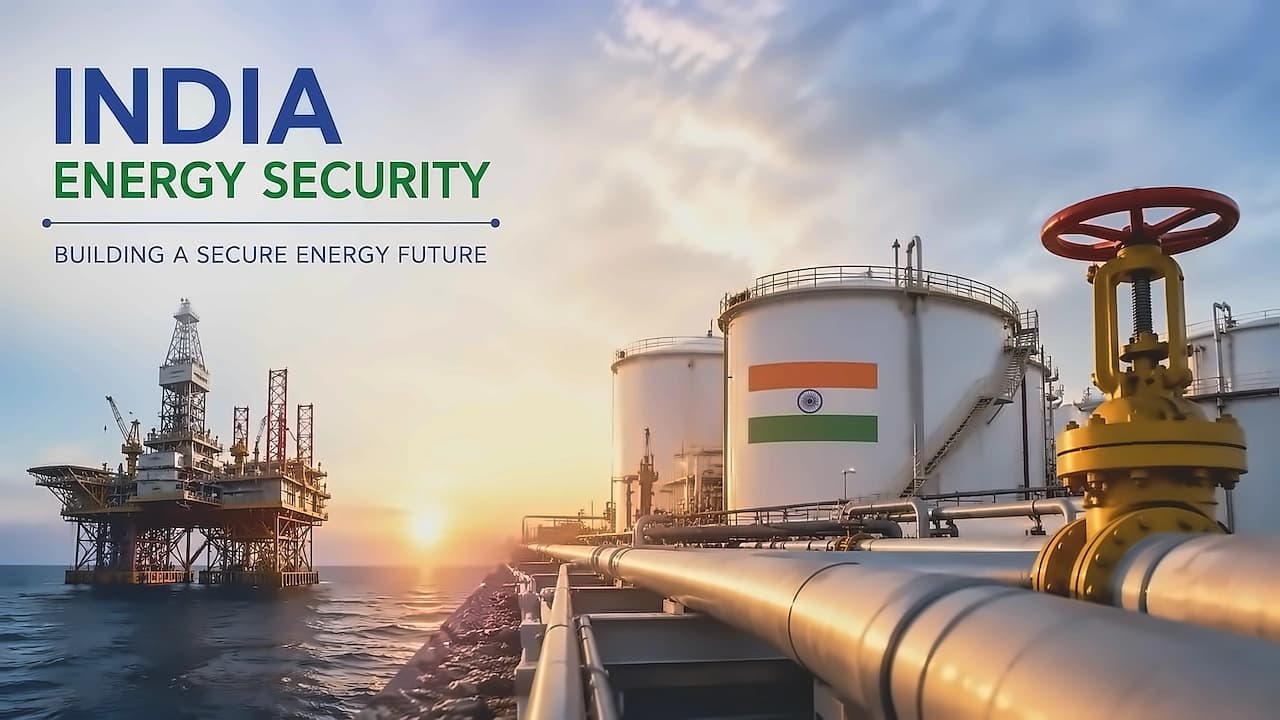
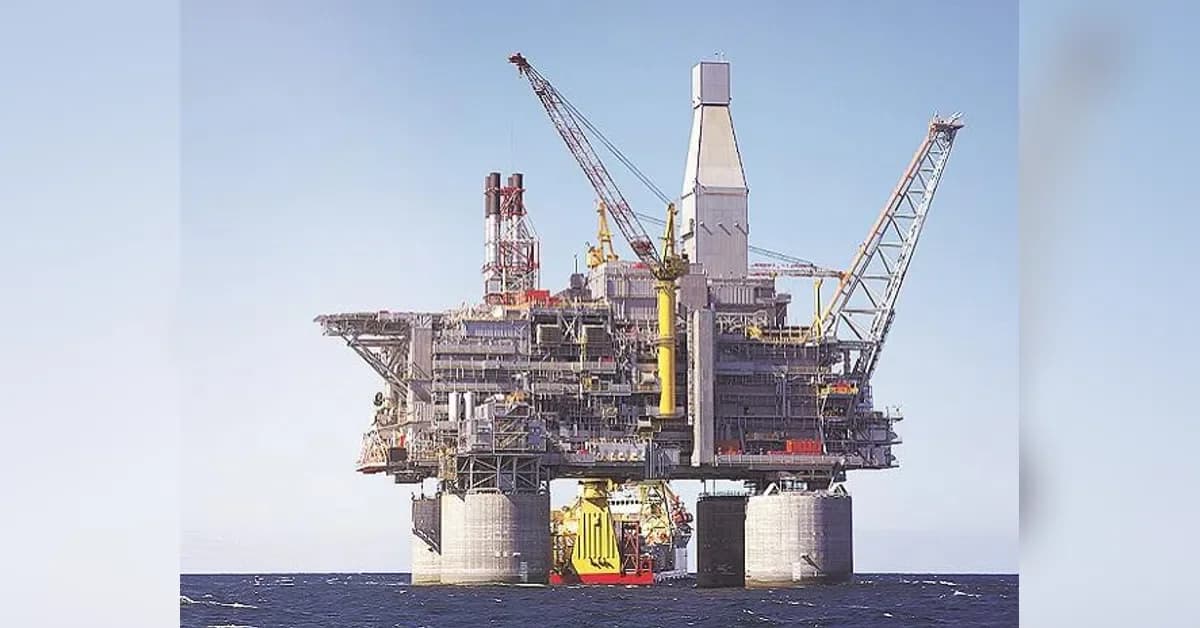
India has launched the ₹84,000-crore Samudra Manthan scheme for national offshore exploration, with Principal Secretary to Prime Minister Shaktikanta Das announcing the initiative at the India and the Emerging Economic Order Forum (IEOF) in New Delhi on Tuesday. As reported by The Hindu BusinessLine, the scheme was approved by the Union Cabinet in July 2026 with a Phase 1 outlay of ₹84,000 crore up to the financial year 2030-31. The programme aims to accelerate exploration and production in deep and ultra-deep-sea areas, strengthen domestic hydrocarbon output and reduce dependence on imported energy. The government expects the programme to catalyse reserve accretion of more than 600 million tonnes of oil and oil-equivalent gas.
India must strengthen domestic oil exploration and technological capabilities to safeguard its energy security at a time when geopolitical tensions and disruptions to global supply chains are increasingly affecting energy flows and prices. Speaking at the Shillong curtain raiser of India Energy Week (IEW) 2027 on Monday, Oil India Limited Director (Finance) Abhijit Majumder emphasized that the global energy industry was "at a turning point," with demographic growth, rising energy demand, geopolitical tensions and economic development putting increasing pressure on energy security. As per Rediff Moneynews, Majumder stressed that this strengthening is crucial for India's energy security, especially given the current global geopolitical landscape. Principal Secretary Shaktikanta Das reinforced this message, stating that India remains "highly dependent on imported oil and gas" and needs to bring down its import dependence.
Majumder cited recent disruptions around the Strait of Hormuz as an example of how instability in one part of the world can pose a wider threat to global energy security. As reported by The Hindu BusinessLine, he noted that disruptions to global supply chains and major energy corridors can have an immediate impact on energy flows, prices and economies worldwide. The official highlighted the need for India to prepare for such supply chain vulnerabilities through enhanced domestic energy capabilities, emphasizing the critical importance of maintaining energy security in an increasingly interconnected global economy.
The government is simultaneously advancing mineral security through two offshore mineral blocks in the Andaman Sea region that will be offered for composite licence under the Offshore Areas Mineral (Auction) Rules, 2024. As reported by Business Standard, the Ministry of Mines will launch this auction on Thursday to unlock India's offshore mineral potential and strengthen long-term mineral resource security. The blocks will be offered for composite licence to encourage systematic exploration, attract investment and promote the adoption of advanced technologies for offshore mineral exploration and development. Minerals such as cobalt, nickel, manganese, copper and rare earth elements are important inputs for electric mobility, renewable energy systems, advanced electronics and strategic industries, contributing to India's objectives of self-reliance and sustainable economic growth.
Principal Secretary Shaktikanta Das identified Samudra Manthan as one of three ongoing areas of reform that could offer lessons for the Global South. The other two areas highlighted were India's space sector and nuclear energy. On space, Das said the Space Policy 2023 had opened the entire space value chain to private participation, innovation and investment, including satellite manufacturing, launch services and downstream applications. He also pointed to the launch of Vikram-1, describing it as India's first privately developed orbital rocket. On nuclear energy, Das said the government had set a target of achieving 100 GW of nuclear power generation capacity by 2047, forming part of a broader effort to expand nuclear energy in India's power mix and support its net-zero target for 2070. He highlighted the first criticality of the indigenously designed prototype fast breeder reactor at Kalpakkam in Tamil Nadu in April 2026.