The Union government has approved ₹4,687 crore in interest subsidies for eligible ethanol projects under various support schemes, according to Minister of State for Petroleum and Natural Gas Suresh Gopi. In a written reply to the Rajya Sabha, Gopi revealed that the government has released ₹2,075 crore to the National Bank for Agriculture and Rural Development (Nabard) since 2022-23. Nabard serves as the nodal agency responsible for disbursing the interest subsidy to eligible projects, providing a major boost to India's ethanol blending programme.
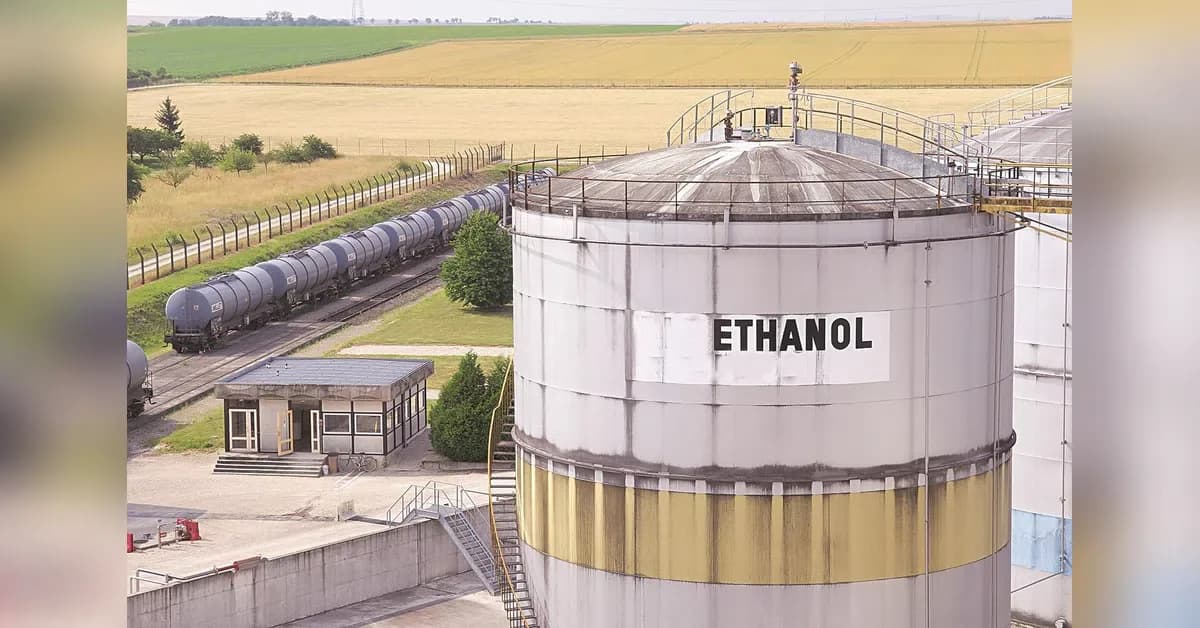
Under the government's ethanol promotion programme, eligible projects receive an interest subvention of 6 per cent per annum or 50 per cent of the interest charged by banks and financial institutions, whichever is lower, for five years. The benefit is available on term loans taken to set up new distilleries or expand ethanol production capacity at existing facilities, and includes a one-year moratorium on loan repayment. The scheme covers molasses-based, grain-based and dual-feed distilleries, as well as projects to expand ethanol manufacturing capacity. The financial support is aimed at accelerating investments in ethanol production, strengthening India's biofuel infrastructure, and supporting the country's target of higher ethanol blending in petrol.

The interest subsidy forms part of a comprehensive policy framework to encourage investment across the ethanol value chain. Under the PM JI-VAN Yojana, the government provides financial support and viability gap funding for second-generation (2G) bioethanol projects that use agricultural residues and biomass as feedstock. Additionally, the government has introduced a separate interest subvention scheme to help cooperative sugar mills convert single-feedstock distilleries into multi-feedstock facilities capable of processing maize and damaged foodgrains alongside sugarcane. These initiatives collectively support India's renewable fuel initiatives and energy security objectives.
Separately, Gopi informed the Rajya Sabha that 50% of the 1.75 million tonne petroleum storage facility being developed by state-run Oil and Natural Gas Corporation (ONGC) at Mangaluru will be earmarked for India's Strategic Petroleum Reserve (SPR), while the remaining capacity will be used for commercial operations. The project is being fully funded by ONGC. The government has established Phase-I strategic petroleum reserve facilities with a combined capacity of 5.33 million tonnes at Visakhapatnam (1.33 million tonnes), Mangaluru (1.5 million tonnes) and Padur in Karnataka (2.5 million tonnes). This strategic reserve development enhances India's energy security alongside its renewable fuel initiatives.
The financial support is aimed at encouraging investment in ethanol production capacity, strengthening India's biofuel infrastructure and advancing the country's ethanol blending programme. The scheme is part of the government's broader strategy to improve energy security, reduce dependence on imported crude oil and promote cleaner transport fuels. Ethanol supplied under the Ethanol Blended Petrol (EBP) programme attracts a concessional Goods and Services Tax (GST) rate of 5 per cent, while public sector oil marketing companies provide long-term offtake agreements, offering producers greater demand certainty. The programme supports India's target of higher ethanol blending in petrol, contributing to the country's renewable energy goals.