The National Unified Scheme for Compressed Biogas (CBG), also known as the National Circular Bioenergy Scheme, has a ₹23,731 crore outlay running from FY27 to FY36. According to reports from Business Standard, the scheme targets a nearly ten-fold leap in domestic CBG production by mobilising private capital. Industry experts believe the scheme could catalyse ₹50,000 crore of private investment over the next three to five years, with total investment over the scheme's ten-year duration potentially being significantly higher. The initiative addresses historical gaps in demand, pricing, infrastructure, financing, and technology support that have constrained sector growth. As per Business Standard, the scheme is designed to turn organic waste and crop residues into clean fuel and rural economic value, with its six pillars targeting comprehensive market development.
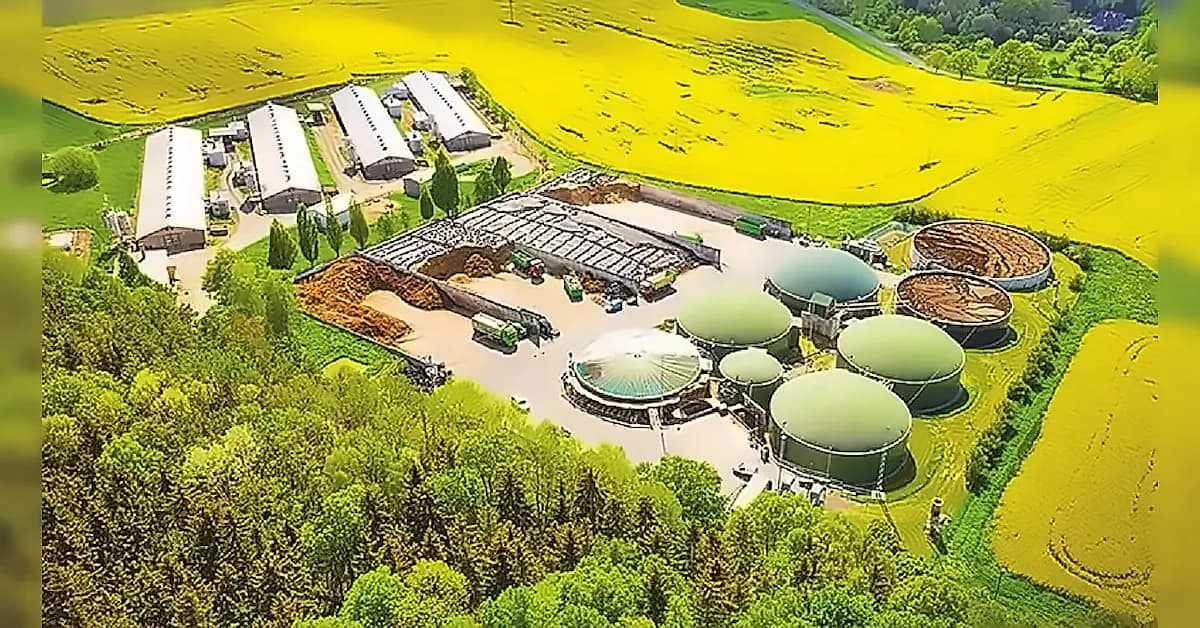
The scheme offers capital assistance of up to ₹2 crore per tonne per day of capacity for greenfield projects, alongside support for brownfield expansions. As reported by Business Standard, the framework provides ₹2,110 per million British thermal unit as an administered price with a minimum 10-year framework and mandatory blending obligations. The scheme includes a dedicated credit guarantee for MSME-led projects and an Ecosystem Challenge Fund to drive feedstock assessment, district planning, technology adoption, infrastructure, and capacity building. A CBG project typically requires ₹8-10 crore of capital investment per tonne per day of installed capacity, making the government assistance crucial for reducing effective equity burden and improving project returns. According to Business Standard, the capital assistance covers core plant machinery alongside key assets for feedstock aggregation, manure processing, and value addition, with brownfield expansions also eligible.
According to the Indian Biogas Association (IBA), reduced natural gas imports represents the largest economic gain from the Gobardhan scheme. India currently imports around half of its natural gas requirements, with LNG import bill estimated at $15.2 billion (₹1.28 trillion) in 2024-25. The association projects that even with 1,500 fully functional CBG plants, the trade deficit on natural gas imports could be diminished by one-third of its current level, i.e. $5 billion. The scheme guarantees CBG offtake through mandatory blending obligations and addresses the sector's most critical challenges by supporting both production and distribution infrastructure. As per Business Standard, the scheme's capital assistance of ₹2 crore per tonne per day can reduce the effective equity burden and improve project returns, debt-service capability and lender confidence.
Currently, only 216 CBG plants are active against the 5,000 targeted under SATAT in 2018. As reported by Business Standard, the scheme builds upon SATAT's foundational work while addressing gaps in making projects bankable. The initiative leverages India's 500 million tonnes of crop residue annually that is currently burned and polluting the air. Industry leaders argue Gobardhan could convert policy intent into bankable projects, similar to how production linked incentive schemes transformed solar manufacturing, with assured offtake, stable pricing, and efficient feedstock aggregation addressing previous viability constraints. According to Business Standard, the government has moved from promoting individual CBG plants to creating a complete national bioenergy ecosystem, integrating multiple interventions including CBG blending obligation, Market Development Assistance for organic manure, Biomass Aggregation Machinery scheme, pipeline assistance and the National Bioenergy Programme into a single national framework.
The ₹23,731 crore GOBARdhan scheme creates significant investment opportunities across the CBG value chain, according to analysts. Praj Industries is positioned as the cleanest upstream exposure through plant technology and EPC services, with the framework providing long-term demand via CGD obligations, stable price support of ₹2,110/MMBTU, and capital assistance of up to ₹2 crore per tonne per day. TruAlt Bioenergy offers direct CBG production exposure with multi-location expansion capabilities, potentially accounting for around 22% of industry CBG volumes at full scale with EBITDA margins exceeding 50%. City Gas Distributors including Indraprastha Gas and Mahanagar Gas provide downstream exposure to the rising blending obligations of 3% in FY27, 4% in FY28, and 5% from FY29. Large Oil Marketing Companies like Indian Oil Corporation, BPCL, and HPCL are expected to participate but with relatively small financial impact compared to their refining businesses.