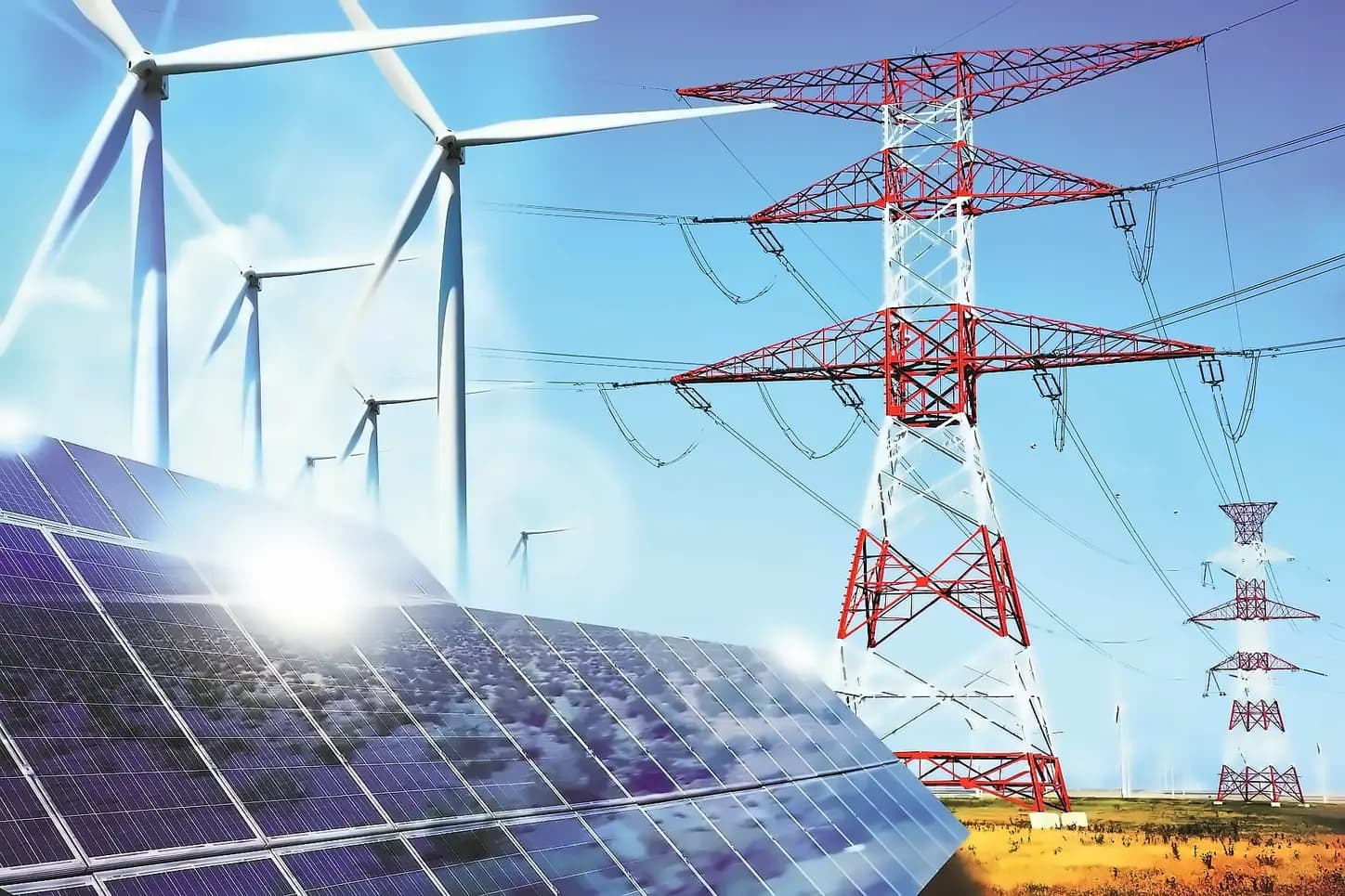
The scheme aims to evacuate 135 GW of renewable energy by FY 2032-33, with ₹1.36 trillion allocated to intra-state transmission systems and ₹50,000 crore for battery energy storage systems. This unprecedented investment is creating both opportunities and challenges for transmission infrastructure companies and equipment manufacturers across the value chain.
Power Grid Corporation: Market Leadership Amid Margin Pressure
Power Grid Corporation of India maintains a commanding 44% cumulative market share in tariff-based competitive bidding (TBCB) projects, with work-in-hand of ₹1.75 lakh crore. However, the company faces significant financial headwinds. Return on equity has declined from 23% in FY22 to 16.5% in FY26, while profit growth has remained flat despite capital spending accelerating to ₹37,279 crore in FY26. The company's work-in-hand composition has shifted dramatically to 83% from bid projects (₹1.46 lakh crore), up from a more balanced mix historically. Transcript +5
This concentration in TBCB projects creates earnings stability risks, particularly as intra-state auction intensity varies significantly across states. Rajasthan has approximately ₹60,000 crore of projects, Karnataka ₹60,000-70,000 crore, while other states show varying levels of activity. Power Grid's 50-60% market share guidance in intra-state projects exposes it to state-level execution volatility. The TBCB model offers superior return potential compared to cost-plus mechanisms, with equity IRR typically ranging 11-13%, but execution efficiency becomes critical to capturing these returns. Transcript +2
Equipment Manufacturers: Margin Pressure and Execution Challenges
The transmission equipment manufacturers face divergent challenges. Techno Electric & Engineering Co. Ltd. is experiencing operating profit growth (13%) lagging revenue growth (25%) due to elevated input costs for long-lead equipment, particularly transformers and control and relay operations. The company maintains a robust order book of ₹11,000 crore but faces 2-3 year conversion cycles, with Q1 typically representing only 15% of annual revenue. Transcript +2
GE Vernova T&D India reported a 30% decline in order intake alongside gross margin slip to 41.3% despite 38% revenue growth. The margin decline stems from lower export revenue impact, elevated commodity prices, and ramping up of lower-margin high voltage business. Notably, the company has reduced state utility exposure to under 2% of backlog, which improves credit quality but limits direct participation in GEC-III state-level projects. Transcript +4
Transformers & Rectifiers (India) faces the most acute execution challenges. Revenue growth of only 8% contrasts sharply with 218% order inflow surge, reaching ₹2,114 crore in Q1 FY27. The company's ₹6,630 crore order book includes major state utility orders from GETCO (₹228 crore), RRVPNL (₹175 crore), and PGCIL (₹1,000+ crore). However, delivery constraints at the Changodar plant, delayed by extreme monsoon conditions and labor shortages, have forced the company to lower growth guidance from 30-35% to 25% for FY27. Investor Presentation +5
State-Level Competition and Right-of-Way Bottlenecks
Transformers & Rectifiers maintains direct relationships with state transmission utilities in Gujarat, Rajasthan, and Andhra Pradesh, positioning it uniquely for GEC-III's ₹1.36 trillion intra-state opportunity. This contrasts with Power Grid's focus on interstate transmission and GE Vernova's reduced state utility exposure. However, right-of-way delays in Rajasthan and Gujarat create execution bottlenecks that differentially impact companies. Transcript
For APAR Industries Ltd, ROW constraints actually create opportunities through reconductoring demand. The company's premium conductor segment contributed 50.3% of revenues versus 43.7% a year ago, driving EBITDA growth. Export orders worth ₹2,800 crore from U.S. and European utilities provide insulation from domestic delays. In contrast, Techno Electric faces 6-9 month project start delays for substation installations, as land acquisition delays extend revenue realization cycles to 2-3 years. Transcript +3
ISTS Waiver Expiration: Acceleration Window
The June 2028 expiration of the Inter-State Transmission System charge waiver for Battery Energy Storage Systems creates a critical acceleration window. The waiver provides 100% exemption for BESS projects commissioned by June 30, 2028, with 25% annual phase-down thereafter. This creates powerful incentives for state transmission utilities to accelerate infrastructure deployment before the deadline.
Power Grid Corporation is best positioned to benefit from this acceleration due to its scale, market leadership, and financial strength. The company's ₹1.75 lakh crore work-in-hand and 44% TBCB market share provide execution capability that peers cannot match. Techno Electric's digital substation technology and 765 kV AIS/GIS expertise position it well for substation acceleration, while Transformers & Rectifiers' direct state utility relationships provide access but execution constraints limit near-term capture. Transcript +3
Battery Storage: Secondary Opportunities
The ₹60 billion central funding for battery storage (approximately 12% of total BESS costs) creates substantial secondary opportunities for transmission equipment makers. Grid integration requirements including STATCOM systems, synchronous condensers, power transformers, and HVDC terminal stations represent a 2-3x multiplier on the direct BESS investment.
GE Vernova is well-positioned with STATCOM expertise (25+ units operational), HVDC capabilities, and technology leadership. The company expects one HVDC project per year for 3-4 years, with meaningful growth from HVDC execution starting FY29. Transformers & Rectifiers has potential through its high-voltage transformer capabilities and capacity expansion to 75,000 MVA, but must resolve Changodar constraints to fully capture opportunity. Transcript +3
Valuation Concerns and Market Expectations
The market has priced these companies with varying expectations. APAR Industries trades at 60 times earnings after a 156% share price rally from ₹6,800 to ₹17,400, reflecting optimism about premium conductor demand but raising questions about sustainability given margin volatility from 3.8% to 7.1% between quarters.
Transformers & Rectifiers' 45% stock price decline over the past year reflects market concerns about execution capacity despite record order inflows.
The path forward requires companies to balance aggressive order booking with execution capability. Power Grid's market leadership provides insulation but margin pressure remains a concern. Equipment manufacturers must resolve production scaling challenges to convert record order books into earnings. The June 2028 ISTS waiver expiration creates both opportunity and pressure—companies that execute efficiently will capture the GEC-III opportunity, while those facing execution bottlenecks may see valuations further compress as the market rewards execution over order book size.