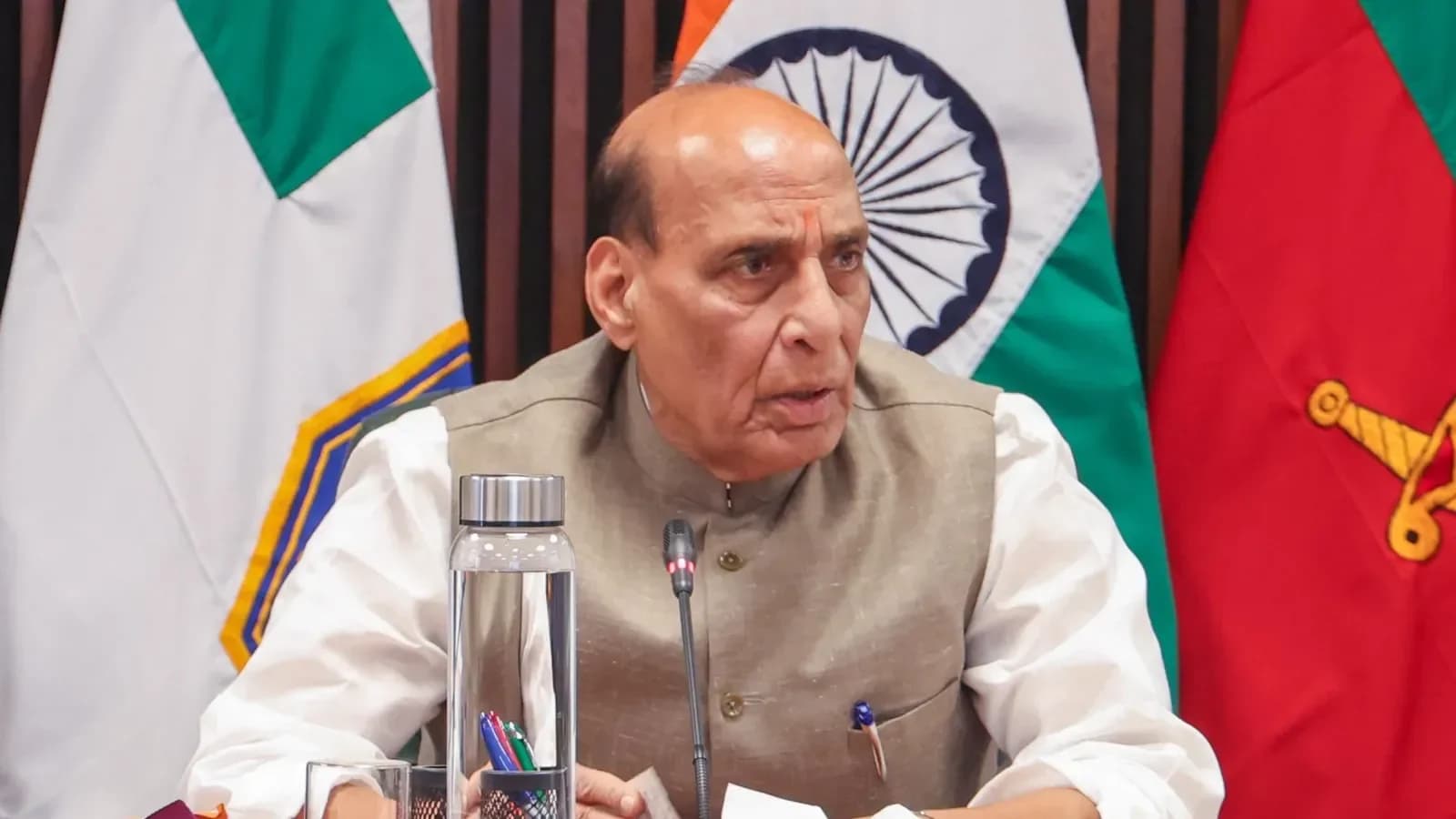
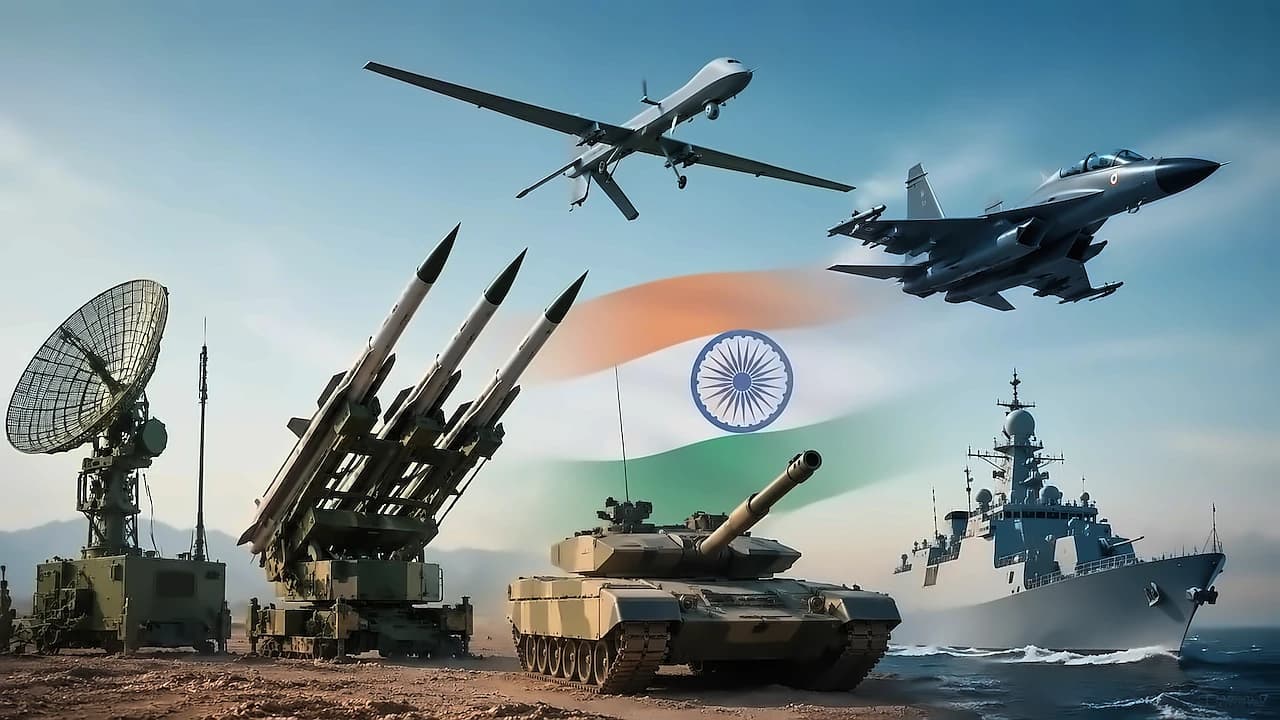
The Defence Acquisition Council (DAC), chaired by Defence Minister Rajnath Singh, has granted in-principle approval to capital acquisition proposals worth approximately ₹2.12 trillion for the armed forces. According to the Ministry of Defence (MoD), this represents a significant approval for India's defence modernization efforts across all three services. The approval process involves the Defence Acquisition Council (DAC), which functions under the Defence Acquisition Procedure 2020 to streamline procurement procedures. As per latest reports, these approvals are known as Acceptance of Necessity (AoN), covering military equipment for the Indian Army, Navy and Air Force. The approvals cover high mobility vehicles, artillery systems, light helicopters, air-defence, and drone systems to strengthen the armed forces' operational and surveillance capabilities.
Defence stocks witnessed a sharp rally with gains up to 9% in Tuesday's intraday deals following the DAC approval, as reported by LiveMint. With around 82% of the approved procurements earmarked for Indian industry, the clearances also highlighted the government's continued push towards domestic defence manufacturing. Twenty-one of the 22 Nifty India Defence constituents traded green in early trade, driving the sectoral index 2.8 per cent higher to 8,907.90. Among the top gainers were Apollo Micro Systems up 8.7%, Data Patterns up 8.1%, Paras Defence up 7.3%, and Astra Micro Systems up 5.9%. MTAR Technologies shares were locked in the 5% upper price band, while PSU stocks such as Midhani, HAL, BEL, BEML and Mazagon Dock rallied 3-4%. Aequs bucked the sectoral trend, slumping nearly 19% following a wider loss of ₹52.2 crore for Q2 FY27 compared to ₹20.6 crore loss in the same period last year, despite revenue growth of 45% year-on-year. Paras Defence, Sigma Advanced Systems, Mishra Dhatu Nigam (MIDHANI) and Garden Reach Shipbuilders & Engineers (GRSE) also gained 3–5%.
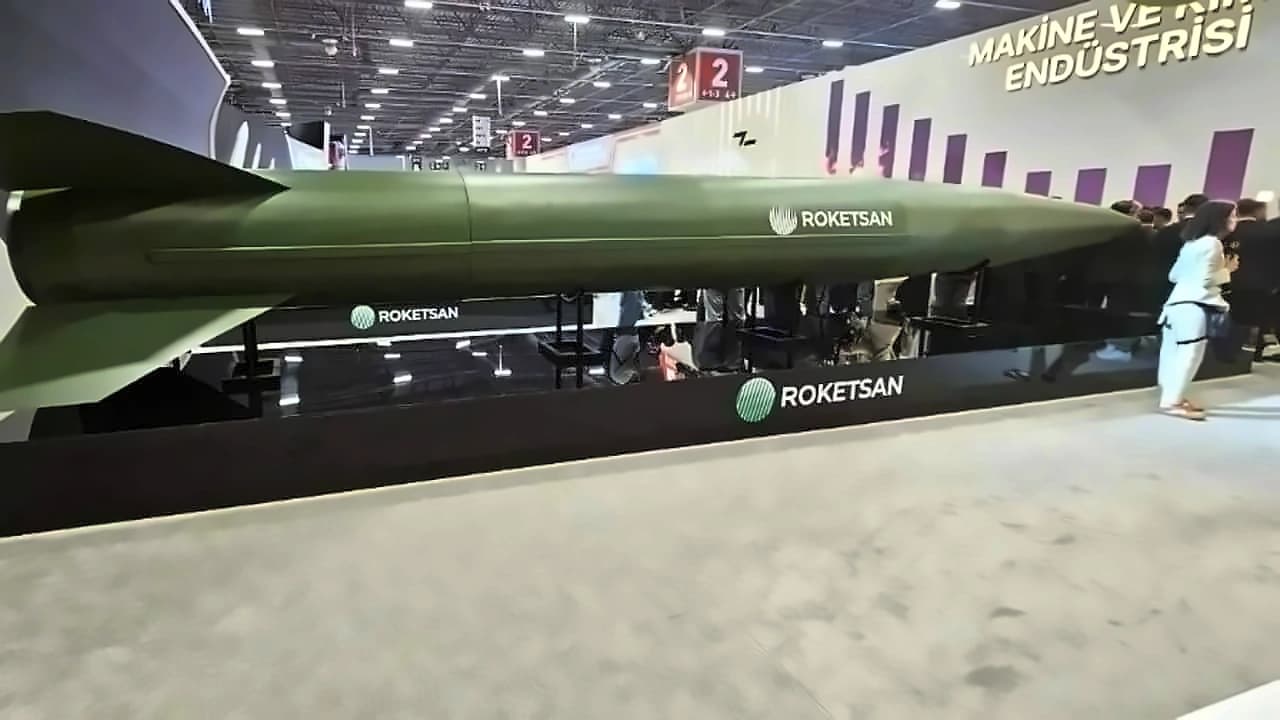
The Ministry of Defence on Monday granted in-principle approval for the procurement of more than 300 additional K9 Vajra-T self-propelled howitzers at an estimated cost of over ₹20,000 crore. The proposed acquisition is part of the Indian Army's artillery modernisation plans and aims to strengthen its firepower along the borders with China and Pakistan. The K9 Vajra-T is India's variant of South Korea's K9 Thunder, a 155 mm, 52-calibre tracked self-propelled howitzer manufactured by Larsen & Toubro (L&T) at its Hazira facility in Gujarat, in partnership with South Korea's Hanwha Aerospace. The Indian Army currently operates around 100 K9 Vajra guns, ordered under a ₹4,500 crore contract signed in 2017, with deliveries completed in 2021. A second order for 100 guns, worth ₹7,629 crore, was signed with L&T in December 2024. The latest proposal would help the Army build a fleet of 500 guns, equivalent to 25 artillery regiments, with 20 guns in each regiment. The first contract valued at ₹4,500 crore for 100 guns was signed in May 2017, while the second contract worth ₹7,629 crore for another 100 guns was signed in December 2024. The programme has achieved more than 50% indigenisation by value at the primary contract and programme-management level, with more than 80% of physical work packages and sub-assembly manufacturing handled in India. The newer guns have more than 80 per cent indigenous content and are planned for extreme cold and high-altitude conditions, with initial trials conducted in deserts and not in cold climatic conditions.
For the Army, the DAC approved comprehensive proposals covering High Mobility Vehicles (HMVs), Self-Propelled Tracked Gun Systems, Gun Shot Response Systems (GSRS), Light Multi Role Helicopters (LMRH), Very Short-Range Air Defence Systems (VSHORADS), Platform Based Counter Unmanned Aerial Systems (C-UAS), Long-Range Unmanned Aerial Systems, Surveillance UAVs, Integrated Surveillance and Strike Systems, and Long Range Kamikaze Drone Systems. The High Mobility Vehicles will improve operational mobility and logistics support in challenging terrain, while the tracked gun systems will provide mobility and firepower to mechanised formations. Gun Shot Response Systems will strengthen real-time situational awareness, and Light Multi Role Helicopters will serve both the Army and the Air Force in reconnaissance, surveillance, combat, troop search and rescue, humanitarian assistance and disaster relief operations. The very short-range air defence systems will provide critical protection against aerial threats, with VSHORADS having a range of about eight kilometres. The counter-drone systems are intended to improve the survivability of tanks on the technology-intensive battlefield, while the C-UAS systems will strengthen the survivability of tanks against drone threats. For the Navy, the DAC approved the procurement of Active Offboard Decoy Systems (AODS) and other major naval platforms. The AODS is expected to strengthen the Navy's anti-missile defence, particularly against modern anti-ship missiles, while the indigenously designed and constructed platforms will enhance naval combat capabilities with modern warfare systems.
For the Air Force, approvals include helicopters, air defence systems, weapons and Mobile X-Band Doppler Weather Radar Systems. Special Utility Helicopters will meet air transport requirements, while the weather radar systems will provide high-resolution, localised weather surveillance in forward areas. The Unmanned Aerial System Brick Long Range, surveillance UAVs, Integrated Surveillance and Strike Systems, and Long Range Kamikaze Drone Systems will strengthen the Army's surveillance and targeting capabilities, while the air defence systems and weapons will enhance the Air Force's combat and air defence capabilities. According to news agency ANI, the approvals cover a wide range of military equipment, including artillery systems, helicopters, counter-drone technology, surveillance and strike drones, naval missile defence systems, air defence equipment and weather radars. The K9 Vajra-T howitzer is an artillery gun that fires explosive shells over long distances, including at high angles to hit targets behind obstacles. Unlike other towed artillery, which must be pulled by a vehicle, the K9 Vajra carries its gun on an armoured, tracked chassis to help the gun move with artillery formations, fire at enemy positions and relocate quickly to reduce its exposure to retaliatory fire. The system has a reported firing range of around 40 km, extendable to approximately 50 km with certain ammunition, can travel at speeds of up to 67 km per hour on roads and houses a crew of five. It can fire three rounds in less than 15 seconds.
Bharat Electronics (BEL) has emerged as the most direct and broadest beneficiary of the ₹2.12 lakh crore package, with potential exposure spanning radars, electronic warfare, air defence, counter-drone systems, naval decoys and weather radar. As per Harshit Patel, Co-head of Research at Equirus Securities, BEL could supply Air Force air defence radars, fire-control systems and command-control equipment, while also participating in Integrated Surveillance and Strike Systems and counter-drone systems mounted on tanks. Hindustan Aeronautics (HAL) is exposed to helicopter procurement for Army and Air Force, including the Light Multi Role Helicopter (LMRH) requirement, with Pankaj Kumar from Kotak Neo identifying exposure to two helicopter programmes. Bharat Dynamics (BDL) is positioned for VSHORADS and Air Force weapons requirements, while Larsen & Toure (L&T) has potential exposure to the Self-Propelled Tracked Gun System and naval platforms. Sunny Agrawal from SBI Securities identifies BEL, HAL, BEML, L&T, Bharat Forge, Solar Industries India, Garden Reach Shipbuilders & Engineers, Data Patterns, Astra Microwave and Zen Technologies as key stocks to watch based on their business exposure. Defence analysts expect the earnings impact to be back-ended, with Kotak Neo estimating around ₹7 lakh crore in new orders over FY27 to FY29 and cumulative AoN approvals since FY24 crossing ₹20 lakh crore. Mirae Asset Sharekhan's Ankit Soni expects major contracts from these approvals around 2029-30, with revenue contributions beginning from 2031, while Kotak Neo maintains an ADD rating on HAL with fair value of ₹5,305 and on BEL with fair value of ₹410.