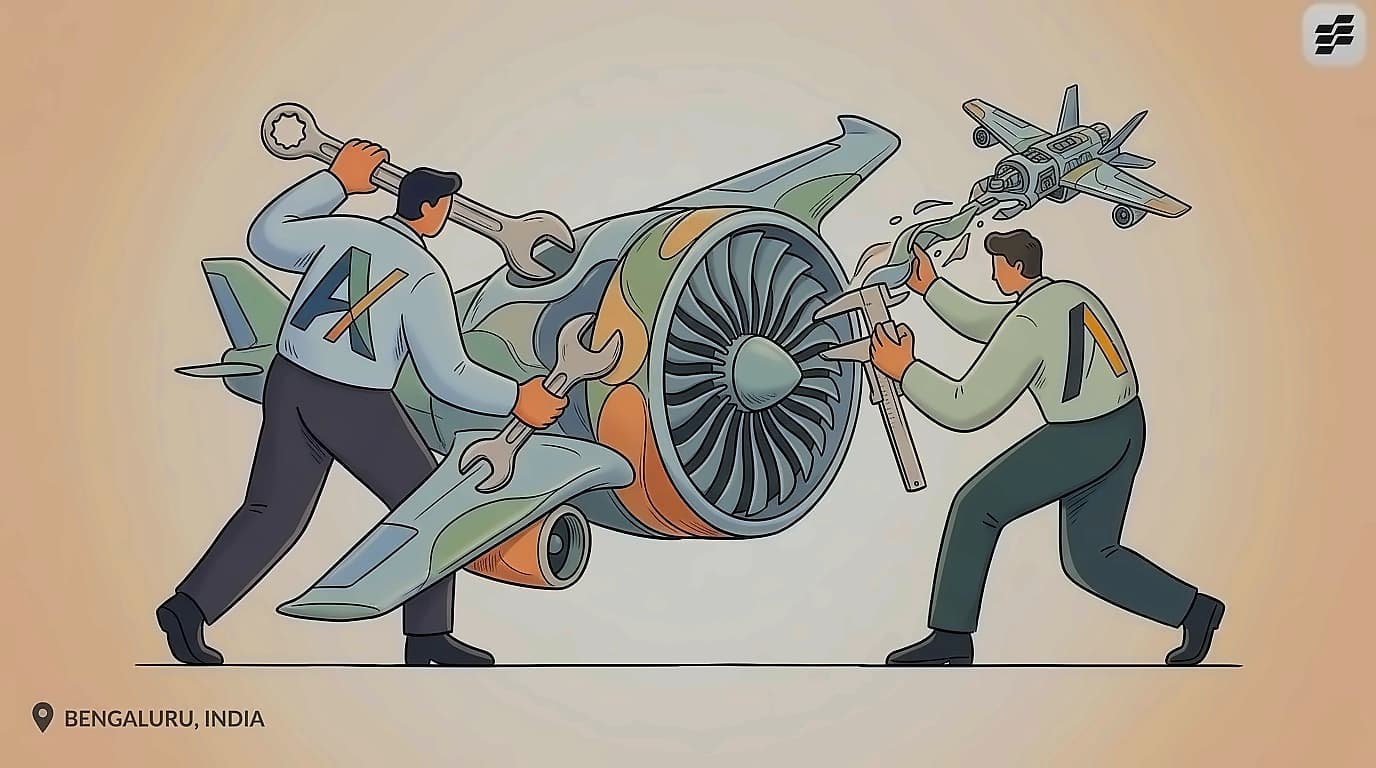
India's defence sector is riding a wave of government spending. The push for localisation under Atmanirbhar Bharat has opened up thousands of crores in revenue potential. Yet, for companies like Data Patterns (India), Hindustan Aeronautics, and Bharat Electronics, the gap between receiving orders and converting them into revenue is widening. The problem isn't a lack of demand. It's a complex web of execution bottlenecks that sit largely outside the companies' control.
The Inspection Bottleneck
The most immediate bottleneck is a shortage of inspection personnel at customer agencies. Data Patterns has highlighted that finished products often sit ready for delivery, waiting for inspection teams that don't arrive because the customer's own delivery schedules have slipped. Since revenue is recognised only upon customer acceptance, this directly delays revenue recognition. This isn't just a Data Patterns issue. It's a systemic risk for the entire sector. When inspections are delayed, deliveries are pushed back, and revenue that should have been booked this quarter gets pushed into the next, creating unpredictable quarterly swings. Transcript
The 18-Month Programme Delay
At Data Patterns, a major programme was delayed by over 18 months, followed by further extensions. The cause wasn't internal execution failure but a long, protracted approval process at the customer end before orders could be placed. This delay has a cascading effect. It prevents negotiated orders from converting into firm contracts, leaving a large portion of the order book in a state of limbo.
A massive ₹1,726 crore was still under negotiation. Until those negotiated orders convert to firm contracts, they provide no revenue visibility, making quarterly performance highly volatile. Transcript +1
The Working Capital Squeeze
These delays aren't just a revenue timing issue. They directly impact working capital and cash flow. Companies like Unimech Aerospace and Axiscades Technologies have seen their working capital days rise as long-cycle aerospace and defence programmes require more inventory and longer customer acceptance before billing. Axiscades Technologies even deferred about ₹142 crore of revenue due to supply chain and logistics issues, leading to negative operating cash flow in FY26. When revenue is delayed, the cash that should have come in doesn't, but the costs of holding inventory and running facilities continue. This squeeze can pressure margins and force companies to rely more on debt or internal accruals to fund operations. Transcript +1
The Government Customer Risk
The root cause of many of these issues is the sector's heavy dependence on the Ministry of Defence (MoD) and related agencies.
Bharat Electronics gets about 90% of its business from defence. Data Patterns counts DRDO, HAL, MoD, and BrahMos as its major customers. This concentration creates a monopsony—a single powerful buyer. When the MoD changes its procurement procedures, inspection protocols, or simply delays approvals, the impact on suppliers is immediate and severe. There is no alternative customer to turn to. This dependence also affects bargaining power. Pricing is often set by negotiation and cost scrutiny, leaving suppliers with limited room to pass on cost increases or protect margins. Annual Report +2
The HAL Contract Opportunity
Amidst these challenges, a potential game-changer looms for Data Patterns. The company has reportedly secured the Lowest Bidder (L1) position for a ₹1,300 crore contract from Hindustan Aeronautics for buffer amplifier and Built-In Test Equipment modules. If awarded, this single contract would be larger than Data Patterns's entire FY26 order inflow and would significantly boost its firm order book. However, the contract is not yet signed. The conversion of this L1 position into a firm contract is the critical variable. Brokerages like ICICI Securities have emphasised that converting the negotiated pipeline into firm orders is the key monitorable for Data Patterns's growth. The execution timeline is aggressive—just 180 days from award—which would pack a massive amount of revenue into a short period, testing the company's capacity and, crucially, HAL's ability to inspect and accept the products on schedule.
Margin Dynamics and Operating Leverage
The sector's margin story is a tale of two forces. On one hand, operating leverage can boost margins when deliveries ramp up. Fixed costs like employee salaries and facility overheads are spread over a larger revenue base.
Data Patterns guides for a healthy 35-40% EBITDA margin for the full year, assuming strong second-half execution. On the other hand, margin pressure comes from product mix and execution delays. Hindustan Aeronautics expects its EBITDA margin to compress in Q2 FY27 despite strong revenue growth because a higher share of lower-margin manufacturing revenue is expected. Delays add cost. Liquidated damages provisions at Hindustan Aeronautics have risen, and inventory carrying costs increase when programmes stretch out. Transcript +2
Supply Chain and Geopolitical Risks
The final piece of the puzzle is the supply chain. The defence sector is not immune to global disruptions.
Delays in GE engine supplies have already pushed back LCA Tejas Mk1A deliveries. A broader vulnerability lies in critical materials like rare earth magnets, where India's usable stockpile is reportedly just a few weeks. Geopolitical tensions can disrupt these supply chains, leading to cost inflation and further delays. While Bharat Electronics has a high indigenous content of 78-80% and Data Patterns focuses on in-house IP to reduce import dependence, the ecosystem as a whole remains exposed to global shocks. Annual Report +2
The Road Ahead
The medium-term outlook for India's defence sector remains undeniably positive. The government's commitment to self-reliance, the Positive Indigenisation Lists, and the growing private sector participation all point to a multi-year expansion. However, the near-term path is fraught with execution risks. For investors, the focus must shift from headline order book numbers to the gritty details of execution. Monitor the conversion of negotiated orders into firm contracts. Track inspection and acceptance timelines. Watch working capital trends. The companies that can navigate these bottlenecks—managing their working capital efficiently, diversifying their supply chains, and maintaining strong relationships with their government customers—will be the ones that successfully bridge the gap between order intake and revenue recognition, turning the promise of Atmanirbhar Bharat into consistent financial performance.