The Centre has waived all customs charges on cotton imports from June 1 to October 31, 2026, marking a significant escalation from the previous partial exemption. According to the latest notification by the finance ministry, the government has exempted cotton from the whole of the duty of customs leviable thereon under the Customs Tariff Act and from the whole of the Agriculture Infrastructure and Development Cess (AIDC). This represents a complete waiver of the previous effective duty of 10.5%, which comprised 5% basic customs duty, 5% agriculture infrastructure and development cess, and 0.5% social welfare surcharge. The temporary duty exemption is expected to reduce input costs across the textile and apparel sector, thereby providing targeted relief to manufacturers and consumers while keeping the interests of domestic farmers in mind. The customs notification was issued by the Department of Revenue under powers conferred by the Finance Act, 2021 and the Customs Act, 1962, stating that the government was satisfied that granting the exemption was necessary in the public interest.
The Indian textile and apparel industry has welcomed the government's decision with industry bodies expressing confidence that the complete removal of cotton import duty will provide momentum to the MSME-dominated sector. A. Sakthivel, chairman of Apparel Export Promotion Council (AEPC), stated that the temporary duty exemption is expected to reduce input costs across the textile and apparel sector, improve cotton availability, and enhance the competitiveness of Indian textile and apparel exports. He noted that the removal of customs duty on cotton imports is the need of the hour and will help moderate domestic cotton prices. Ashwin Chandran, chairman of Confederation of Indian Textile Industry (CITI), emphasized that the import duty was acting as a hindrance to the Indian industry's growth, with cotton imports being largely quality and specification-driven, catering to IT specialised requirements and back-to-back export orders. The Textile Ministry confirmed that the measure, implemented during the cotton off-season, will ensure adequate availability of cotton for the textile industry, support MSMEs, moderate input costs, and strengthen the competitiveness of Indian textiles while safeguarding farmers' interests and ensuring market stability. The decision is expected to particularly benefit small and medium enterprises (SMEs), which have been facing challenges due to the sharp increase in cotton and yarn prices.
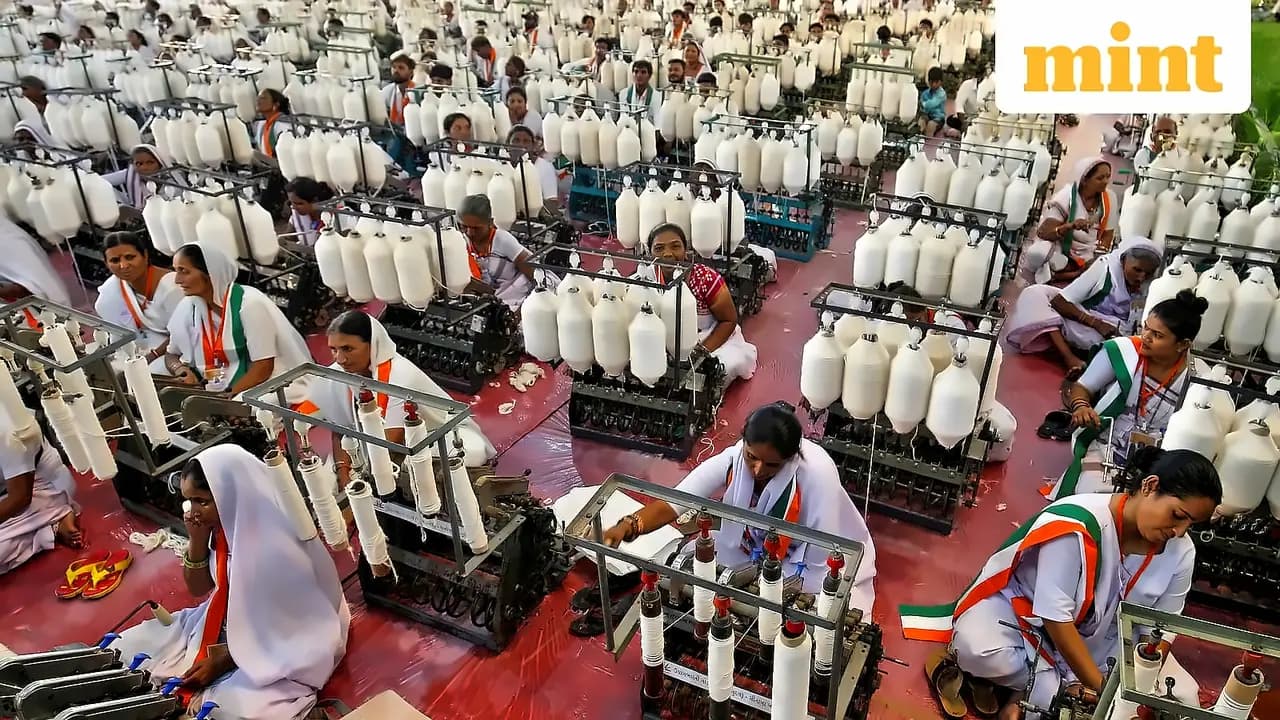
According to Directorate General of Foreign Trade (DGFT) data, India's raw cotton imports surged 54.6% year-on-year to $1.86 billion in FY26, while exports fell 33.9% to $436.35 million. The textile and apparel sector is one of India's top export earners, accounting for around 8-10% of the country's total merchandise exports. However, amid weak global demand and pricing pressures, India's exports of readymade garments fell to $15.81 billion in FY26 from $16.01 billion in FY25, registering a marginal decline of 1.2%. India's textile and apparel sector is one of the country's largest manufacturing industries and a major consumer of cotton, with industry participants often seeking lower import costs during periods of tight domestic supplies and elevated raw material prices.
Cotton farmer Ganesh Nanote from Maharashtra's Vidarbha region expressed concerns about the move, stating that allowing duty-free imports could weaken demand for domestically produced cotton and put further pressure on market prices. He noted that cotton farmers are already facing pressure from rising input costs and volatile prices. Despite overall textile and apparel exports declining 2.2% year-on-year to $35.79 billion in FY26 from $36.6 billion in FY25, the textile and apparel sector remains India's second-biggest employer and a major contributor to the GDP and exports. The exemption will remain in force from June 1, 2026, up to and including October 31, 2026, providing targeted relief to manufacturers and consumers while maintaining the interests of domestic farmers.
Earlier this month, the Union Cabinet, chaired by Prime Minister Narendra Modi, approved an outlay of ₹5,659.22 crore for the Mission for Cotton Productivity (2026-27 to 2030-31) aimed at addressing bottlenecks, declining growth, and quality concerns in India's cotton sector. The mission aligns with the government's 5F vision (Farm to Fibre to Factory to Fashion to Foreign) and focuses on enhancing cotton productivity through the development of high-yielding variety (HYV) seeds resistant to disease and pests, scaling up of existing and latest crop production technologies, ensuring a least-contaminant cotton supply to industry, and promoting high-quality cotton exports. The mission envisages accomplishing the production of 498 lakh bales (170 kg lint each) of cotton by 2031, with approximately 32 lakh farmers benefiting to achieve self-reliance.