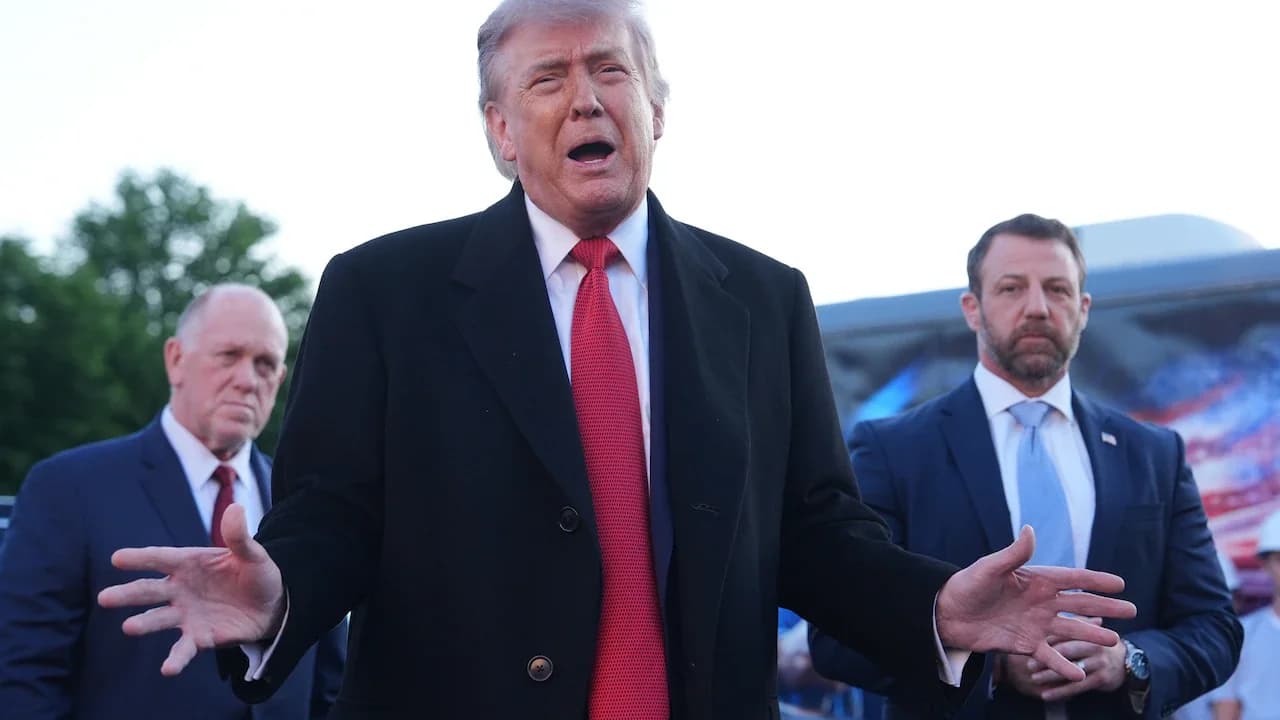
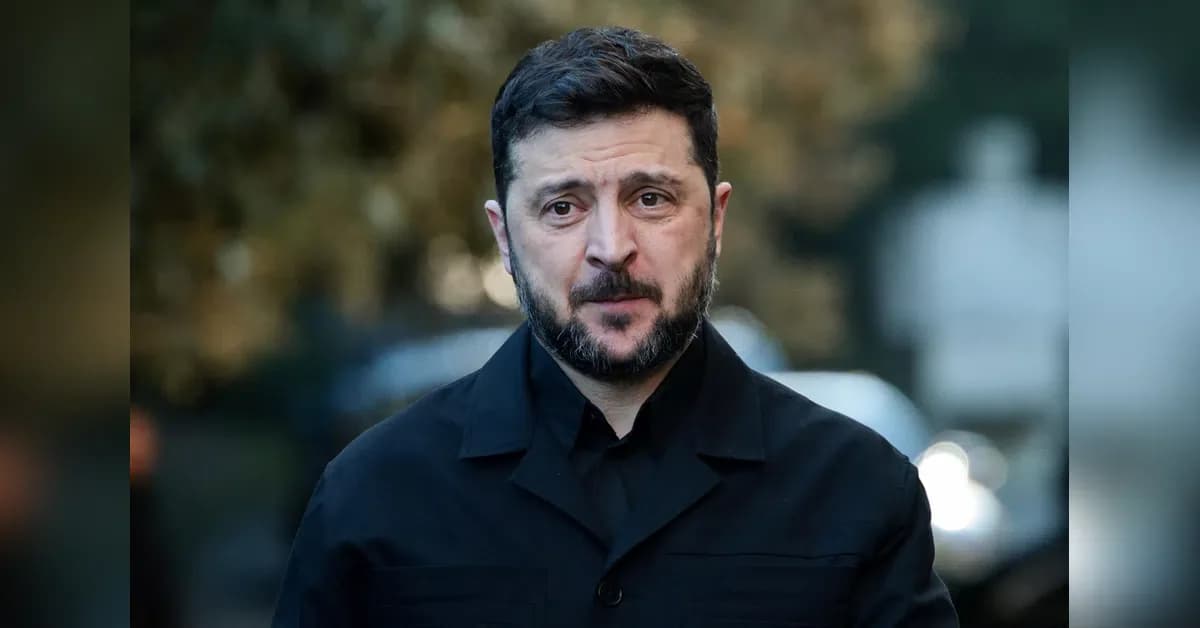
Ukrainian President Volodymyr Zelenskyy has sent a letter to US President Donald Trump and Congress warning of a worsening shortage of air defence systems, particularly anti-ballistic missiles, according to the Kyiv Independent. The letter, delivered by Ukraine's ambassador to the United States, Olha Stefanishyna, to the White House, Speaker of the House Mike Johnson, and other members of Congress, urges Trump and Congress to supply more Patriot PAC-3 missiles and other air defence systems. As per the letter, 'When it comes to air defense against missiles, we rely on our friends. When it comes to defending against ballistic missiles, we rely almost exclusively on the United States'. Zelenskyy emphasized that 'For us - for a nation fighting for its survival - there is hardly anything more painful to see than Patriot batteries with no missiles loaded', stating that 'I ask for your help in protecting Ukraine's skies from Russian missiles' and calling on Washington and Congress to support additional air defence supplies to counter ongoing missile attacks. The appeal comes as Ukraine faces mounting pressure from intensified Russian aerial bombardments and growing uncertainty over the pace of Western military assistance.
The request comes after Russian forces launched a massive assault on the eve of Memorial Day, launching dozens of cruise and ballistic missiles, including hypersonic weapons, alongside roughly 600 drones, as reported by CBS News. This latest escalation killed at least two people and injured nearly 100, with more than 350 residential buildings damaged, including schools and museums in Kyiv. The attack destroyed the Chornobyl Museum, which had recently been renovated ahead of the 40th anniversary of the Chornobyl disaster, according to Zelenskyy's letter. The escalation has prompted Russian authorities to encourage businesses to contribute to protective measures against aerial strikes. The letter appeared calibrated not only to secure military aid, but also to reinforce Ukraine's strategic value to the U.S. at a moment when Washington is balancing commitments in Europe, the Middle East and Asia.
Russian lawmakers have backed a draft bill to have bank employees join the fight against Ukraine's long-range drones that strike deep inside Russia, with trained bank staff shooting down the unmanned aircraft, according to Business Standard. The ambitious plan approved by the country's lower house of parliament on Tuesday envisages banks installing electronic jamming systems on their premises while selected employees would be trained to shoot down incoming drones. The bill, which state news agency Interfax said was first presented last August and later expanded in scope, must still be approved by the upper house Federation Council and signed by Putin before coming into force. Bank employees may jam or intercept drone control signals, and damage or destroy uncrewed aerial, underwater and ground vehicles threatening their facilities, without waiting for a response from security services, as Anatoly Aksakov, chairman of the State Duma Committee on Financial Markets, told Russian media outlet RBK.
Anne Keast-Butler, head of UK's intelligence agency GCHQ, asserted that Russian President Vladimir Putin is 'going backwards on the battlefield', with new data showing that 'almost half a million Russian soldiers have now been killed since the conflict began', according to Business Standard. The conflict has been ongoing for more than four years following Russia's all-out invasion of Ukraine, with neither side making much progress on the 1,250-km front line. As reported by Business Standard, the US weapons that European nations and Canada buy to donate to Ukraine are a vital component of the country's air defences, but only a few NATO allies are investing significant sums in the arrangement. Russia is finding it hard to protect its large land mass from a growing number of attacks by increasingly sophisticated Ukrainian long-range drones, with smaller drones also holding back Russian troops along the front line.
The proposed measures reflect growing problems for Russia against Ukraine's increasingly sophisticated drones, according to Thomas Withington, an associate fellow at the Royal United Services Institute in London, as reported by Business Standard. The draft bill 'seems to indicate that military-level drone defense capabilities in Russia are failing, because if they were working you wouldn't need to do that'. The measure seeks to 'try and offload some of the burden of drone protection to the non-military, non-law enforcement sectors', which are under strain. With Putin keen to shield Russians from the war, the plan could work against his efforts by involving regular citizens in it and making the consequences of the invasion more visible. The widespread installation of equipment and training of staff in how to use it would require a huge organizational effort, with each organization determining which employees would be trained to deploy protective measures. Ukrainian officials are increasingly concerned that limited stocks of Patriot interceptors and other Western-supplied systems may be insufficient to withstand continued heavy bombardment, with Zelenskyy describing the current pace of deliveries through the Prioritised Ukraine Requirements List (PURL) program as no longer keeping up with the reality of the threat they face.