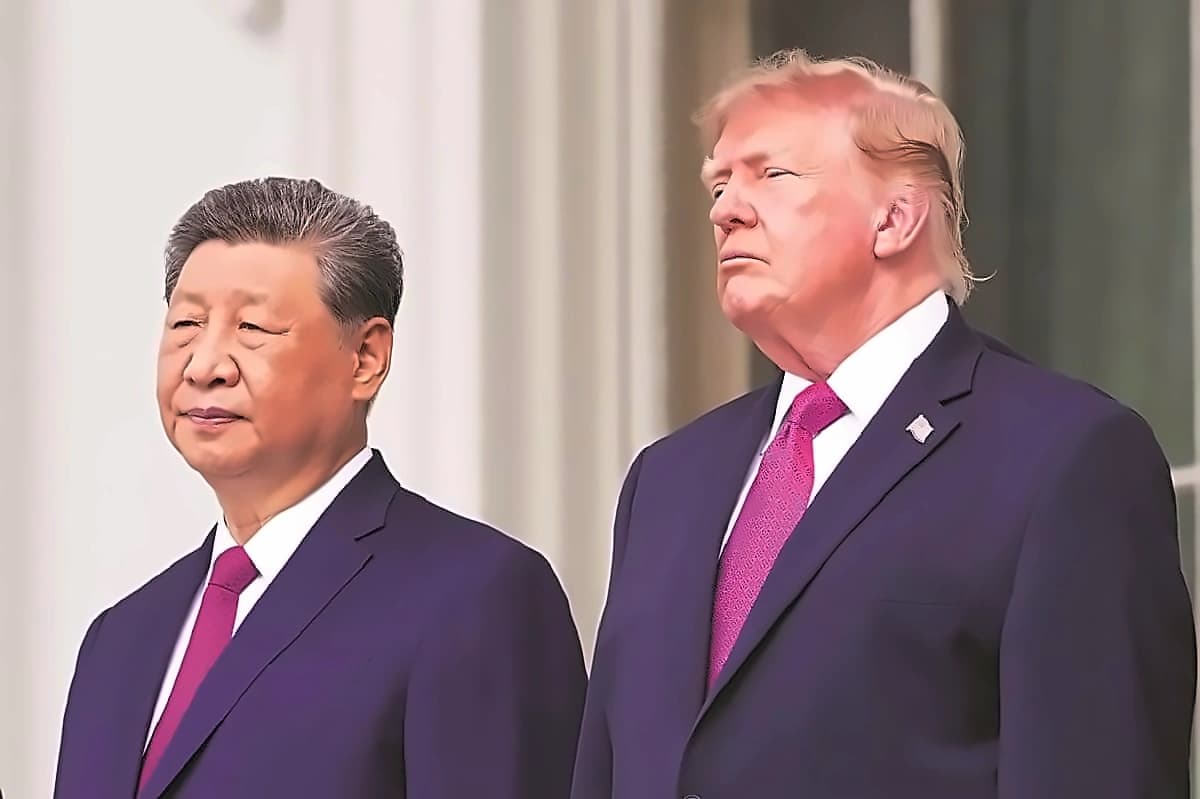
President Trump and Chinese President Xi Jinping concluded their summit in Beijing on Friday after three days of diplomatic engagement, with both countries claiming the visit as a diplomatic win. According to Xinhua, the leaders held their bilateral meeting at China's Zhongnanhai Garden compound late Friday morning, before Trump boarded Air Force One for his return to Washington. The meeting represents the first visit by a US president to China in nine years, highlighting the importance of this diplomatic engagement. As confirmed by the Chinese Foreign Ministry spokesperson, this marks Trump's second visit to China since November 2017, demonstrating the continued importance of bilateral relations.
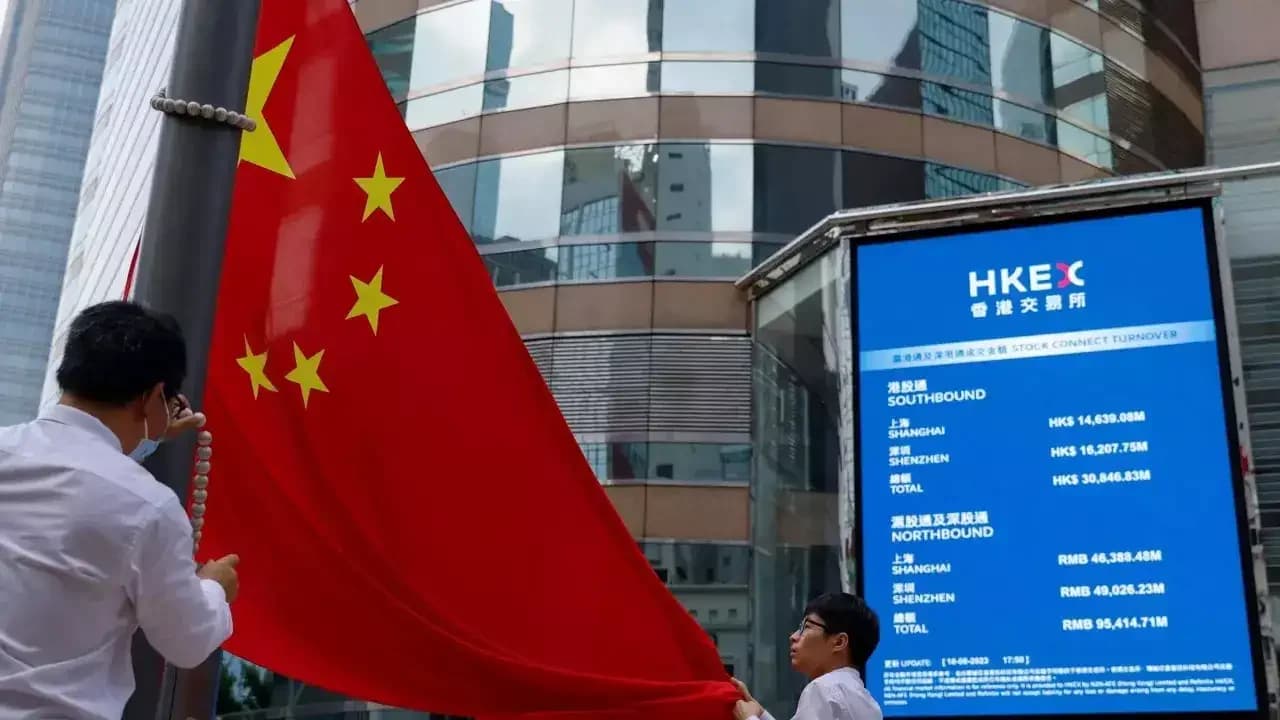
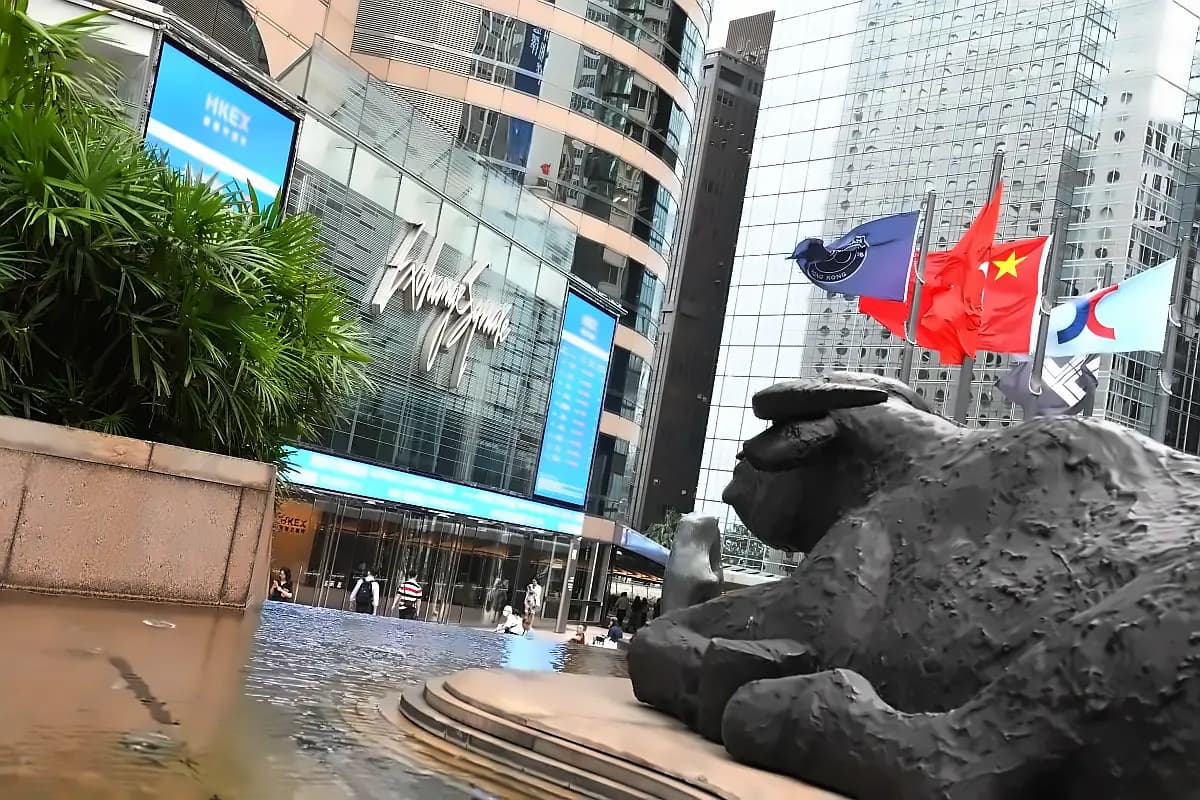
Wall Street experienced significant selling pressure as tech stocks retreated following the summit conclusion. The Nasdaq Composite plunged 1.6% minutes after opening, with the S&P 500 opening 1% lower at 7,431.36 and the Dow Jones Industrial Average down 0.60% at 49,760.76. According to NDTV Profit, the broader market weakness was driven by tech-heavy Nasdaq bearing the bearish brunt as investors retreated from AI-related stocks. Semiconductor majors took particularly heavy losses, with Nvidia Corp. breaking its week-long rally to plunge over 4% to $226.37 in its biggest drop since April, Micron Technology Inc. opening 6% lower at $736.56, and Advanced Micro Devices Inc. trading 4.8% lower at $430.84. The sharpest decline was seen in Intel Corp., which traded 6.3% lower at $108.57, while Microchip Technology Inc. was down 3% to $94.
The summit heralds a new form of US-China cooperation that analysts describe as a 'strategic bargain' rather than global leadership. As reported by Business Standard, this week's meeting represents a 'private bargain between two great powers' that imposes 'hidden costs on those outside, looking in.' The 'Group of 2' (G2) dynamic now appears to operate outside traditional multilateral frameworks, with cooperation no longer automatically producing positive spillover effects for the rest of the world. The Trump administration's shift from shared liberal values to spheres of influence among great powers has fundamentally altered how US economic interests are defined, moving away from the 'Keynesian global order' that characterized post-World War II cooperation.
The summit revealed the 'irony of the Trump–Xi agenda looking more like the old Eastern bloc's approach' through coordination on strategic technologies. According to Business Standard, Beijing wants access to advanced semiconductors necessary to dominate the artificial intelligence race, while Washington wants rare earths and critical minerals whose importance has become more acute as the conflict with Iran strains US stocks of missiles, drones, air-defence systems and other high-end military technologies. The presence of executives such as Nvidia's Jensen Huang, Apple's Tim Cook, Tesla and SpaceX's Elon Musk gave the summit the appearance of a commercial negotiation, with reported agreements on aircraft orders, agricultural purchases, investment forums and corporate access potentially stabilizing the great-power bargain.
The summit revealed significant tensions over Taiwan, with Xi giving an unusually direct warning to Trump on Thursday, saying if the issue was not handled properly, the two countries could see 'clashes and even conflicts'. According to reports, Xi cautioned Trump during the conference that mistreating Taiwan could lead to violence, while Trump subsequently told reporters 'I made no commitment either way, and a decision on a pending US arms sale to Taiwan will come later.' Looking ahead, Xi called their meetings 'historic' and a 'landmark' and said they 'reached important common understandings on maintaining stable economic and trade ties, expanding practical cooperation in various fields, and properly addressing each other's concerns.' However, as Business Standard notes, 'the danger is that Taiwan and other regional actors bear the external costs of a private bargain,' with the 'costs of US–China cooperation may fall on those not in the room.'