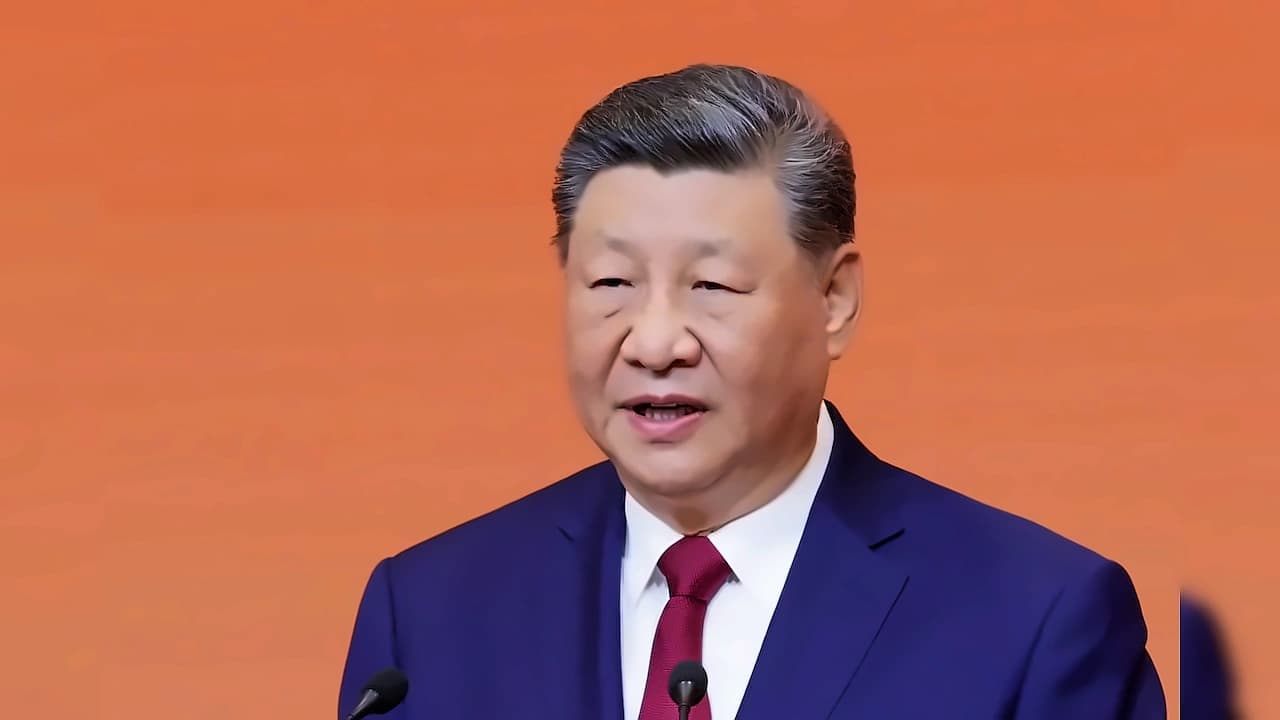
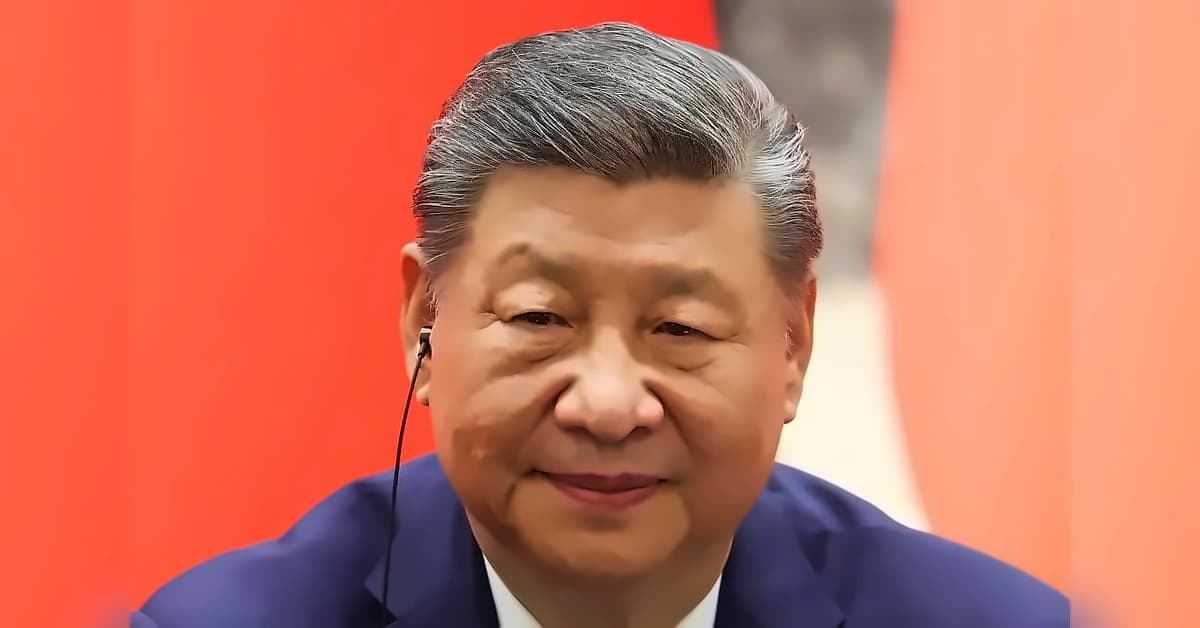
Chinese President Xi Jinping arrived in Pyongyang on Monday for a two-day visit, marking his inaugural overseas trip of the year after recently hosting Donald Trump and Russia's Vladimir Putin in Beijing. According to reports from Xinhua News Agency, Xi flew out of the Chinese capital on a special plane accompanied by his wife Peng Liyuan, de facto chief of staff Cai Qi and Foreign Minister Wang Yi. As per Business Standard, Xi's visit is seen as significant because it is his first international trip this year, with the Chinese leader expected to hold talks with Kim Jong Un during the rare summit. Flags of both countries lined the main avenues of the North Korean capital in a short video released by Xinhua, with welcome banners for Xi draped across landmark buildings. Since then Pyongyang has resumed crossings at the Chinese border and stepped up exchanges frozen during the COVID-19 pandemic, while Air China restored flights between the capitals in March.
President Xi Jinping declared that ties between China and North Korea are at a 'new historical starting point' in a comment published in the neighbour's state media ahead of his arrival in Pyongyang. According to Business Standard, Xi said in the Rodong Sinmun newspaper that China's unwavering policy is to develop ties with the North and both will strengthen exchanges in all areas. "We must oppose hegemony, authoritarianism and all attempts and conspiracies to revive militarism that endanger regional security and stability," Xi added in Beijing's effort to draw Pyongyang closer. Xi also pledged to work with North Korea to promote fair and orderly multilateralism and inclusive economic globalisation to benefit the world, adding that long-term regional peace and stability were the common pursuit of both nations. John Delury, a senior fellow of the Asia Society, noted that Xi's commentary celebrates the 'traditional friendship' between Beijing and Pyongyang, and emphasised strategic cooperation and socialism throughout.
Kim Yo Jong, the influential sister of leader Kim Jong Un, has dismissed Washington's denuclearization goal, describing it as an anachronistic dream and vowing that Pyongyang will continue to strengthen its nuclear capabilities. According to a report carried by state media and cited by The New York Post, Kim Yo Jong said "The US assertion to backbite the status of the DPRK as a nuclear weapons state has no legally binding force and no one will be bound by the US unilateral rhetoric." She also dismissed as false information a recent US claim that President Donald Trump and Chinese President Xi Jinping had reaffirmed a shared commitment to North Korea's denuclearization during talks in Beijing last month. "Some officials in the United States have failed to wake from their escapist and anachronistic dream," she stated. The remarks come as Pyongyang sought to flex its strength by unveiling plans for a 10,000-ton naval destroyer and reaffirming its status as a nuclear-armed state on the eve of Xi's arrival.
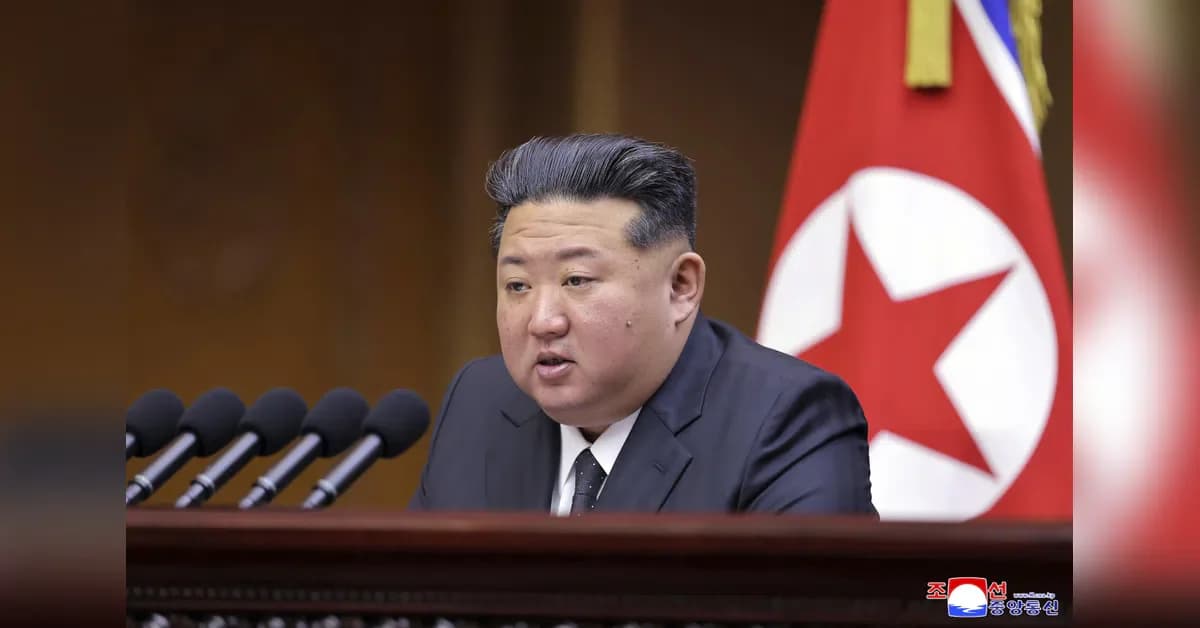
North Korean leader Kim Jong Un visited the 5,000-ton destroyer Kang Kon on Thursday as it underwent capability tests, showcasing his expanding military capabilities ahead of Xi's visit. As reported by Korean Central News Agency, Kim called for "rapidly developing" naval forces capable of playing a larger role in the country's nuclear deterrent and dealing a "deadly blow at the enemy any moment under the water or on the water." The navy is a key focus of a new five-year defense plan approved at a ruling party congress earlier this year, which includes building larger 10,000-ton-class destroyers and developing unspecified "underwater secret weapons." Kang Kon was damaged during a botched launching ceremony in May last year at the northeastern port of Chongjin, triggering a furious reaction from Kim, who called the failure "criminal." The ship was relaunched in June after repair, though outside experts have questioned whether it is fully operational.
North Korea's state media released photos from a new uranium-enrichment facility on Thursday, with Kim shown inspecting arrays of centrifuges that nuclear experts will analyze to estimate how much fissile material the plant could produce. During a visit to the plant, Kim announced plans to bolster the country's nuclear forces 'at an exponential rate', with experts saying the plant's disclosure implies that Kim was eager to cement his country's status as a nuclear weapons state ahead of Xi's visit. The experts suggest Kim wants international recognition as a nuclear state so he can demand the lifting of sanctions and ultimately push for arms reductions talks with the U.S. to win concessions in return for a partial surrender of his country's nuclear capability. Much has changed since Xi's last visit in 2019 - Kim has accelerated his pursuit of atomic weapons, days ago unveiling what appeared to be a new uranium enrichment facility and touting a doubling of nuclear production capacity. The US and Israeli war on Iran has likely only deepened Kim's conviction that possessing a fully operational nuclear arsenal is essential to regime survival.
China's latest white paper on non-proliferation skipped stating 'denuclearization' as a goal for the Korean Peninsula, representing a shift from previous statements. While the White House said Trump and Xi last month confirmed their shared desire to 'denuclearize North Korea,' the Chinese readout didn't include such details. Such omissions have prompted speculation that Beijing is tacitly accepting a nuclear-armed North Korea to maintain regional stability. At their meeting in Beijing last month, Xi and Kim expressed their opposition to 'foreign policy isolation, economic sanctions, military pressure and other methods of creating threats to the security' of North Korea, according to a statement from the Kremlin. "Prioritizing improved relations with Pyongyang to preserve and expand China's influence over North Korea" is now more important to Xi than pushing the nuclear issue, said Tong Zhao, a senior fellow in the Nuclear Policy Program at the Carnegie Endowment for International Peace. For decades, Beijing was Pyongyang's closest economic partner and sole formal security ally, but in 2024, North Korea and Russia signed a comprehensive partnership agreement that included a mutual commitment of military assistance in times of war.