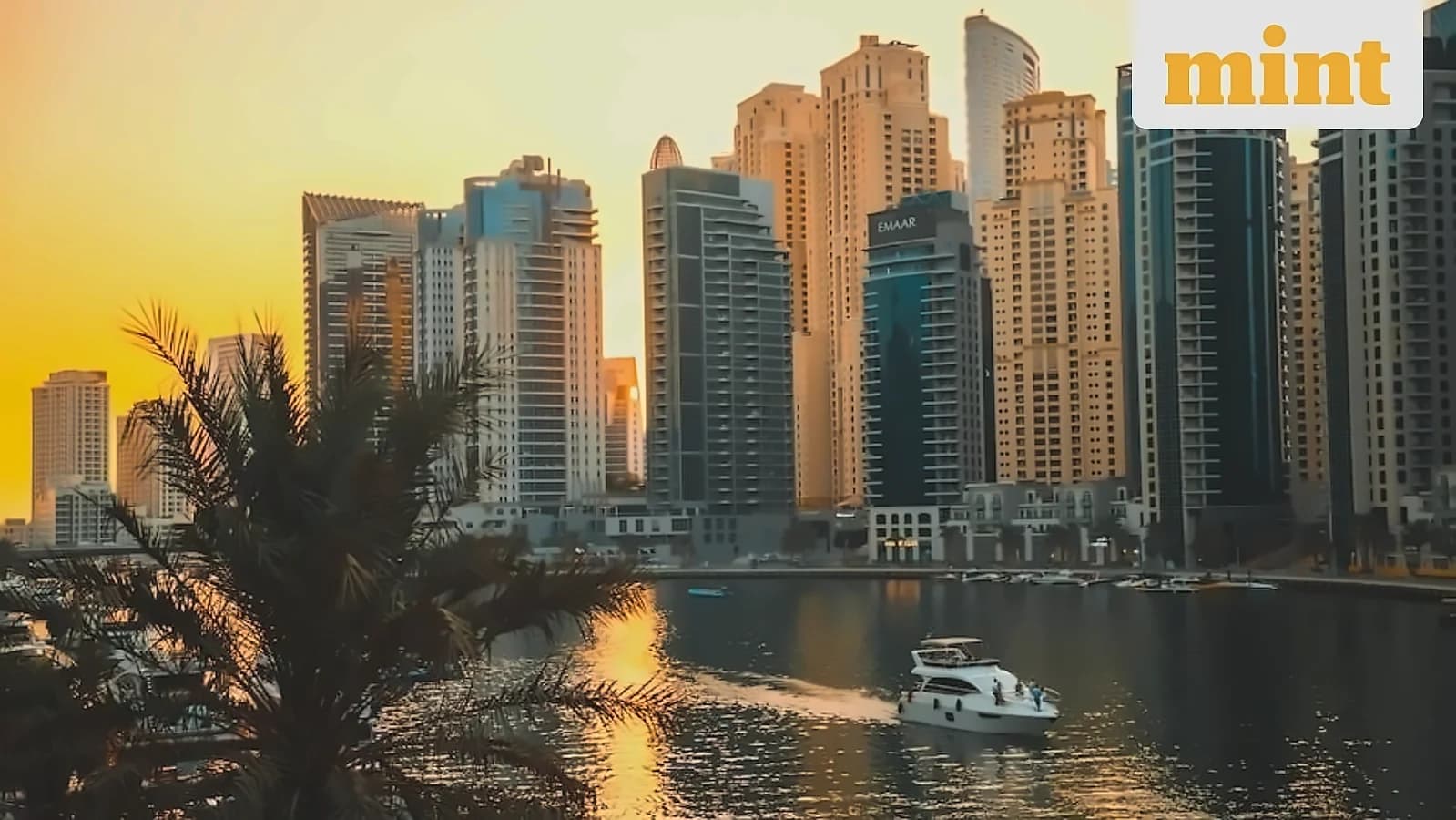
Dubai's real estate market is experiencing a significant slowdown due to rising geopolitical tensions in West Asia, with transactions falling 11.4% to 13,416 in March compared to 15,145 a year earlier, according to The Economic Times. Between April 1 and April 14, Dubai recorded 6,535 transactions compared with 7,563 a year earlier, though activity was 8% higher than the previous month. Emaar Properties, the developer behind Burj Khalifa, has fallen more than 26% on the Dubai bourse since the conflict began, as reported by The Economic Times. In some cases, ready or near-handover properties are being sold at 12-25% below peak prices, helping end-users, especially Dubai residents priced out of premium areas, to enter the market.

India is increasingly emerging as a preferred real estate destination for both domestic and NRI investors, supported by urbanisation and regulatory reforms, according to industry experts. Aditya Goel, Co-Founder of One Prastha, noted that "Today's investor is more informed and cautious. They are not just chasing short-term gains they are looking for stability, transparency, and future growth potential." As reported by The Economic Times, Jagadish Prasad Naik, Chairman of DN Group, stated that "India has clearly emerged as one of the most compelling real estate investment destinations globally, especially when compared to markets like Dubai." Jagadish Prasad Naik emphasized that "India offers a far more balanced and sustainable value proposition driven by strong end-user demand, rapid urbanisation, and long-term economic growth."
According to reports from Mint, Keiko Honda, a board member at MUFG and former chief executive officer of the World Bank Group's Multilateral Investment Guarantee Agency (Miga), explained that the current volatility is changing how risk premiums are calculated. Investors are now weighing the probability of conflict directly against projected cash flows, a shift that favours India's comparatively insulated state. As reported by Mint, Honda stated that India is seeing stronger investor interest, partly because its geopolitical risk profile is comparatively favourable versus regions like the Middle East or Eastern Europe. This geopolitical advantage is particularly relevant as rising geopolitical tensions in West Asia are now influencing global real estate flows, as noted by industry experts.
As reported by Mint, with aging populations stalling growth in Japan and China, India's edge in demographics could provide an advantage. However, Honda warned that stability is only half the battle won, with the continuation of capital inflows depending more on corporate governance standards and the ability of boards to guide companies towards long-term value creation. According to the report, she emphasized that the 'social' component of ESG now effectively captures geopolitical instability, making it central to how investors evaluate countries and companies. Aditya Goel from One Prastha highlighted that "India today offers something far more grounded real demand, long-term growth, and infrastructure-driven appreciation."
As reported by Mint, Honda was upbeat about India's financial sector, stating that multiple overseas financial institutions continue to study opportunities in the country. MUFG recently completed the acquisition of a 20% stake in the non-banking finance company Shriram Finance Ltd. According to The Economic Times, demand in India remains largely driven by end users, particularly in Gurugram, Mumbai, and emerging luxury corridors. Aditya Goel noted that "From a developer's point of view, we are clearly seeing a shift in investor sentiment." The cooling in Dubai is prompting a shift in investor attention toward India's premium housing market, with cities like Gurugram and Mumbai seeing steady demand for luxury housing.
According to Mint, Honda cautioned that even if current conflicts de-escalate, markets are unlikely to revert to the earlier equilibrium. We now know such extreme geopolitical events can happen. That understanding will remain embedded in future investment decisions, she said, indicating that risk premiums could stay structurally higher. On the role of multilateral finance and blended capital, Honda offered a measured view, noting that public capital must be deployed carefully to avoid crowding out private investors where market-based capital is already willing to participate. The current West Asia crisis is demonstrating how regional instability is now influencing global real estate flows, while strengthening India's position in the luxury housing segment.