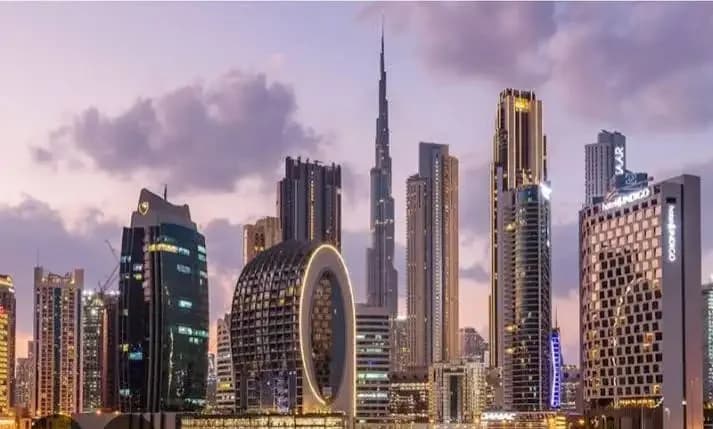
The International Monetary Fund (IMF) has issued a stark warning that continued disruptions from the Iran war are pushing the global economy closer to an 'adverse' scenario marked by slower growth, tighter financial conditions and rising inflation risks. According to AFP, the IMF's World Economic Outlook projected global growth at 3.1% for 2026 under its baseline scenario, while cautioning that a prolonged conflict could significantly weaken the outlook. Under the Fund's adverse scenario—where oil prices remain elevated for a longer period, inflation expectations become unstable and financial conditions tighten—global growth could slow to 2.5%. IMF chief spokesperson Julie Kozack told reporters in Washington that "We are moving into the adverse scenario, but inflation expectations are still reasonably well anchored, and financial conditions still remain accommodative." The IMF has also outlined a more severe scenario under which global growth could slow to 2% while inflation rises to 6%.
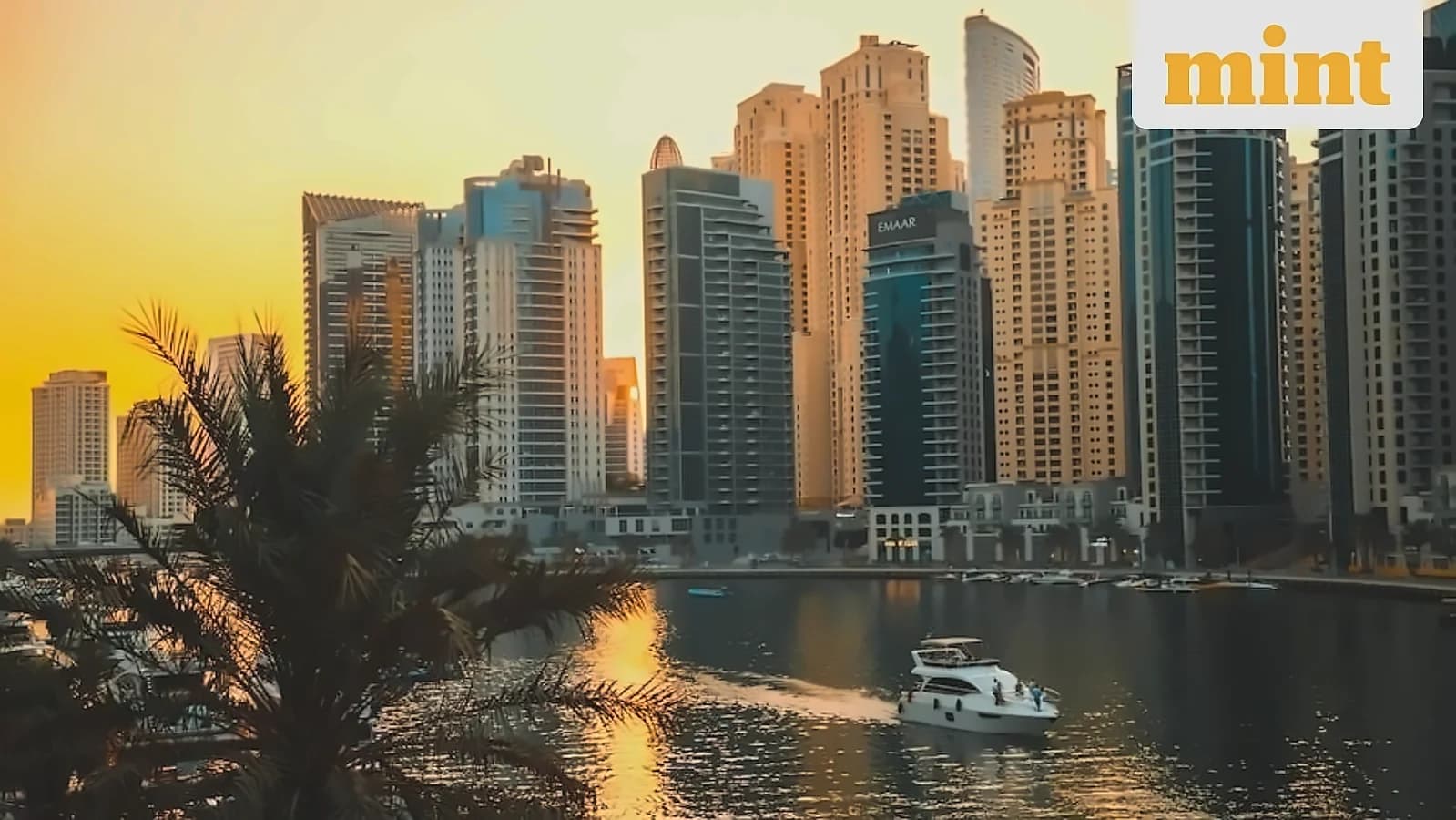
Dubai's real estate market, which had experienced a four-year boom with record-breaking sales, has entered a cooling phase following the US-Iran conflict that began in late February. According to reports from Mint, transaction volumes began declining as the regional conflict unfolded, with deals dropping 24% from 17,398 in January to 13,238 in March. However, Q1 2026 sales of 52,266 transactions remain higher than the 45,474 Q1 sales of 2025, with total transaction value reaching AED 252 billion and marking a 31% year-on-year increase in value. The conflict has sparked an interesting reaction among expats under the government's Golden Visa programme, with Dr Miniya Chatterji noting that while a few thousand left Dubai, more than three million residents have decided to stay. The slowdown is particularly pronounced by the end of April, with sales standing at 13,812 transactions—a 36% drop from the all-time high of 21,630 transactions in February 2026.
The Dubai Land Department's Mo'asher Annual reported that the property market grew to a record-breaking 97,448 sales transactions in 2022, representing a 61.5% jump in volume and totalling AED 266.51 billion (approximately ₹6.91 trillion in today's rates). In 2023, the market scaled new heights with 133,134 transactions worth AED 411.7 billion, while 2024 recorded 180,900 property transactions for AED 522 billion—3.5 times the figure for 2021. The boom continued into 2025 with 215,736 transactions for AED 686.9 billion, with Dubai recording 19.59 million visitors in 2025, including almost two million in December. According to an official DLD statement, real estate performance in Dubai remained strong in Q1 2026, with "total transactions reaching AED 252 billion, marking a 31% year-on-year increase in value and a 6% rise in volume, reflecting sustained momentum and investor confidence."
According to data from Property Finder, monthly transactions in Jumeirah Village Circle have fallen from an average of 1,333 over the past year to 541 in the last month, while Dubai Marina volumes have dropped from around 3,200 annually to just 125 in the most recent month. Villa transactions in Palm Jumeirah and Al Barari have dwindled from about nine deals a month to just two each in the past month. However, prices have held steady across most segments, with rates remaining around AED 1,500 per sq. ft. in Jumeirah Village Circle, suggesting end-user demand remains intact. As reported by Allsopp & Allsopp, transaction volumes are down 18% quarter-on-quarter, even as prices have risen 14% over the quarter and 19% year-on-year. The slowdown is uneven across segments, with apartments and off-plan sales taking the sharpest hit—volumes down as much as 25% in some segments and 22% in off-plan, while villas and townhouses continue to see price growth with average values up 43% year-on-year.
The off-plan market has been running at near-record intensity, with industry estimates suggesting well over 150,000 units were launched in 2025. For the Indian diaspora, who represent 22% of all property transactions in Dubai, the Golden Visa programme has become a bridge to long-term residency, allowing expats to think of the UAE as home. Indians invested over AED 35 billion in 2024 alone, according to The Times of India. Developers have begun reintroducing incentives reminiscent of the post-covid cycle, including extended payment plans, reduced booking amounts and fee waivers, which lower upfront commitment and allow buyers to enter the market while deferring risk. Dubai's off-plan market has been running at near-record intensity, with established players such as Emaar Properties, DAMAC Properties and Nakheel joined by new entrants including Aldar Properties, whose recent Dubai launch underscores growing competition for high-end buyers.
Long-time brokers suggest the current cooling was long needed because the market had run too hot, with 40,000 brokers active in 2025 compared to about 4,000 in 2021. According to Inder Bhagnani from RK-RE, this current cycle represents a necessary transition for a market that has grown at record-breaking pace. Buyers are becoming more selective, with brokers noting that investors are looking for under-market deals while long-term renters view the current situation as a window to finally step into the market. The underlying fundamentals—population growth, infrastructure spending, and Dubai's positioning as a global capital hub—remain intact, with capital not exiting but waiting for the conflict to resolve. As one broker noted, "The minute this war is over, the prices will stabilize." A case in point is Marissa Peer, a British therapist who moved to Dubai because she found it safer than LA, who recently declined broker offers with knock-down prices, saying "I'm not panic selling. This will pass and I will wait until it does."