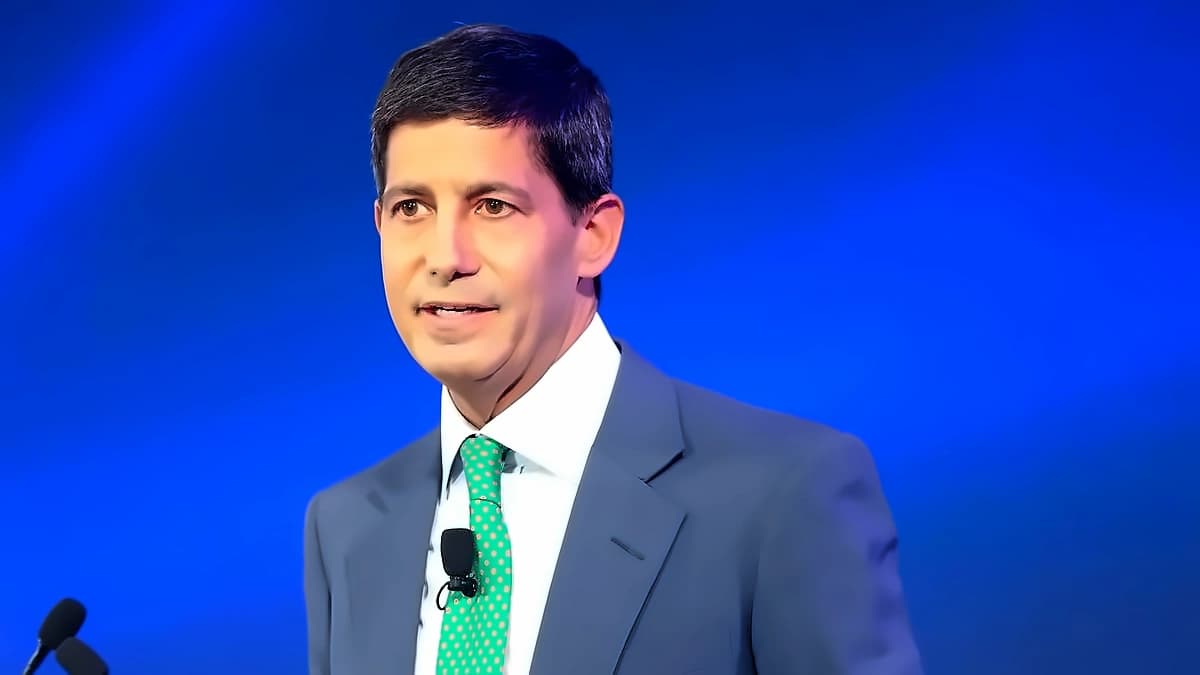
The gold market has experienced significant volatility as investors respond to Federal Reserve Chairman Kevin Warsh's new communication approach. According to B2Prime Group founder Eugenia Mykuliak, "The new Fed chairman has altered the market landscape" through what she describes as "cautious and often ambiguous statements" from Warsh, including at his first Fed meeting. As reported by multiple analysts, these unconventional communication methods have created uncertainty that has pushed money from stocks to safer instruments like gold and other metals. GLD was higher by roughly 1% on Wednesday, with expectations for rate hikes declining even before the latest inflation print. Gold more than doubled between late 2023 and the January record, positioning that needed to work off, though analysts view the longer-term secular case for gold as intact.
Investors are questioning whether Federal Reserve Chairman Kevin Warsh can successfully unwind decades of communicating monetary policy intentions without exacting a price from financial markets. As reported by Reuters, while some market participants welcomed recent efforts by the Fed to reduce what they see as excessive focus on Fed messaging, many argued that investors have spent years incorporating its guidance into everything from bond valuations to risk-management models. The concern centers on whether markets would become more volatile and harder to price risk, with U.S. 30-year yields hitting their highest in 19 years and the benchmark 10-year yield rising to a 20-month peak in recent sessions. Market strategists note that less information from policymakers could make it harder to price risk, pushing up yields and borrowing costs over time. According to recent reports, Wall Street is experiencing what analysts describe as a 'credibility shock' as Warsh deliberately changes a dynamic that has been in place since the turn of the century.
Kevin Warsh, the new chairman of the US Federal Reserve, will address the Jackson Hole Economic Policy Symposium from August 27-29, 2026. According to reports from The Financial Express, this will be Warsh's first Jackson Hole address after becoming Fed Chair on May 22, 2026. The symposium, themed 'Financial Innovation: Implications for Payments and Policy,' is a highly watched event featuring prominent economists and US government officials. However, analysts expect Warsh to avoid focusing on inflation or interest rates during his address, as he has made unconventional decisions since taking office. The symposium comes at a critical time as Warsh attempts to reset the Fed's communication approach with Wall Street.
In his first major public outing in June as Fed chair, Warsh made two significant decisions: he did not disclose his rate forecast for the 'dot plot' and shortened the forward guidance report. As reported by The Financial Express, Warsh recently remarked that he had not made any topic decisions yet for his Jackson Hole speech but signaled he wants to move away from near-term data discussions. Market analysts view this as a watershed moment, since previous chairs have used the Jackson Hole Economic Policy Symposium to lay out new objectives. Warsh aims to modify the Fed's communication strategy, potentially reducing the number of planned sessions. According to Reuters, the New York Times reported that Warsh raised the idea of reducing the number of the Fed's regularly scheduled meetings where it sets monetary policy, which would break with nearly half a century of practice. Before stepping into the role as Fed Chair, Warsh was outspoken about wanting to lower interest rates, which aligns with President Trump's public statements about rate cuts. However, rates were not increased at the last meeting, leading some on Wall Street to question whether Warsh is trying to avoid a rate increase to appease the President.
From a technical standpoint, last week's move above the 50-day moving average, along with the break of this year's pattern of lower highs, should support further gains, according to Solomon Global analyst Nick Cawley. Any pullbacks are expected to be short-lived and viewed as opportunities to re-enter gold's next leg higher. The recent GLD options activity increase indicates professional money flow, not just retail chasing. Inflation will continue to loom large in the gold picture, with analysts noting that if the market outlook remains on the side of price growth being modest, there is additional runway for gold. It could even climb higher than the January highs, according to some market participants. With expectations for a rate hike from the Federal Reserve coming down after the latest inflation data was viewed by the market as tame, the appeal of gold versus other rate-sensitive assets and against a soft U.S. dollar typically increases.
Beyond rates, Warsh has initiated a broader review of the Fed's operations and announced the formation of five task teams that will investigate issues essential to monetary policy conduct. According to The Financial Express, the five task forces will focus on communications, balance sheet policy, data, productivity and jobs, and inflation frameworks. These task forces will comprise external advisers, including economists and business leaders, who will co-lead the initiative, supported by Federal Reserve staff. They will function independently, focusing on evidence, providing honest feedback, and delivering thorough findings for the Federal Open Market Committee. The review comes as Warsh faces the same dilemma that former Fed Chair Powell encountered regarding interest rate cuts, with inflation remaining high and a weakening labor market making it harder to hold employment steady even as inflation stays elevated.