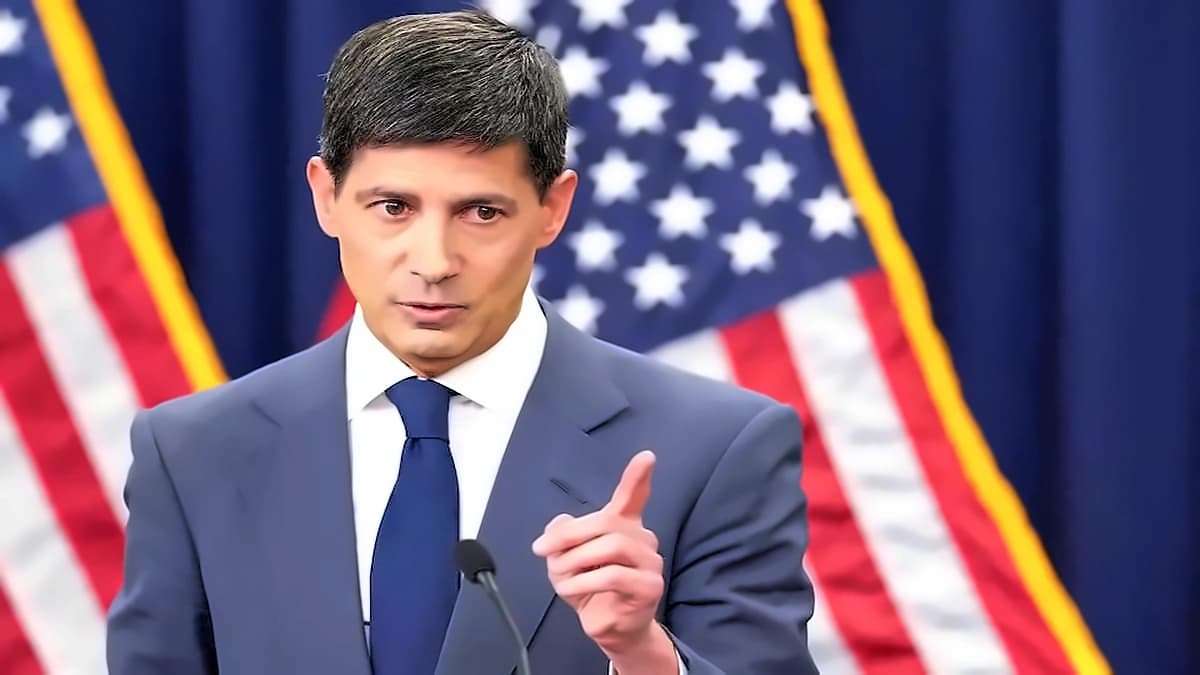
Federal Reserve Chair Kevin Warsh has implemented a dramatic communications overhaul, slashing the Fed's official statement to just 130 words - down from 341 words in Powell's last statement - and eliminating forward guidance entirely. This represents a fundamental departure from the Fed's longstanding practice of providing detailed guidance about future interest rate policy. The decision comes as Warsh launches a comprehensive review of the Fed's communication framework, with a revised communication framework potentially introduced before the end of the year. Warsh has maintained that Fed officials should communicate less, arguing that policymakers can become prisoners of their own words. The level of communication from the Fed and other central banks increased over time, particularly since the global financial crisis, which has arguably helped reduce information asymmetry between policymakers and other stakeholders.
The elimination of forward guidance has already triggered significant market volatility, with financial markets see-sawing then falling Wednesday after the statement and news conference. The yield on the 10-year Treasury jumped Wednesday to 4.49% from 4.43%, though it fell back in Thursday trading. The yield on the 2-year Treasury was 4.16% Thursday, up sharply from 4.05% before the Fed's meeting. The broad S&P 500 stock index dropped 1.2% Wednesday. As George Pearkes, global macro strategist at Bespoke Investment Group, explains, 'Forward guidance in general has served to suppress volatility and anchor market expectations' and 'that has led to lower borrowing rates, relative to alternatives'. The impact on consumers is likely to be modest, with mortgage rates perhaps a quarter-point higher than they would be otherwise, according to Pearkes. Bond yields climbed as markets interpreted the Fed's messaging as more hawkish than anticipated, with the absence of detailed guidance on the Fed's policy framework amplifying investor uncertainty.
Warsh's guarded communication approach has created a shadow Fed Chair phenomenon, with the dot plot emerging as the primary source of monetary policy insight after Warsh refused to participate in the Summary of Economic Projections. The dot plot showed Fed officials deeply divided over the best course of action, with nine officials favoring rate hikes, eight supporting rate holds, and only one preferring cuts, yet the committee voted unanimously to hold rates steady. This dramatic shift reflects many more Fed officials now seeing appreciably higher rates as appropriate than in March, reflecting an inflation outlook that has worsened in recent months. Financial markets reacted to the hawkish dot plot, pushing market rates higher, though analysts note the dots remain a poor substitute for direct Fed Chair communication. Warsh cannot force other Fed officials to stop talking, and most will still explain their voting rationale, creating a noisy and less precise process than under previous Fed chairs.
Warsh's first policy meeting as Fed chief reflected a deliberate move away from the expansive communication strategy adopted by the central bank over the past two decades. Rather than simply stating that inflation remains elevated, the statement described inflation as being above the Fed's 2% target, wording that some economists interpreted as allowing greater flexibility around inflation levels close to that objective. The assessment of employment also shifted, with the statement saying employment gains had kept pace with workforce growth, reflecting changes in labour market dynamics as immigration trends evolve. On economic growth, the statement highlighted productivity improvements and business investment, while omitting detailed discussion of consumer spending, trade, fiscal policy and other components that featured more prominently in previous Fed communications. The statement removed the long-standing assessment balancing risks to inflation and employment, replacing it with a more direct commitment to achieving price stability.
In a press conference following the meeting, Warsh announced the establishment of five task forces to address key institutional reforms. According to Reuters, these include a communications task force, a balance sheet task force, a data sources task force, a productivity and jobs task force, and an inflation framework task force. Warsh stated that the groups will include outside experts and be supported by staff, with results expected by the end of the year. The data sources task force specifically aims to 'rethink that approach' as Warsh noted that 'most of the data that central bankers consume come with old-fashioned survey methods' and 'National accounts of what the U.S. economy looks very little like the U.S. economy in 2026'. Economists viewed transparent communication about how policymakers respond to evolving economic conditions as an important feature of modern central banking, with the revised statement reflecting Warsh's priorities while securing unanimous support from the FOMC, marking the committee's first unanimous policy vote in a year.