The Federal Reserve's decision to keep interest rates unchanged has triggered an unusual 'twist steepener' in the Treasury market, with investors questioning the central bank's commitment to tackling inflation. As reported by The Economic Times, the move has led to long-term yields surging to their highest level in 19 years while shorter-term yields continued to fall, creating what market participants described as an uncommon shift in borrowing costs. The benchmark 10-year Treasury yield has climbed about 25 basis points in July, marking its biggest monthly increase since March. The steepening continued into Thursday, with the spread between two-year and 10-year, as well as two-year and 30-year, Treasury yields widening further. Nathan Sheets, global chief economist at Citigroup, noted that "the markets voting 'no confidence' on the Fed and the Fed's willingness and capacity to bring inflation down," explaining that "he highlighted a problem and gave no strategy for solving it other than, 'I'm a hawk, trust me."** According to Bloomberg, Nohshad Shah, Citadel's head of EMEA fixed-income sales, wrote that "the moves underscored 'a challenge to the credibility or clarity of the policy framework."**
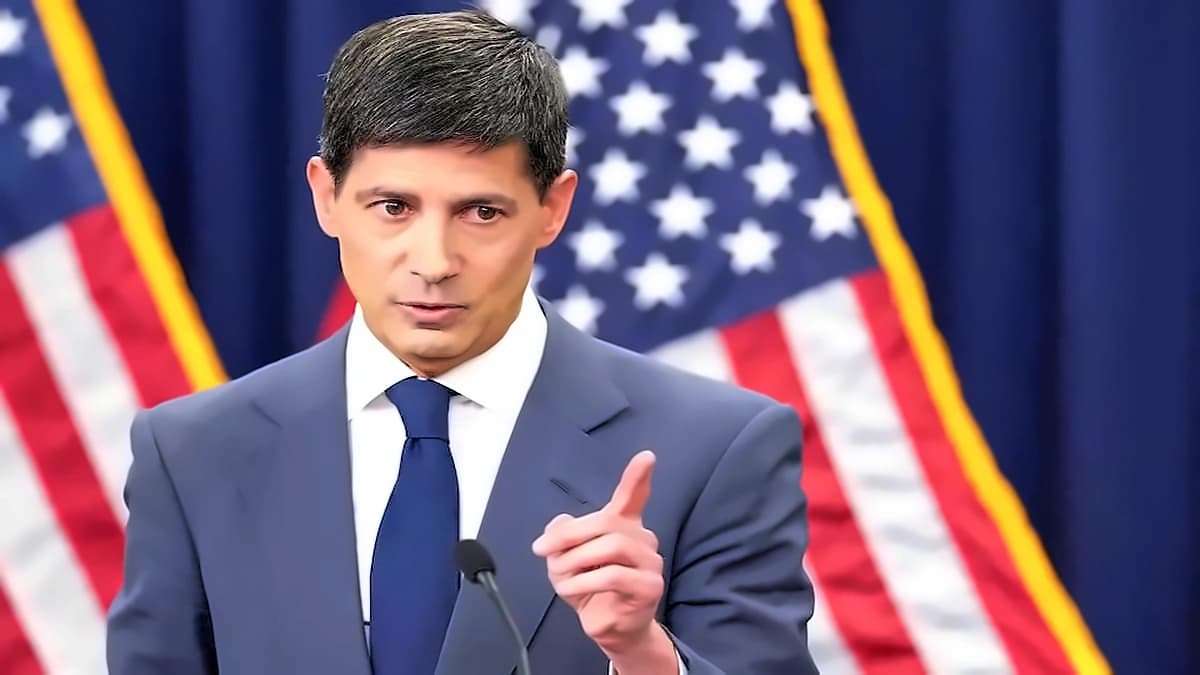
Fed Chair Kevin Warsh faced his biggest early policy split since 1970, with three FOMC members dissenting against the decision to hold rates unchanged. According to The Economic Times, this marks the strongest early opposition to a new Fed leader since Arthur Burns faced three dissents at his very first policy decision in February 1970. The dissenting policymakers were Beth Hammack, Neel Kashkari and Lorie Logan, who all preferred a 25-basis-point rate hike. As reported by Investing.com, this decision passed by a 9-3 vote, with the dissents making the decision look less like a strong consensus and more like a judgment call by the chairman. The St. Louis Fed's database shows that at least three members have dissented at only 56 meetings since comparable records begin in March 1936, roughly 6.5% of all meetings. Warsh had repeatedly called for a 'good family fight' at the Fed and appears to have received his wish, with the committee revealing growing dissent as policymakers pushed for rate increases.
During his recent press conference, Fed Chair Kevin Warsh created significant market uncertainty by signaling potential changes to the Fed's inflation framework and communication strategy. According to The Economic Times, Warsh initially affirmed that PCE inflation remains the Fed's official target measure but then raised concerns about future policy direction. When asked about the 2% inflation target, Warsh stated that "Who knows come after next January what we might say about strategy. I suspect the task forces might have something to add." This represents a departure from the Fed's established practice, as the January vote is a routine reaffirmation of the Longer-Run Goals and Strategy statement, not a framework review. Since the first statement in 2012, the January vote has only ever affirmed the use of PCE inflation, never questioned it. Warsh pointed to his handpicked task forces as potential drivers of any future changes, which market analysts warn could destroy the Fed's credibility if implemented. Warsh handpicked 15 outside experts in May to deliver recommendations by the end of 2026 on the Fed's conduct of monetary policy, including its inflation framework. He indicated he will check in with them in the next couple of weeks and may share any thoughts that are "ready for prime time" at the Fed's global central bankers' conference in Jackson Hole, Wyoming.
Market experts are expressing concerns about Fed Chair Kevin Warsh's approach to inflation fighting, particularly his reliance on market forces to tighten financial conditions. According to Bloomberg, Nohshad Shah, Citadel's head of EMEA fixed-income sales, warned that "relying on markets to tighten financial conditions risks creating a negative feedback loop." Shah explained that higher long-term borrowing costs encourage the Fed to wait longer before raising rates, which in turn would likely prompt investors to demand even larger inflation and term premiums, pushing yields higher still. "The Fed holds because markets have tightened, while markets tighten because the Fed has held," he wrote. Shah argued that not all increases in yields tighten financial conditions in the same way, noting that while higher short-term rates driven by expectations of Fed tightening help restrain demand, a rise in long-term borrowing costs fueled by investors demanding greater compensation for inflation and policy uncertainty could instead erode confidence in the central bank's commitment to price stability. Frank Flight, head of macro strategy at Citadel, had previously argued that the Fed should surprise markets with a rate increase, given that an overwhelming majority of economists expected policymakers to stand pat, which would have reinforced Warsh's inflation-fighting credibility.