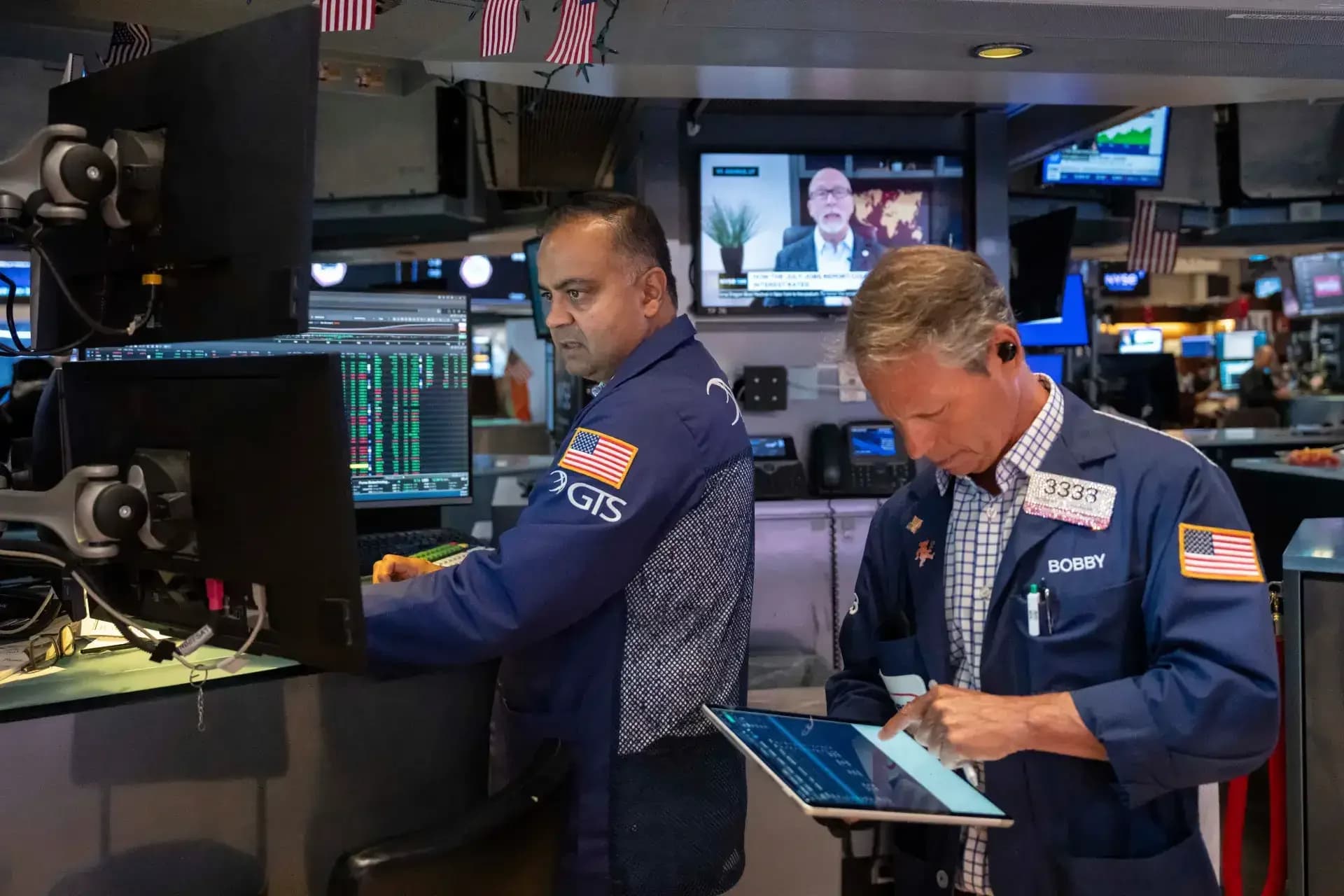
The momentum trade that powered the US stock market through the first half of 2026 is showing clear signs of fatigue, with Bloomberg US Equities Reporter Natalia Kniazhevich confirming the unwind is already underway. Momentum is the best-performing factor, up by 28% year to date, but as Kniazhevich explained on the July 3 Bloomberg Daybreak segment, "We see this momentum factor starting to fade now." The rotation is evident in recent performance, with QQQ dropping 4.5% over the past month while IWM climbs 2%, signaling a clear shift from momentum leaders into small caps. This marks a significant departure from the strong performance that characterized the second quarter, where the benchmark S&P 500 rose 14.9% - its best quarter since 2020.
The June jobs report has fundamentally altered Fed policy expectations, with traders responding by pushing July rate-hike odds to effectively zero and pricing only about 30 basis points of Fed moves by year-end. June nonfarm payrolls came in at 57,000, well below estimates in the 100,000 to 110,000 range, though the unemployment rate ticked down to 4.2%, cushioning the blow. Bloomberg Executive Editor Paul Dobson summarized the shift: "It takes the pressure off the Federal Reserve to raise interest rates any time fast. The market is not really expecting that to be a necessity anymore." Marianne Zangerl, Aberdeen's Global Head of Multi-Asset and Alternative Investment Solutions, went further, reaffirming that no hikes are coming through 2026: "Nothing in this report changes that view. We won't see anything happen this year." The Fed funds target upper bound sits at 3.75%, unchanged since the December 10, 2025 cut.
The upcoming earnings season is expected to provide crucial insights into corporate performance and market direction. As reported by The Economic Times, S&P 500 companies are expected to increase second-quarter earnings by more than 24%, according to LSEG IBES data. Two early reports next week will offer different perspectives on consumer spending trends: Delta Air Lines and PepsiCo earnings could signal the market's next direction and the health of consumer spending. Investors see these updates as early reads on consumer spending trends ahead of a broader second-quarter reporting season later in July. Stocks have rebounded from declines stemming from the U.S.-Israeli conflict with Iran, with the S&P 500 up more than 9% in 2026 and the tech-heavy Nasdaq Composite gaining 11%.
The potential for a restrictive Fed policy cycle poses risks to market valuations, though current conditions suggest a more accommodative outlook. The 10-year Treasury yield closed at 4.48% on July 1, and the 2s-10s spread has compressed from 0.74% in early February to 0.35% currently, evidence that the curve is repricing growth risk rather than fresh inflation. Kniazhevich flagged the seasonal setup behind the rotation: "People are taking profits ahead of July, August vacation time. Hedge funds have posted really strong performance," adding that per Goldman Sachs it was one of the best quarters in history. The momentum trade's 28% YTD run has been capped by the softer jobs data, with the BLS series showing total nonfarm employment at 158,984 thousand in June 2026, up from 158,927 thousand in May, while average hourly earnings continued to firm at $37.64 in June, up from $36.36 a year earlier.