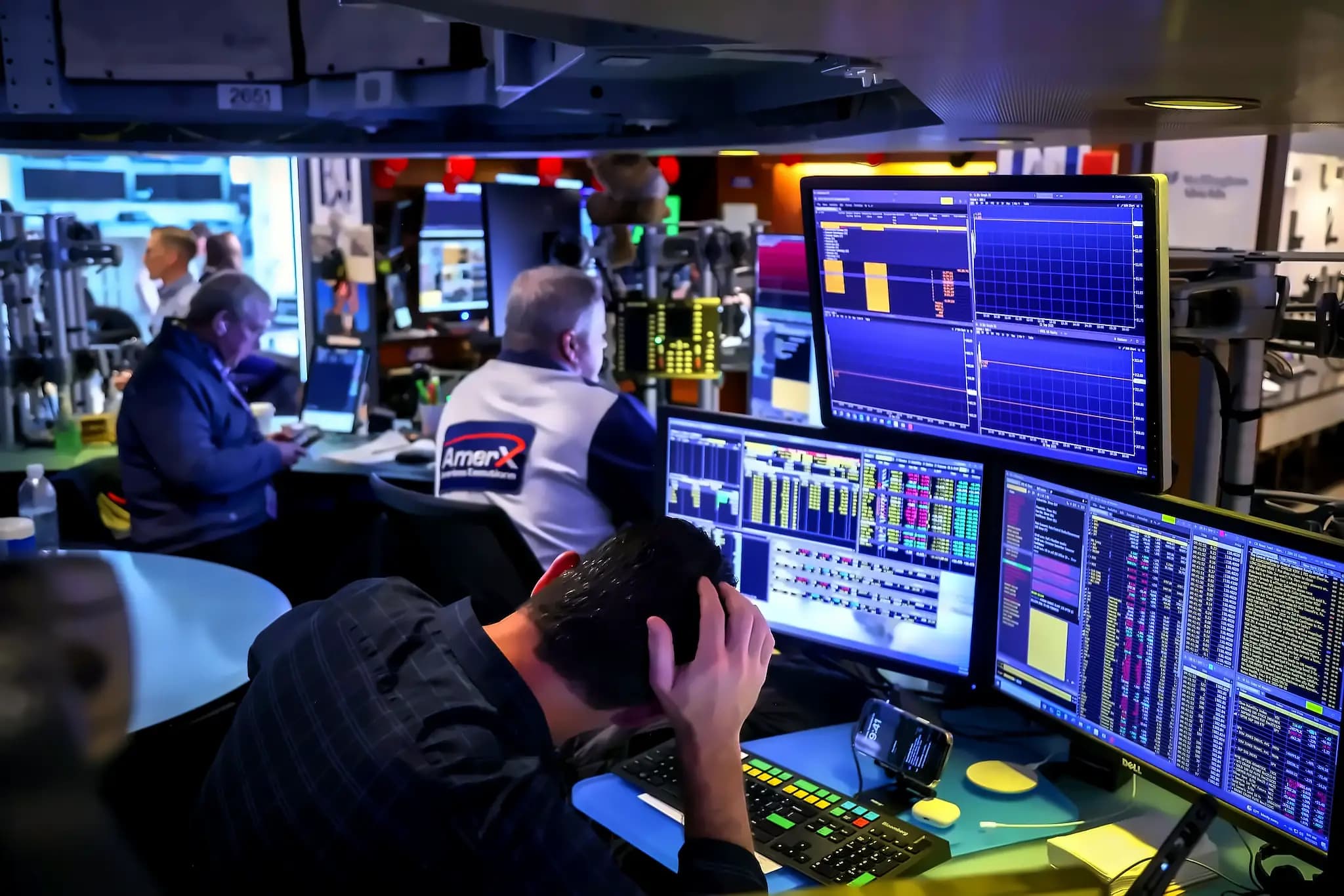
US stocks experienced a dramatic reversal on Wednesday, with the S&P 500 falling 1.2% and the Nasdaq 100 declining 1.3% as traders responded to the Federal Reserve's hawkish policy shift. The Dow Jones Industrial Average fell more than 500 points, erasing gains from earlier in the session, as markets digested the Fed's decision to hold rates unchanged while signaling potential rate hikes ahead. Kevin Warsh's first Federal Reserve press conference on June 17 marked the worst "Fed day" performance for any new chair since 1994, according to Bespoke Investment Group data. The Dow Jones went from a gain of 280 points in the morning to a drop of 507 points (1%) as markets digested the Fed's decision to hold rates unchanged while signaling potential rate hikes ahead. As reported by Business Standard, the Dow Jones fell 507 points from its intraday high before the Federal Reserve policy announcement, marking a sharp decline from Tuesday's session where the Dow Jones gained 77.71 points to 52,070.81 and the Nasdaq advanced 89.53 points to 26,466.52. The market decline was triggered by new Fed Chair Kevin Warsh's hawkish tilt, with traders betting that the Federal Reserve's next move would be a rate hike after Warsh highlighted the need to tame inflation.
The Federal Reserve left interest rates unchanged as widely expected but delivered a hawkish surprise with new quarterly projections showing nine of 18 policymakers expect at least one rate hike by the end of 2026, according to The Economic Times. The policy statement removed previous language that had flagged the likelihood for rate cuts this year. Breaking with past practices by Fed chiefs, Warsh did not submit an interest-rate-path projection as part of quarterly forecasts, telling reporters the central bank would deliver on price stability. After the meeting, trader bets that rates would hold steady by year-end had dwindled to 15.7% from 40% on Tuesday, according to CME Group's FedWatch tool. Expectations for a 25-basis-point rate hike by December were at nearly 38% while the probability for a 50-basis-point hike was nearly 33%. The Dot Plot showed the FOMC divided 9-9 between those who see rates stable to one rate cut, and those who see rates stable to one rate hike, with the Dot Plot pointing to one hike by the end of the year. As reported by Reuters, the Fed released a shorter policy statement that removed language previously interpreted as signaling an easing bias, with the simplified statement placing greater emphasis on the Fed's overarching objective of restoring price stability while offering less forward guidance on the future path of interest rates. Fed funds futures now show traders pricing in the possibility of a rate hike as early as October, a scenario few had entertained at the start of 2026.
The Fed policy announcement sent bond markets into significant action, with the two-year Treasury yield, the closest to Fed's moves, jumping to 4.21% from 4.05% and the 10-year Treasury yield rising to 4.49% from 4.43%, according to Business Standard. The two-year Treasury yield, which more closely tracks expectations for Fed action, climbed 16 basis points to 4.21%, while the 10-year Treasury yield also advanced five basis points to 4.49%. According to Reuters, Treasury yields moved higher following the Fed's decision, reflecting investor expectations that interest rates may remain elevated for longer. The US Dollar index firmed up after projections of a rate hike by the end of the year, with the Bloomberg Dollar Spot Index rising 0.7% and the euro falling 1% to $1.1490. This dollar strength contrasted with the previous session's performance, where the dollar had fallen to its lowest level since 2021. Bitcoin fell 2.3% to $64,301.09 and Ether declined 3.2% to $1,738.17, while spot gold fell 1.9% to $4,247.93 an ounce. As DoubleLine Capital CEO Jeffrey Gundlach noted on CNBC's Closing Bell, "He is absolutely telling you that he plans on delivering on price stability. That means we're not going to have such easy money policy as everybody thought maybe Chairman Warsh would do back in the first quarter of this year, when everyone was counting on rate cuts."
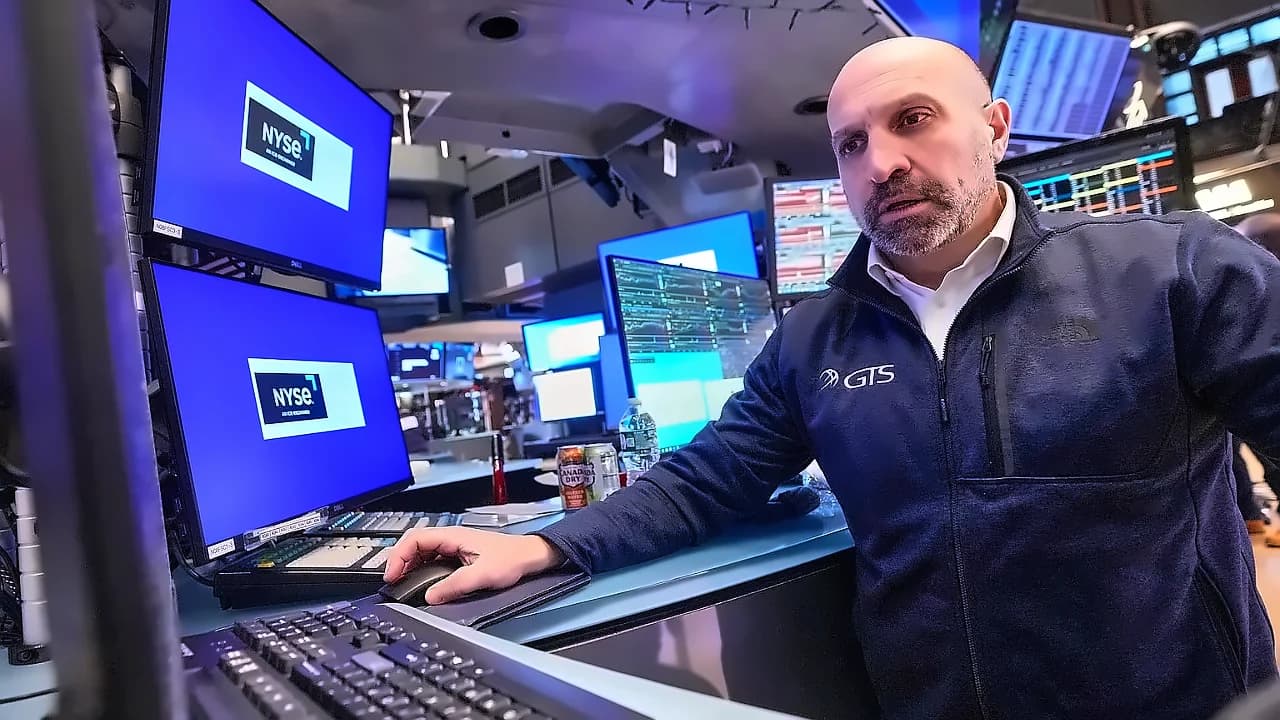
The market showed mixed performance with seven of 11 major S&P 500 sectors lower, led by technology stocks after Microsoft dropped 3.8%, Amazon fell 3.5%, and Nvidia declined 1.3%, according to Business Standard. These tech giants helped overshadow a jump of 14.8% for La-Z-Boy, which reported stronger profit and revenue for the latest quarter than analysts expected. The furniture retailer benefited from revenue made at newly opened stores, though Chief Financial Officer Taylor Luebke said the company continues to have a measured view of the broad sales environment. In individual stock movements, CME Group slipped after the exchange operator said its CEO, Terry Duffy, will step down on March 1, and transition to the role of executive chairman. Conversely, Allbirds soared after the footwear maker-turned-AI company changed its name to Smartbird and appointed former Amazon executive Nadia Carlsten as CEO. Bitcoin and gold both fell after Warsh's press conference, with crypto investors who positioned around expected rate cuts now facing the question of whether the Fed will raise rates instead.
Investor sentiment was supported by stronger-than-expected US retail sales data, which rose 0.9% in May, well above estimates and signalling resilient consumer demand despite higher prices. As reported by Reuters, the Commerce Department's Census Bureau said retail sales jumped 0.9% last month after a downwardly revised 0.4% gain in April, with economists expecting a rise of only 0.5%. However, the control group, which excludes volatile components such as autos, gasoline, building supplies and eating out, was also better than expected, rising 0.7% versus the 0.4% consensus. Economic data showed U.S. retail sales increased more than expected in May, with households purchasing more cars and other vehicles even as they paid higher prices for gasoline. The details show that gasoline station sales rose 3.4%, reflecting higher prices, but there was a 2.3% month-on-month increase in miscellaneous stores after two monthly falls, while non-store retailers saw sales rise 1.5% and furniture store sales rose 1% with auto up 1.2%. A report released Wednesday said retailers across the country saw their revenue grow at a faster pace in May than economists expected, offering hope that solid spending by consumers can support the economy but high inflation has also made U.S. shoppers feel more discouraged about their finances.
Futures on Wall Street are rebounding this morning after the overnight sell-off, with Dow futures up 130 points, while the S&P 500 and Nasdaq futures are trading 35 and 250 points higher respectively, according to CNBC TV18. While Wall Street will have a full trading day on Thursday, reacting to the signing of the deal between the US and Iran, along with the consequent fall in crude oil prices, they will remain shut on Friday on account of the Juneteenth holiday. The market recovery suggests investors are taking a more measured approach after the initial shock from the Fed's hawkish tilt, though the S&P 500 remains down 1.2% despite the futures rebound. The MSCI World Index fell 1% as global markets responded to the Fed's policy signal, with Warsh also announcing the appointment of a task force to examine the central bank's $6.7 trillion balance sheet - a first step in addressing a policy issue he has long criticized. In international markets, South Korea's Kospi jumped 1.6% and Hong Kong's Hang Seng fell 0.7% for two of the world's bigger moves, while oil prices were steadier Wednesday following slides earlier in the week with Brent crude oil rising 0.7% to $79.55. As ClearBridge Investments' Josh Jamner noted, "Investors will ultimately need to stay tuned to see what the task forces deliver, but one thing is clear now: A new chapter at the Fed has begun."