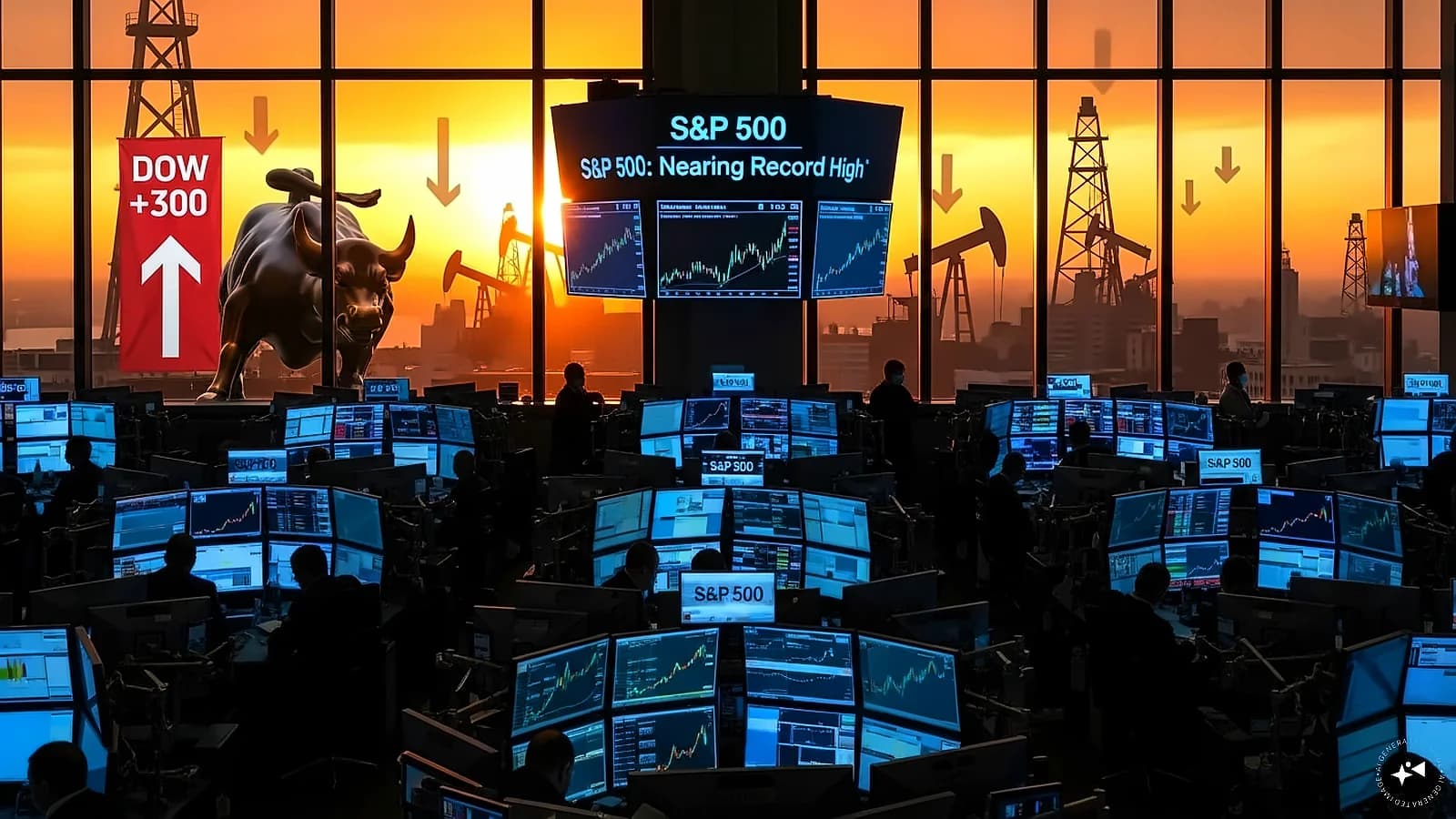
The U.S. stock market has achieved unprecedented milestones, with the S&P 500 posting its third consecutive record close and the Nasdaq Composite notching its 13th consecutive advance, marking its longest winning streak since 1992. According to Reuters, the S&P 500 gained 84.78 points, or 1.20%, to 7,126.06 while the Dow Jones Industrial Average rose 868.71 points, or 1.79%, to 49,447.43. For the week, the S&P 500 gained 4.53%, the Nasdaq rose 6.84%, and the Dow climbed 3.2%. This remarkable rally has been driven by hopes of cooling U.S.-Iran tensions and anticipation of a robust first-quarter earnings season. The benchmark S&P 500 has stormed back 11% since its recent low on March 30, closing this week above the 7,000 level for the first time. As noted by Bespoke Investment Group, this represents the fastest recovery to all-time highs in just 11 trading sessions from a 5-10% pullback since 1928.
Markets surged on Friday following Iranian Foreign Minister Abbas Araqchi's announcement that passage for all commercial vessels through the Strait of Hormuz was "completely open" after a ceasefire agreement in Lebanon. According to Reuters, this development eased inflation concerns as U.S. crude oil prices tumbled more than 11%, alleviating concerns about oil-driven economic slowdown. President Trump stated that talks could take place this weekend between Tehran and Washington and that they could soon secure a peace agreement to end the Iran war, which has left thousands dead since the U.S. and Israel launched joint strikes on Iran on February 28. While statements from both sides left uncertainty over how quickly shipping could resume, the optimism around potential de-escalation has created significant tailwinds for equities. As noted by Crossmark's Bob Doll, "The concern about oil putting the world into a slowdown diminishes as it's onward and upward for a possible final deal."
The global risk-on sentiment has extended beyond U.S. markets, with Brent crude dipping below $US90 for the first time in more than a month as speculation about the Iran war's end sent risky assets surging. According to The Australian Financial Review, this global risk-on surge has lifted the S&P 500 Index to a succession of records, added around $US12,000 to the price of Bitcoin and pushed up credit and gold. The dollar slid against every major peer even as the contours of any US-Iran deal remained unresolved. This broad-based commodity rally reflects the market's confidence in potential de-escalation, with the surge in the S&P 500 particularly driven by optimism over potential de-escalation in the U.S.-Iran conflict and continued enthusiasm for technology and artificial intelligence stocks.
The surge in the S&P 500 has been particularly driven by optimism over potential de-escalation in the U.S.-Iran conflict and continued enthusiasm for technology and artificial intelligence stocks. Microsoft (MSFT) has rallied 13% this week, while Nvidia (NVDA) and Alphabet (GOOGL) have gained over 5% each. Among the S&P 500's 11 major industry sectors, energy was the biggest loser, ending down 2.9%, with Exxon Mobil down 3.6% and Chevron 2.2%. However, consumer discretionary emerged as the biggest gainer, finishing up just under 2%, with cruise operators leading advances as Royal Caribbean jumped 7.3% and Carnival rose 7%. Industrials was the second strongest sector, finishing up 1.8% with United Airlines up 7%. According to Willis Johnson & Associates' Nick Johnson, "Energy prices coming down has a bigger impact on small caps because they have tighter margins."
Market breadth remained strong with advancing issues outnumbering decliners by a 4.03-to-1 ratio on the New York Stock Exchange, where there were 623 new highs and 46 new lows. On the Nasdaq, 3,685 stocks rose and 1,183 fell as advancing issues outnumbered decliners by a 3.11-to-1 ratio. The S&P 500 posted 49 new 52-week highs and no new lows. However, some individual stocks faced pressure, with Netflix tumbling 9.7% after forecasting current-quarter earnings below expectations and announcing the exit of co-founder Reed Hastings. Alcoa shares ended down 6.8% after reporting first-quarter profit and revenue below analyst estimates, citing elevated costs and softening demand. Volume was relatively strong with 20.29 billion shares changing hands compared with the 19.12 billion moving average for the last 20 sessions.