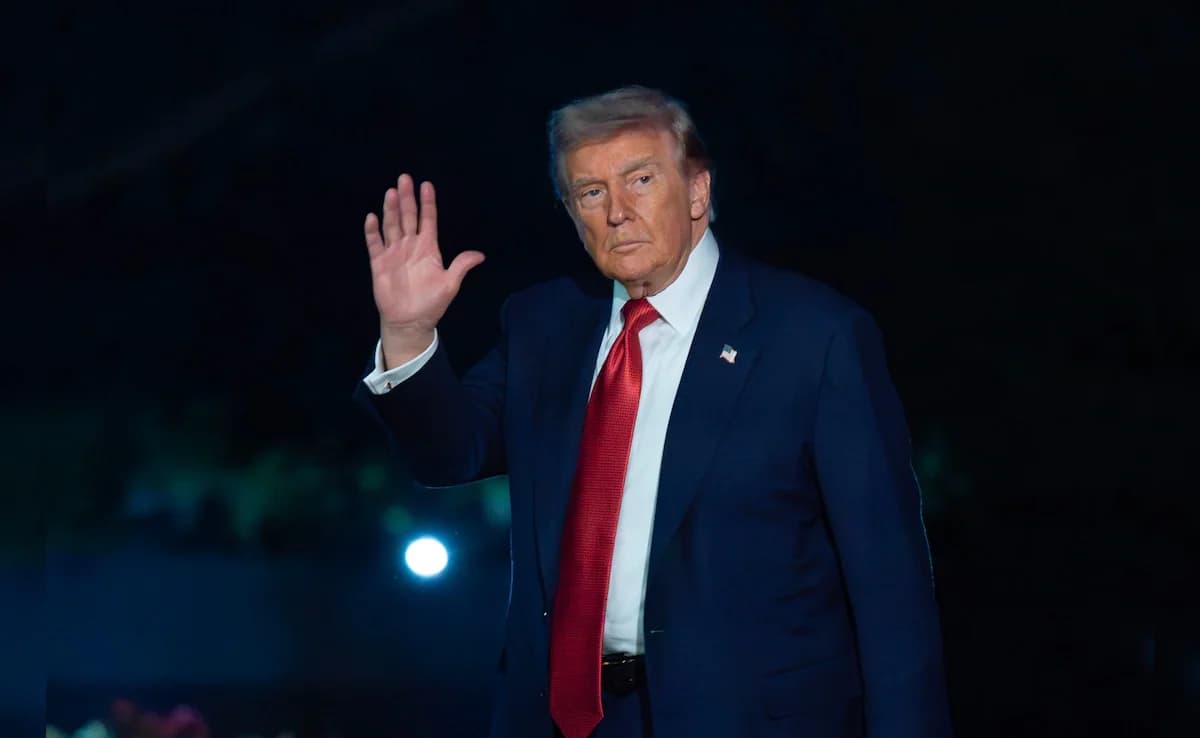
Indian markets experienced a dramatic selloff Thursday as President Trump threatened escalating strikes on Iran in a prime-time address that spooked investors who had been betting on a fast end to the conflict, with the Sensex tumbling around 1,400 points and the Nifty dropping roughly 2%. According to The Economic Times, the selloff rippled across emerging Asia, where equities and currencies crumbled on Trump's warning that the US would strike Iran "extremely hard" within weeks while stopping short of any timeline for ending the war. The MSCI gauge of emerging market Asia equities stumbled 2.3%, while the currency index eased 0.2%, as investors reacted to Trump's aggressive stance that reversed earlier optimism about a swift end to the conflict. The decline mirrored broader market reactions across global markets, with South Korea's KOSPI index demonstrating the whipsaw effect, plunging 4.2% after rising as much as 1.8% earlier in the day. In his nearly 20-minute speech, Trump did not outline any shift in Iran policy, nor did he provide specifics on how operations would proceed beyond what he had previously stated.
Oil prices experienced a dramatic surge following Trump's aggressive stance, with Brent crude futures jumping about 7.59% to $108.84 per barrel after Trump's speech, while US West Texas Intermediate settled up 11.41% to $111.54. According to Reuters, this represents a significant escalation from previous levels, with oil prices continuing their climb as the conflict uncertainty deepens. International benchmark Brent crude rebounded 9% to the day's high of $109.70 a barrel, while US benchmark West Texas Intermediate rose 6.3% to $106.45. Brent crude surged 43% in March, marking its biggest monthly jump on record and extending its winning streak to three consecutive months, resulting in a cumulative gain of 70%. However, recent developments show some moderation as front-month crude prices pulled back after diplomatic moves raised hopes of easing Middle East tensions, with U.S. crude down nearly 11% to around $111 a barrel and Brent up about 6.6% near $108. Traders are pricing Brent at $81 per barrel in October, signaling they expect the disruption to be temporary, as noted by Michael Antonelli, market strategist at Baird. The extended conflict threatens fuel supplies through the Strait of Hormuz, a critical artery for Asian energy imports, with "Two or three weeks (of the war) could prove challenging for economies in this region considering the incoming fuel shipments through the Straits of Hormuz are only trickling in on a selective basis," warned analysts.
US stock futures crashed on Thursday following Trump's latest address on the Iran war, with futures of the three key indices—the Dow Jones Industrial Average, the S&P 500, and the Nasdaq—trading lower on the last trading day of the week, with markets closed for the Good Friday holiday. According to Reuters, the Dow Jones Industrial Average fell 0.39% to 46,383.81, the S&P 500 declined 0.23% to 6,560.04 and the Nasdaq Composite lost 0.28% to 21,780.32. In his latest address, Trump told US forces would continue to strike Iran "very hard" over the next two to three weeks and bring the country "back to the Stone Ages." He also threatened to target Tehran's energy infrastructure if the Strait of Hormuz is not reopened. Earlier, Trump had set an April 6 deadline for Iran to reopen the strait, warning of expanded attacks on the country's power plants if it fails to comply. The ongoing conflict has roiled US stock markets, which had earlier shown resilience but slipped into correction territory last week. The war, which has cost the Trump administration billions of dollars and pushed gas prices above an average of $4 a gallon, has also led to millions of people marching across all 50 states in "No Kings" protests in late March 2026. The conflict in the Middle East is no longer a regional war, as its impact is being felt globally, with disruptions in crude oil supply forcing many economies to shift to alternatives such as coal, raising concerns over emissions.
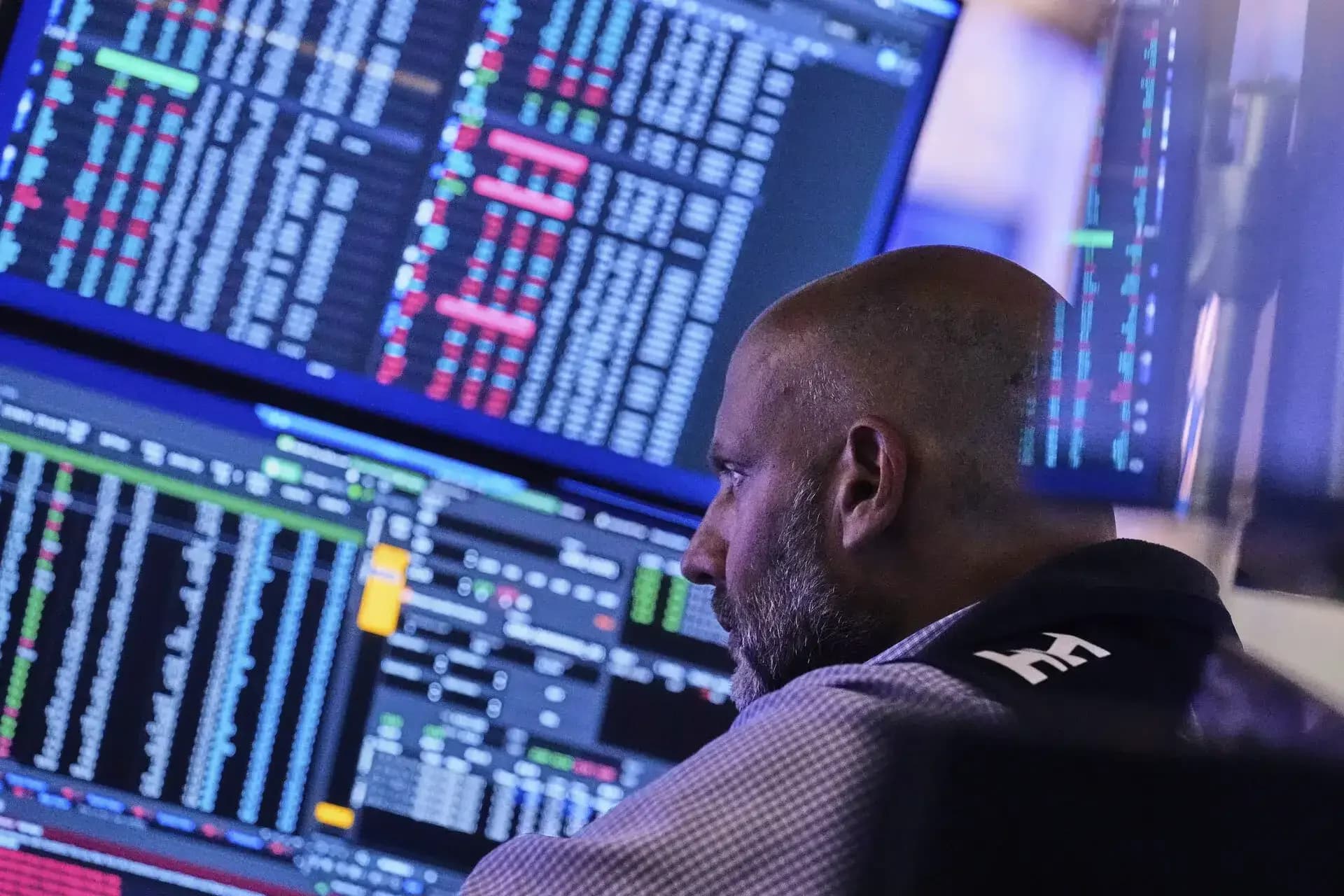
Asian markets experienced significant declines following Trump's aggressive stance, with South Korea's KOSPI index demonstrating the whipsaw effect, sliding 4.7% after rising as much as 1.8% earlier in the day. According to Reuters, the pan-European STOXX 600 index and Europe's broad FTSEurofirst 300 index both lost 0.2%, while MSCI's gauge of stocks across the globe fell 0.59% to 990.80. Shares in Singapore opened at a two-week high before falling 0.8%, while Malaysia's benchmark stock index dropped 1%. Equities in Indonesia and Taiwan declined around 1% and 1.4% respectively, as the mixed signals from Trump's latest statements created uncertainty across the region. U.S. futures were down more than 0.9%, reflecting the global market reaction to Trump's renewed hawkish tone, with the decline in Asian markets contrasting with Wednesday's performance when the S&P 500 rose 0.7% to 6,575.32. The decline in Asian markets contrasted with Wednesday's performance, when the S&P 500 rose 0.7% to 6,575.32, the Dow Jones Industrial Average gained 0.5% to 46,565.74, and the Nasdaq Composite climbed 1.2% to 21,840.95.
Market analysts are expressing caution about the near-term outlook as Trump's latest statements create uncertainty about the Iran war's resolution. "The statement led caution to set in again as Trump doubled down on his stance, without providing clarity on any potential signs of resolution," said Lavanya Venkateswaran, senior ASEAN economist at OCBC. "The conflict is not ending in the near-term and that real economic pressures continue to build," she noted. "President Trump's statement that 'we will finish the job in two to three weeks' cannot be taken at face value since the president has been notoriously inconsistent in all his views. He can change his position anytime," said Dr. VK Vijayakumar, Chief Investment Strategist at Geojit Investments Limited. Market experts are anticipating continued volatility, with "Uncertainty will prevail in the near term with crude oil prices remaining firm, even as hopes have been offered for closure of war within next 2 to 3 weeks," said Garima Kapoor, Deputy Head of Research and Economist at Elara Capital. Despite the market turmoil, some pockets of resilience emerged, with "The March auto numbers reflect great resilience in the sector, and this has the potential to keep auto stocks relatively strong even in an otherwise weak market," noted Vijayakumar. "The fact that we can expect 2-3 more weeks of action, boots on the ground were not ruled out and that threats to hit infrastructure were reiterated, will put the market back on the defensive," said Pictet Asset Management's Jon Withaar.
Investors are receiving mixed signals from brokerages as the market faces unprecedented volatility. During the day, Nomura downgraded Indian equities to neutral from overweight saying that possibility of elevated energy prices raise risks to earnings and valuations. At the same time, Jefferies released another report saying that Nifty valuations are now close to pre-Covid average and 12% discount to the last 5 years, making them look attractive. "Clearly, expectations of 4-5% earnings cuts have been built here. On an extreme case of close to No earnings growth in FY27, Nifty implied P/E is ~20x, the post Covid average," it said. The conflicting signals reflect the uncertainty surrounding the Iran war's resolution and its potential impact on global markets. As reported by The Economic Times, "With President Trump's declaration 'we are going to hit Iran extremely hard in the next two to three weeks,' market sentiments have again turned negative," Vijayakumar said, highlighting the immediate impact of Trump's latest statements on market sentiment.