The Trump administration has escalated its economic pressure campaign against Iran with the launch of Operation Economic Outcast on August 24. Treasury Secretary Scott Bessent announced the new campaign targeting Iran's regime, stating the objective is 'to sever every economic lifeline that sustains this tyrannical regime until Tehran stands alone.' Among the designated entities, Bank Melli, one of Iran's largest state banks, was singled out as having 'every foreign branch must be shuttered and dark.' The bank faces a critical decision on October 22, when its UK Treasury license expires, potentially marking the closure of a regime-owned British bank.
The Trump administration has announced plans to seize control of more than 65 billion barrels of Venezuela's crude reserves, marking a significant escalation in US hemispheric ambitions. According to reports from Bloomberg, this move represents only the beginning of Washington's campaign to squeeze out China and other powers the White House has classified as 'malign foreign actors.' The US Energy Secretary Chris Wright declared on Wednesday that Beijing won't have any claims to revenue from new Venezuela production, effectively severing one channel for debt repayments to Chinese creditors. The US now claims majority control over about 20% of Venezuela's proven reserves through a complex purchase structure that grants the United States the option to buy 20% of current and future output at cost, plus right of first refusal on the remaining 80%.
In January, the United States removed Maduro from power and soon after backed an arrangement that opens the door to Venezuela's oil patch. Venezuela's interim government granted North American Blue Energy Partners (NABEP), led by Venezuelan businessman Alejandro Betancourt, 100-year rights to develop 17 oil fields. In return, NABEP handed Washington a 35% stake in the parent company, granted the United States the option to buy 20% of current and future output at cost, and gave the United States the right of first refusal on the remaining 80%. The White House framed the move as limiting Chinese and Russian influence under its 'Donroe Doctrine,' saying most of the fields in the plan had been run by Chinese and Russian firms or by 'corrupt cronies of Maduro and Chávez.'
China's exposure to Venezuela has significantly reduced in recent years, with crude from the country accounting for only 4% of China's total oil imports in 2025. According to Bloomberg reports, the total debt pile to China was believed to total at least $10 billion as of 2025, though this figure has come down considerably from its peak. The debt is tied to undelivered oil barrels, with China first beginning to finance Venezuelan projects in 2007 under former President Hugo Chávez, extending more than $60 billion in oil-backed lending by 2015. One route for recovery would be through Venezuela's broader sovereign debt restructuring, though the US structure could complicate China's path to getting repaid. The deal 'makes it less likely that the debt will be repaid any time soon,' said Michal Meidan, head of China energy research at the Oxford Institute for Energy Studies.

The biggest impact may fall on Chinese refiners, particularly independent processors in Shandong province that have long relied on Venezuelan heavy crude as feedstock for bitumen production. As reported by Bloomberg, the loss of Venezuelan supplies has tightened the domestic bitumen market, helping drive futures prices sharply higher. China bought around 80% of Venezuela's crude exports last year, but shipments have halted since Maduro's ouster in January. Venezuela's Merey crude is prized for making bitumen used in roads and construction, with its steep discount to similar grades making it a staple for China's independent refiners, though heavier Canadian barrels can substitute at a higher cost. Chinese state firms have projects in the Orinoco belt and beyond, but output tied to Chinese entities is under 10% of Venezuela's production, while Chevron's operations account for more than 25%.
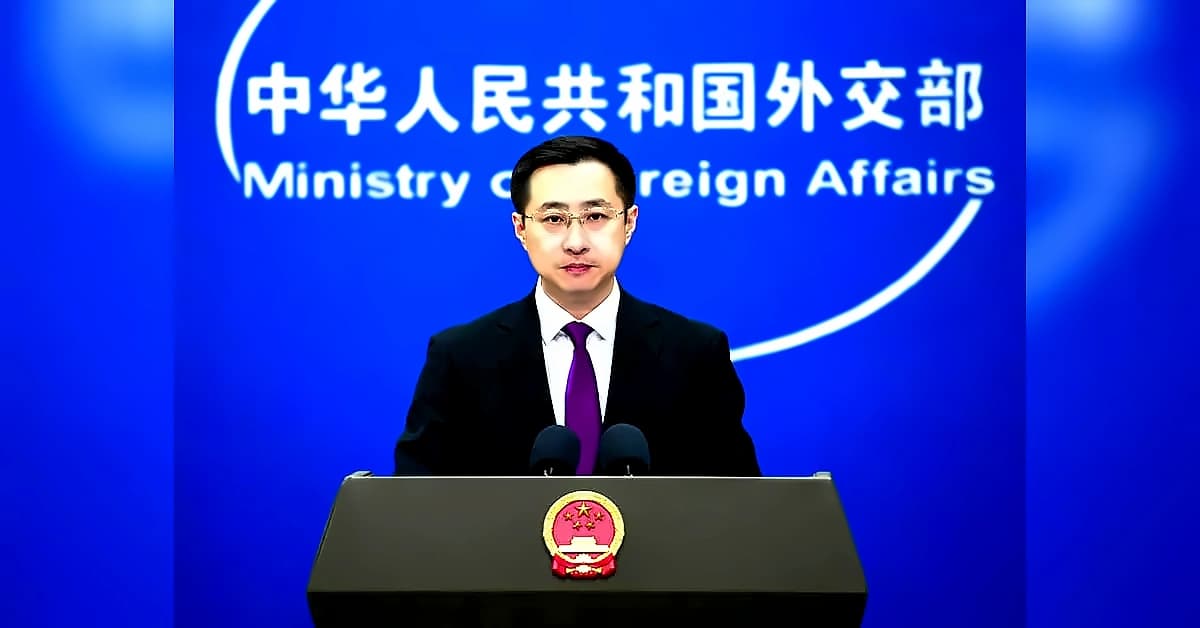
China's reaction has been relatively muted, with Foreign Ministry spokesperson Guo Jiakun stating that China's legitimate rights and interests in Venezuela 'must be protected.' Beijing says its cooperation with Venezuela is compliant with international and domestic law, involves no third party, and that its lawful interests must be protected. Ecuadorian political risk expert Christian Reyes noted that 'Venezuela isn't necessarily a precedent for direct expropriation, but it may be a precedent for coerced exclusion.' The US is more willing to treat parts of Latin America's economic ties with China as a security issue and use leverage to enforce those boundaries. Despite the US being Latin America's largest trading partner and China second, unwinding China's presence would be hard given its deep entanglement across the region, with Chinese companies embedded in power grids, mining, electric vehicles and infrastructure.