For the first time since the Second World War, excluding the COVID-19 pandemic, public debt in the United States has surpassed the entire economy's GDP. As of late March, debt held by the public reached USD 31.27 trillion, just ahead of the GDP of USD 31.22 trillion. According to reports from The Hindu BusinessLine, this threshold is often treated as a long-term fiscal issue, but the economic costs are now moving to the forefront. The most immediate pressure comes from the possibility that major foreign holders of American assets begin pulling capital out of US markets.
Gulf states collectively hold roughly USD 2 trillion in US assets through their sovereign wealth funds, as reported by The Hindu BusinessLine. Officials across the Gulf are already reassessing their positions. In March, one Gulf official said three of the four largest economies in the Gulf Cooperation Council were reviewing their sovereign wealth fund positions to offset the impact of the Iran war. The confidence in US fiscal and military protection has been shaken by the US-Israel attacks on Iran, creating uncertainty about the traditional financial arrangements between Gulf states and the US. Gulf sovereign wealth funds have responded by placing greater emphasis on liquidity and flexibility to navigate the current instability.
The US has limited options to prevent foreign investors from selling US assets, as reported by The Hindu BusinessLine. The freedom to enter and exit what the Federal Reserve Bank calls 'the deepest and most liquid fixed-income market in the world' is exactly what makes US assets attractive, but creates structural vulnerability. The US economy relies heavily on stretched asset valuations where market values far exceed underlying fundamentals. When holders lose confidence and these inflated markets correct, a run is triggered, as happened in the 2008 financial crisis. The present situation carries similar risks: if Gulf states start selling U.S. assets amid ongoing regional instability, falling prices would reduce the value of collateral across the system. As leveraged institutions see their balance sheets weaken, they cut borrowing and sell assets, setting off a chain reaction that spreads financial stress internationally.
The petrodollar system, which traces back to a 1974 agreement between the US and Saudi Arabia, is facing unprecedented challenges. Oil was priced in US dollars, money flowed into the US, and Gulf countries received political and military backing in return. However, Iran's pressure campaign on Gulf states, including attacks on economic assets and leveraging the Strait of Hormuz, is creating uncertainty in oil markets, government budgets and regional stability. As reported by The Hindu BusinessLine, the United Arab Emirates' exit from OPEC on May 1 shows how far the old energy-financial bargain has fractured, with Gulf states now wanting more control over production, revenue and liquidity than the cartel system allows. The move also likely reflects US pressure to bring oil prices down in the short term, but this strategy cannot last as Gulf states still depend on strong revenues to fund budgets, sovereign wealth funds and diversification.
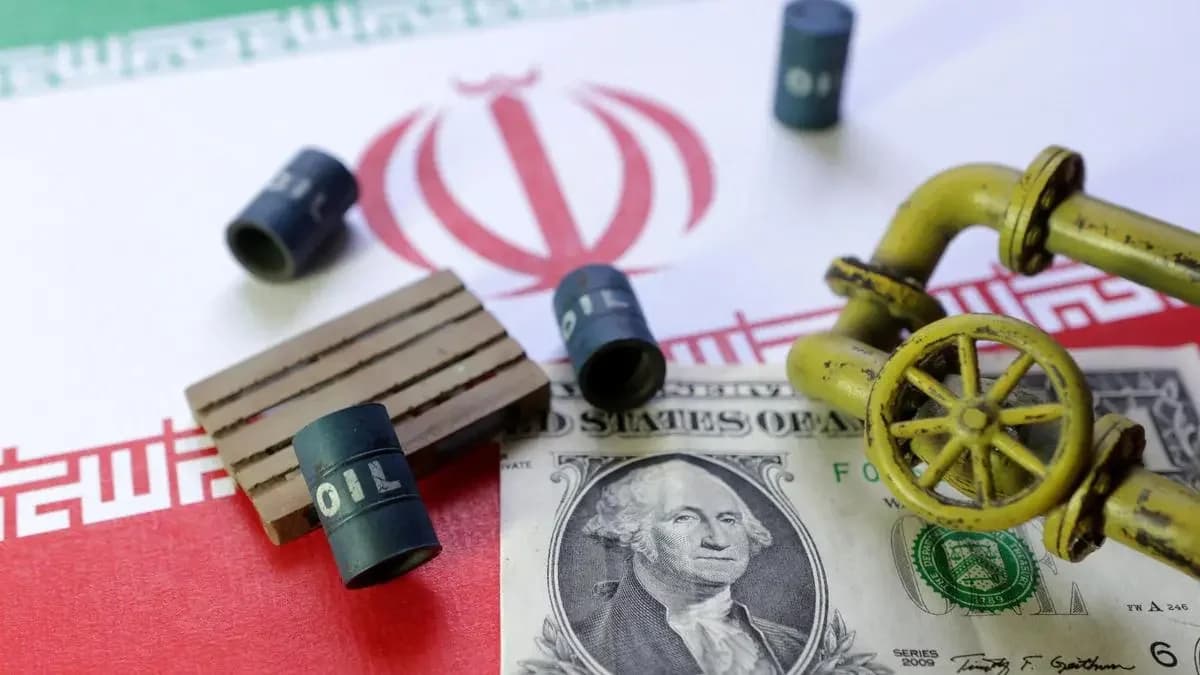
Gulf states are signalling a willingness to expand the use of alternative currencies, including China's yuan, for portions of their oil trade if regional instability disrupts dollar liquidity, according to The Hindu BusinessLine. Extending swap lines to Gulf states may slow this process, but it may not be enough to reverse the currency diversification already underway. The shift would merely accelerate the growing trend among emerging economies to move away from US dollar dependence. Behind the scenes, policymakers are increasingly relying on swap lines, monetary expansion and emergency co-ordination measures to stabilize dollar liquidity and reassure allies. These tools were once reserved for acute crises, but are now becoming part of the normal functioning of the system and undermining US asset credibility. The global financial system was already moving toward greater fragmentation and weaker reliance on the US dollar long before the Iran war, with US President Donald Trump's escalation with Iran accelerating this process by shaking confidence in the political and military foundations that sustained the petrodollar system for decades.