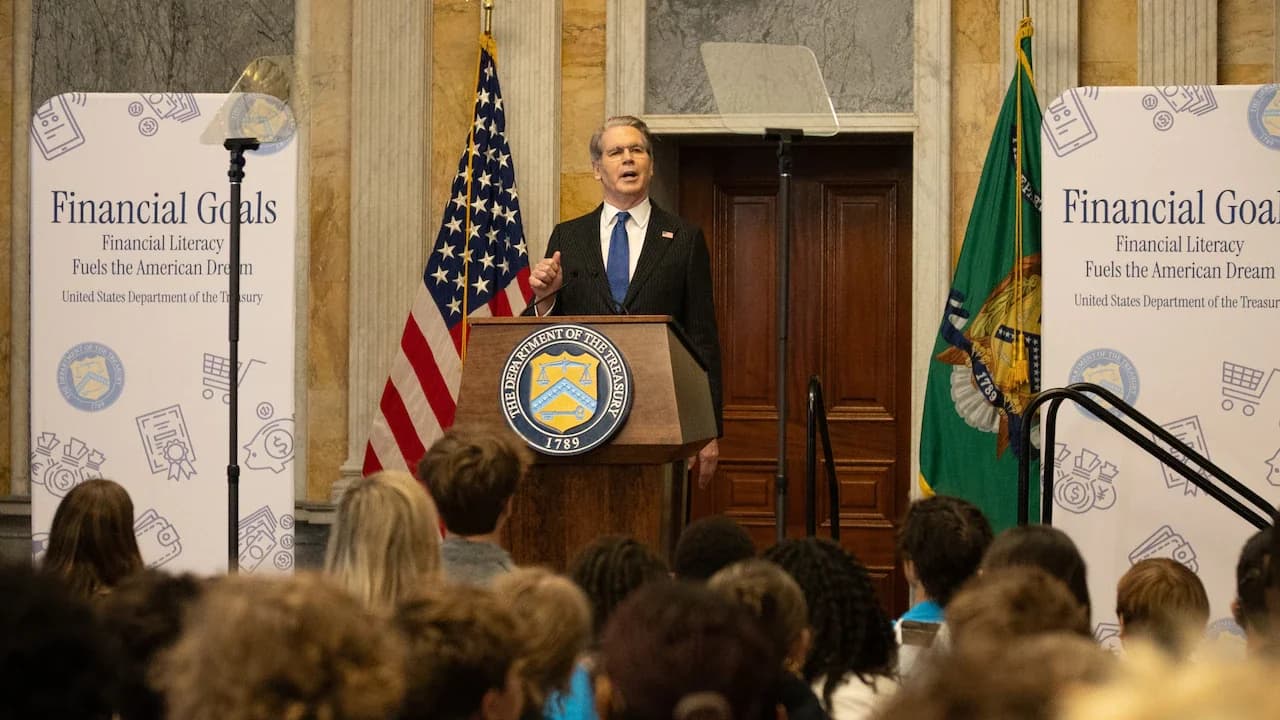
Treasury Secretary Scott Bessent announced that the Trump administration plans to announce sanctions on a bank this week as part of its economic campaign against Iran, with another bank announcement planned for the following week. Speaking at an event on the sidelines of the US-hosted Group of 20 finance leaders in Asheville, North Carolina, Bessent said 'We are probably going to announce a bank sanction this week, and we will announce one the week after'. According to Business Standard, Bessent told Reuters on Sunday that the US Treasury was likely to unveil weekly new secondary sanctions aimed at increasing economic pressure on Iran, with an initial focus on banks. The Treasury Secretary emphasized that 'We have zero tolerance. We are going to economically asphyxiate this regime,' stating 'We are tracking down the IRGC's assets' and warning that 'We know where in the British Virgin Islands your accounts are at these trust companies' and 'We know the 100 million dollar houses you have around the world, and we are going to freeze those.'
The Treasury Department has officially confirmed plans to cut off Banque Misr UAE, the UAE operations of Egypt's second-largest bank, from the US financial system. According to an official statement reported by the Financial Times, the measure will take effect after a 30-day public comment period. The Republican administration's first official action in this new campaign was a proposed rulemaking on Friday, which would, if finalized, sever the Emirati branches of Banque Misr from access to the U.S. financial system. In stopping short of imposing sanctions on the Egyptian bank, the administration appeared to be signaling its reluctance to penalize major trading partners that do business with Iran, including China and India, whose officials Bessent will have meetings with this week. Bessent told Business Standard that the next step may be cutting off an institution entirely from the dollar-based financial system.
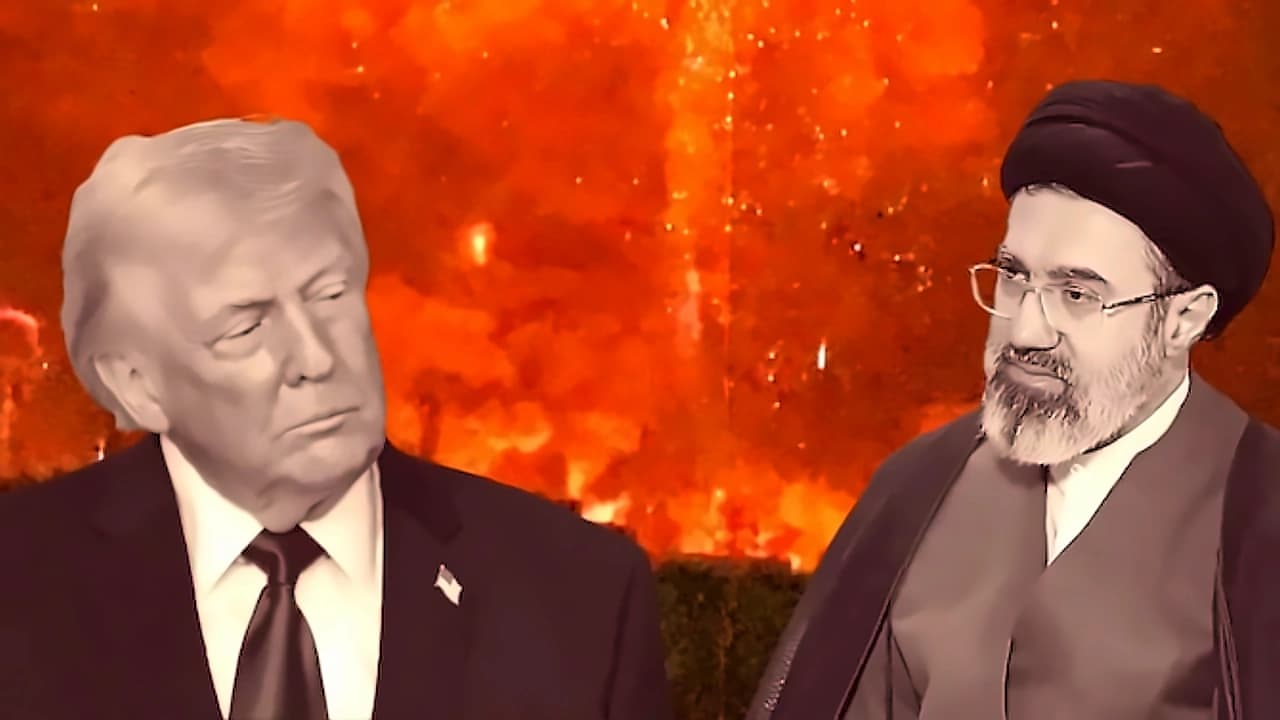
FinCEN has issued a comprehensive Notice of Proposed Rulemaking (NPRM) finding that Banque Misr UAE is a financial institution of primary money laundering concern. The assessment reveals that the bank has approximately USD 6 billion in assets as of December 2025, with three direct correspondent relationships through which it accesses the US financial system. FinCEN identified at least USD 1.8 billion in potential Iranian shadow banking activity through Banque Misr UAE since 2024, including approximately USD 520 million over the most recent 12-month period. The bank serves as a significant conduit for Iranian shadow banking, with FinCEN observing a concerningly high percentage of potential Iranian shadow banking to assets given its size. According to a notice posted on the Treasury Department's website, Treasury officials separately imposed sanctions on one Hong Kong-based entity and one individual linked to Iran's Bank Melli, alongside the proposed restrictions on Banque Misr UAE.
Bessent warned that Washington has 'warned that Iran's enablers cannot continue to enjoy access to the US dollar and the global financial system'. The Treasury Secretary vowed that the United States was declaring an 'economic D-Day' on Iran, warning of harsh consequences for countries that do not join the campaign. According to Business Standard, Bessent said the US was also looking at targeting airline leasing companies and other entities that did business with the Islamic Revolutionary Guard Corps (IRGC). Speaking at the G-20 finance meeting, Bessent claimed that US military action had severely weakened Iran's military capabilities, stating that the US had destroyed Iran's navy, air force and drone inventory, along with 85-90% of factories capable of producing new drones. He described Iran as being in extreme distress militarily and said the US blockade was having a significant impact. 'We are going to economically asphyxiate this regime,' Bessent declared, adding that Iran still had a chance to return to the global economic system. Bessent told Business Standard that the US has privately discussed with China how to stop Iran getting a nuclear weapon and ensuring freedom of navigation in the Strait of Hormuz.
Bessent reported significant diplomatic progress, stating 'We are speaking to our allies here, who have all come forward, and we have had a great show of support'. According to Business Standard, Bessent will meet individually with his counterparts from the world's major and developing economies at the G-20 meeting to encourage participation in the economic isolation of Iran. The Treasury Secretary told Reuters that 'all options are on the table' in terms of sanctioning Beijing for its continued purchases, though he downplayed this reluctance, calling it 'a completely false narrative that the media picked up on' and insisting that China and the U.S. agree on the need to reopen the Strait of Hormuz and prevent Iran from developing a nuclear weapon. A White House official confirmed that Washington has held private discussions with China on the Iran issue, while noting that Iran wants to reach a deal with the US but its proposals have consistently come too late and fallen short of Washington's requirements.