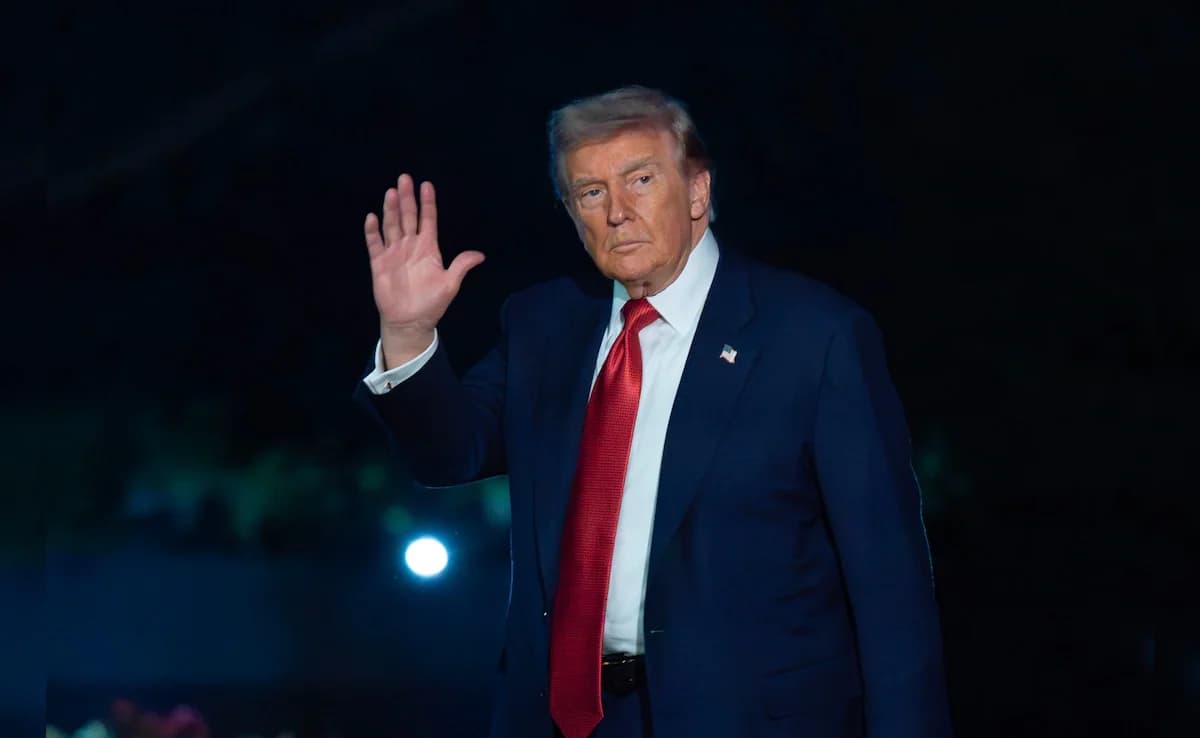
President Donald Trump's decision to reject the US-Iran ceasefire deal while attending the NATO Summit in Ankara represents a strategic power display rather than a diplomatic failure. According to market experts, Trump's timing was deliberate - no one would have complained if he had waited for the end of the NATO Summit before initiating retaliatory strikes, but the US administration chose otherwise to signal to European Union members. As per LiveMint, the US strikes in Iran are a signal to NATO members of Europe to understand the 'Power In' and 'Power Off' power that the US has in the aftermath of the US-Iran war, when it comes to oil and gas supply to EU members. The decision allowed Trump to combine the Iran issue with his long-standing criticism of European allies, arguing that NATO members were not contributing enough to defence and were not fully supporting the US position on Iran.
Oil prices have surged again after Trump's latest declarations, with Brent crude rising 1.31% to $79.04 a barrel and US West Texas Intermediate (WTI) crude gaining 1.28% to $74.46 on Thursday, extending the previous session's rally of more than 5%. According to The Times of India, this marks the second consecutive day of significant gains as global oil markets face renewed chaos. The surge comes after maritime authorities raised the threat level for vessels transiting the strait to 'severe' after two tankers were attacked on Tuesday. Before the conflict, around one-fifth of global oil supplies moved through the Strait of Hormuz, with concerns that continued fighting could disrupt shipments through the strategic waterway pushing crude prices higher in recent months, even going beyond the $125 per barrel mark. The US military's Central Command had previously announced it had launched attacks on Iran after the country targeted ships in the Strait of Hormuz, with CENTCOM describing the attacks as "powerful" and saying they were to "impose heavy costs" on Iran.
Wall Street's early reaction showed significant selling pressure, with Dow futures falling 1.10%, S&P 500 futures losing 0.87%, and Nasdaq futures dropping 1.33% in early pre-market trading. According to The Times of India, the Dow Jones Industrial Average dropped about 550 points, or 1%, while the S&P 500 fell 0.5% and Nasdaq Composite was down 0.2%. As reported by BeInCrypto, money rotated out of stocks and into safer assets, the classic risk-off pattern. Brent crude, the global oil benchmark, jumped more than 6% to $79 per barrel, while gold, a classic safe-haven asset, traded near $4,056. Bitcoin (BTC) traded near $62,170, down roughly 1.6% over the past 24 hours, according to BeInCrypto data. The VIX has gapped up to 18, with the S&P dropping nearly 100 points since the conflict heated up again. The renewed military action has renewed concerns over inflation, as any disruption to crude supplies from the Persian Gulf could increase energy costs, potentially prompting the Federal Reserve and other central banks to raise interest rates.

The renewed hostilities have significantly impacted interest rate markets, with the U.S. 2-year yield up 5bps to 4.21%, back to where concerns about the new hawkish Fed chairman took over. The 10-year yield is up 6bps to above 4.58%, where it was in March when crude oil prices were much higher. According to Investing.com India, interest rates have jumped on the inflation implications, with money markets increasing their bets that the Federal Reserve will raise interest rates by October. As per Forex.com analyst Fawad Razaqzada, "Markets weren't initially taking the re-escalation in US-Iran tensions too seriously earlier this week, but today, that seems to have changed." The inflation concerns have brought the Federal Reserve back into focus as a key market driver, with the dollar making some gains against its peers as the prospect of another hit to Middle East oil supplies fuelled concerns that inflation could remain elevated for longer than feared.
The US administration's decision to reject the ceasefire deal while at NATO serves a broader objective of reprimanding EU members, especially Britain, Italy, Germany and Spain to align more closely with Washington's strategic objectives. As per LiveMint, Europe is currently in a vulnerable position from an energy perspective since reducing its dependence on Russian energy following the Russia-Ukraine conflict, with many European economies having diversified towards alternative suppliers, including the United States. Any disruption around the Strait of Hormuz could significantly impact global crude oil flows and increase energy prices, making the message equally intended for European allies. The EU has already cut its oil and energy supply line from Russia after the Russia-Ukraine war, so they heavily depend on US crude oil imports if there is a crisis in the Middle East. This strategic positioning allows the US to plug into the Middle East crisis to contain the oil supply through the Strait of Hormuz, reinforcing Washington's leadership position in global energy security.