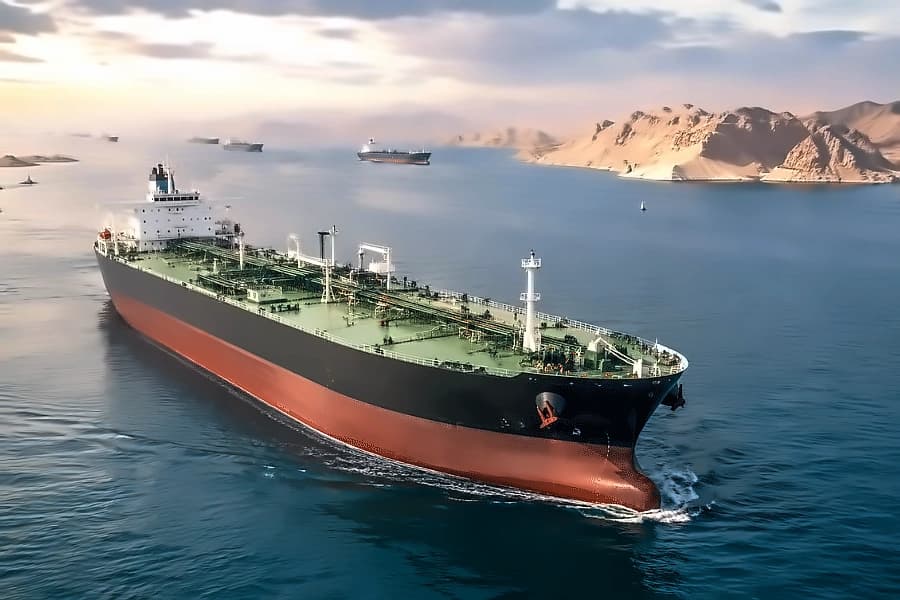
US stock futures opened lower on Sunday evening as oil prices crossed the psychologically significant $100-a-barrel threshold for the first time in roughly two months, after fighting between the United States and Iran intensified further and American forces struck five Iranian oil tankers. Nasdaq futures fell between 350-400 points as trading resumed, with the Dow futures down 150-200 points and S&P 500 futures declining 40 points. The move was led lower by technology stocks, while energy names rose as higher oil prices boosted oil producers' profits. Latest reports indicate Brent crude futures rose 3% to $107.74 per barrel after Saudi Arabia shut down its East-West pipeline following attacks, with West Texas Intermediate trading near $102.93 per barrel. As per CNBC TV18, the surge in oil prices has added pressure at a delicate moment, with higher oil prices lifting expectations for inflation and pushing the 10-year Treasury yield up to around 5%, which has not closed above that level since 2007.
Over the weekend, chief executives of major AI companies OpenAI and Anthropic sounded an alarm over the pace at which AI was growing and urged caution on the future ahead. Anthropic CEO Dario Amodei announced plans to introduce additional safeguards, including independent third-party evaluations and urged the broader industry to slow the developments of the most advanced AI models. The proposal was supported by OpenAI Chief Sam Altman, while Tesla and SpaceX founder Elon Musk wrote on "X" saying "Dario is right." CNBC TV18 reports that OpenAI also said it will not go public this year as it will focus on addressing safety-related concerns surrounding AI first, according to Sam Altman's interview to Fortune. On the flip side, Anthropic has picked Nasdaq for its proposed listing, which could happen as soon as next month, as reported by Bloomberg citing sources. The developments have put significant pressure on tech stocks, with Nasdaq futures comprising mainly of tech, AI and semiconductor stocks bearing the brunt of the decline.
The conflict has intensified significantly with fresh attacks on vessels in the Strait of Hormuz and other regions in the Gulf region driving oil prices higher. Saudi Arabian state media on Sunday released video footage of damage to homes and a mosque from what it claimed to be a Houthi attack on the country's southern Jazan province, while the Houthis had also struck a Saudi military base in a neighbouring province. Additionally, an Iranian cargo vessel was struck on Sunday in the Strait of Hormuz, Iranian state media said, with Iran then postponing a plan to brief its neighbouring countries on its efforts to manage shipping in the strait. On Friday, Saudi Arabia's East-West oil pipeline was shut by a drone strike that originated in Iraq, with the 1,200 km pipeline carrying between 4 million and 5 million barrels of oil per day - equivalent to nearly 5% of global oil supply. The pipeline had helped Saudi Arabia re-route its exports avoiding the Strait of Hormuz, making the closure particularly significant for global oil flows. A scheduled meeting in Oman between Gulf countries and Iran to discuss the Strait of Hormuz had been postponed, according to Omani Foreign Minister Badr Albusaidi.
The security situation has deteriorated further with Saudi Arabia officially confirming after market closing last Friday that the East-West pipeline was shut as a precaution after attacks, without providing any clarification on when operations will resume normally. The 1,200 km East-West pipeline is an important alternative export route for Saudi crude because it allows the kingdom to bypass the Strait of Hormuz, carrying between 4 million and 5 million barrels of oil per day - equivalent to nearly 5% of global oil supply. Saudi Arabia and Iraq stated that the drones involved in the attack originated from Iraqi territory, where Iran-backed militants operate. US President Donald Trump stated that Iran was probably to blame for the pipeline disruption, while the United States has indicated it would provide intelligence support rather than directly intervene against the Houthis. The attack resulted in some injuries and damage that was being assessed, according to the Saudi Foreign Ministry. The combination of attacks on tankers, disruption around the Strait of Hormuz, the Saudi pipeline shutdown, and increasing Houthi activity around the Red Sea has increased fears of further disruption to global oil supplies.
Goldman Sachs has outlined a scenario in which oil prices could rise to as much as $120 a barrel if attacks on Middle Eastern vessels intensify, while if exports return to normal, the bank expects oil prices to move back towards $80 a barrel. JPMorgan estimates that every additional month of disruption could add around $7 to $8 a barrel to Brent prices, with the bank expecting average monthly Brent prices to reach around $114 a barrel if the disruption lasts three months. Citi has raised its average Brent crude price forecast for the third quarter to $86 a barrel from $80, citing a longer-than-expected timeline for the reopening of the Strait of Hormuz. Crude oil surged 8% last week due to the disruptions, rising above $100 for the first time since July, with the loss of the pipeline threatening up to 4% of global oil supply. Daan Struyven, co-head of global commodities research at Goldman Sachs, said the attacks in recent days suggested that shipping disruptions could spread and become more severe.
The market faces a critical period with key US inflation reports due Thursday, September 10, and consumer prices on Friday, September 11, just before the Federal Reserve's meeting next week. During the course of the week, industrial production, capacity utilization and retail sales data will also be reported, adding to the data-heavy schedule. Historical seasonal data compiled by research firm Bespoke has previously noted that the S&P 500 has tended to continue trending lower for a stretch following early-September pullbacks of the kind markets experienced this week, a pattern some technical analysts have pointed to as an additional source of caution for investors. With oil prices continuing to climb amid the unresolved conflict in the Middle East, the U.S.-Canada trade dispute showing no clear signs of near-term resolution, and Apple's product event still to come later Wednesday, investors are likely to face a data- and news-heavy remainder of the week. Market participants will be watching closely for how Apple's presentation is received by both consumers and Wall Street analysts, along with any further developments in the Iran conflict and the Canada trade standoff that could continue shaping the direction of U.S. equity markets heading into the back half of September.